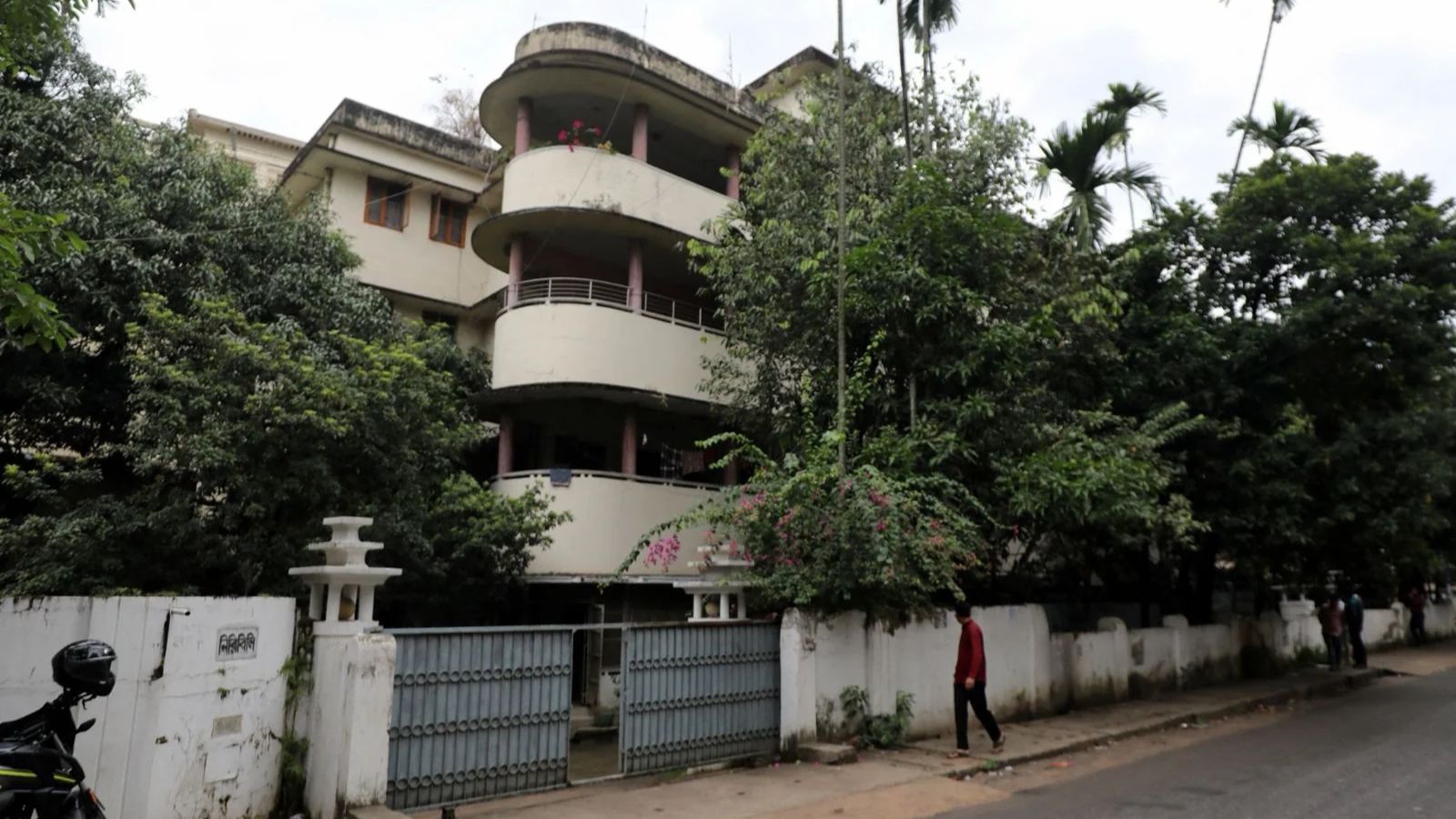
The identification of 25-year-old Tushar Sharma, an Indian national residing in Surrey, inside a burning vehicle on Rawlison Crescent in Langley, British Columbia, highlights a complex category of transnational forensic investigations. Handled by the Integrated Homicide Investigation Team (IHIT), cases involving victims with limited local networks require specific operational protocols to establish chronologies, determine motive, and navigate international jurisdictions.
The Diagnostic Challenge of Incinerated Evidence
When emergency response crews extinguish a vehicle fire and discover human remains, primary physical evidence is often compromised. Thermal degradation alters biological tissue, complicating immediate identification and standard post-mortem evaluations. In this investigation, the timeline between the initial discovery on October 29 and the public identification weeks later reflects the operational friction inherent in forensic identification processes, requiring dental records, DNA profiling, or anthropological analysis to confirm identity.
Vehicle-associated homicides introduce distinct investigative variables:
- Evidence Preservation: Arson destroys ballistic trajectories, trace DNA, and fingerprint evidence, shifting the evidentiary burden to digital footprints, CCTV networks, and chemical accelerant residue analysis.
- Mobility Vectors: Vehicles serve as dynamic crime scenes. Determining whether the homicide occurred inside the vehicle, at a secondary location prior to transport, or as a result of the fire dictates the spatial mapping required by forensic teams.
Transnational Social Mapping and Network Analysis
A central hurdle highlighted by IHIT officials is that Sharma possessed "limited known contacts" within Canada while maintaining immediate family ties overseas in India. When a victim operates within a sparse local social graph, traditional canvassing methods yield diminishing returns. Investigators must pivot to cross-border information-gathering frameworks.
Reconstructing the activity profile of an international migrant worker or student involves several systematic layers:
- Digital Forensics: Extraction of metadata, communication logs, and location data from personal electronic devices to map the final 48 hours before the incident.
- Financial Tracing: Analyzing banking records, digital asset transactions, and recent purchases to identify unrecorded interpersonal interactions or transactional anomalies.
- Consular and Family Liaison: Engaging international authorities and immediate relatives to identify behavioral baselines, recent threats, or unfamiliar obligations that would not appear in domestic municipal databases.
Targeted Incident Classifications and Motive Evaluation
Public statements from law enforcement indicate that preliminary evidence points toward a "targeted incident" rather than a random act of violence. In investigative methodology, establishing a targeted classification relies on behavioral and circumstantial indicators rather than immediate proof of motive.
The absence of a known criminal record complicates standard risk-factor profiling. Investigators typically evaluate potential vectors by testing three structural hypotheses:
- Personal Enmity: Interpersonal disputes originating within local or international acquaintanceships.
- Extortion or Coercion: Financial or social pressure mechanisms targeting vulnerable expatriate populations.
- Secondary Association: Unintended collateral consequences arising from associations with individuals engaged in illicit networks.
Operational Next Steps for Forensic Reconstruction
To transition an investigation from a targeted classification to suspect identification, IHIT's strategy relies on timeline compression. Public appeals for witnesses between the victim's last confirmed sighting and the discovery of the burning vehicle serve to close informational gaps. Cross-referencing Automatic Licence Plate Recognition (ALPR) data along transit corridors surrounding Langley provides a deterministic method to track vehicle movements, bypassing reliance on fragmented human memory.