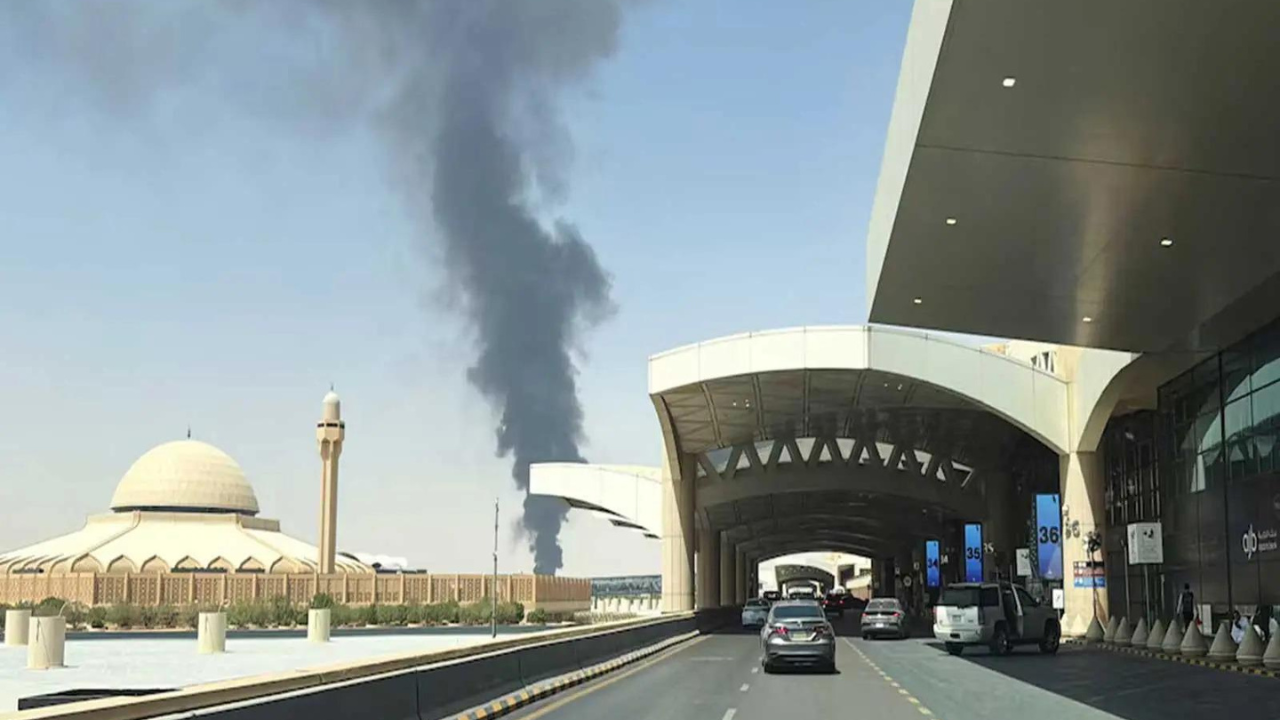
The hum of a quadcopter doesn't sound like thunder. It sounds like an angry mosquito trapped inside a tin can, hovering three hundred feet above a dusty courtyard in Marib, carrying enough high explosives to turn a bakery into a crater.
Silence.
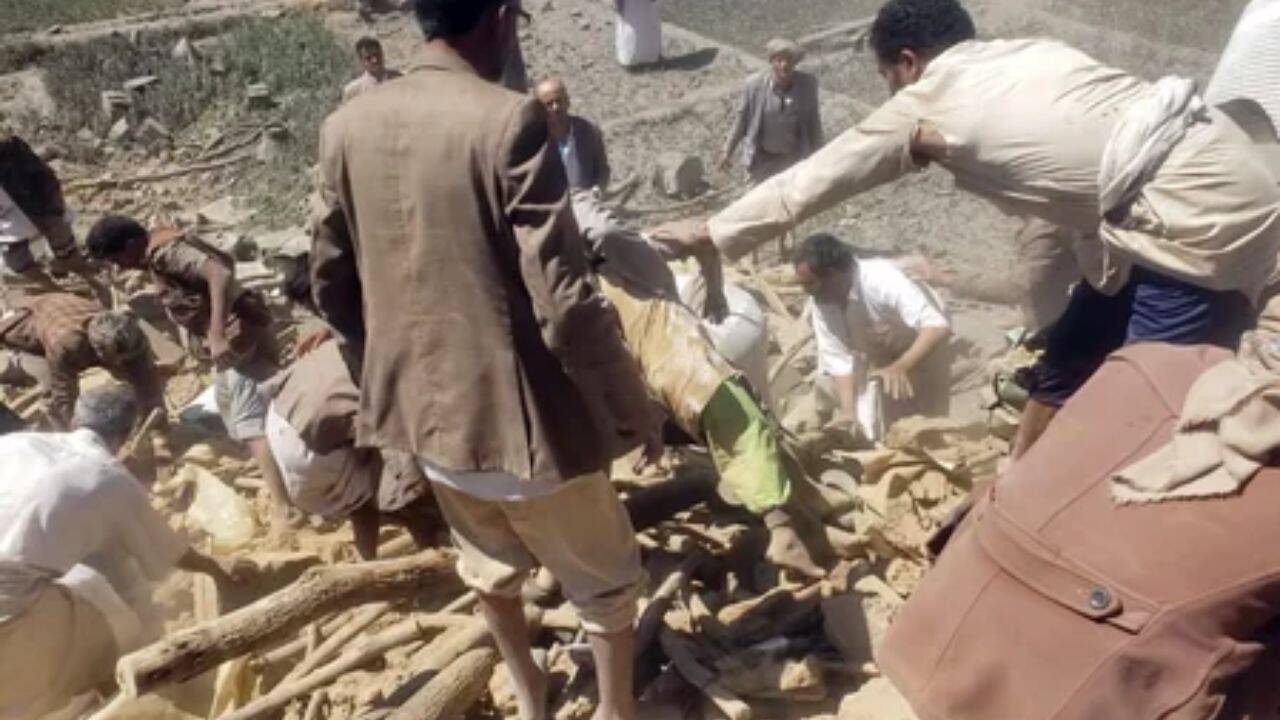
Then the sky cracks open, leaving the smell of cordite, pulverized limestone, and burnt cardamom hanging over the street where twenty minutes earlier, a baker named Tariq was pulling flat loaves from a clay oven. Tariq is a composite, a hypothetical figure built from the testimonies of dozens of displaced Yemenis who have watched their neighborhoods erased from the air, yet his morning is a daily reality for millions. When Tariq looks up at the smoke curling into the Arabian sky, he isn't thinking about geopolitical alignments or Shia crescent strategies. He is wondering where the men who taught the Houthi militants how to wire that drone learned their craft.
The answer lies over twelve hundred miles northwest, in the misty mountains of southern Lebanon and the crowded suburbs of Beirut.
For years, the diplomatic cables between Yemen’s internationally recognized government and the Lebanese state were polite, formal, and largely ignored. That changed when Sanaa's exiled leadership—operating out of Aden and Riyadh—issued an urgent, public plea to Beirut. Stop Hezbollah. Cut the umbilical cord of weapons, advisors, and media networks feeding the Houthi insurgency. On paper, it reads like standard regional finger-pointing, the kind of sterile communiqué that gets buried on page fourteen of an international broadsheet.
In practice, it is a desperate cry from a drowning man asking his neighbor to stop handing bricks to the person holding his head underwater.
The Architecture of a Proxy War
To understand why a minister in Aden is begging a paralyzed government in Beirut to rein in a militia, you have to strip away the maps and look at the mechanics of modern asymmetric warfare. Think of it like a franchise model for insurgency.
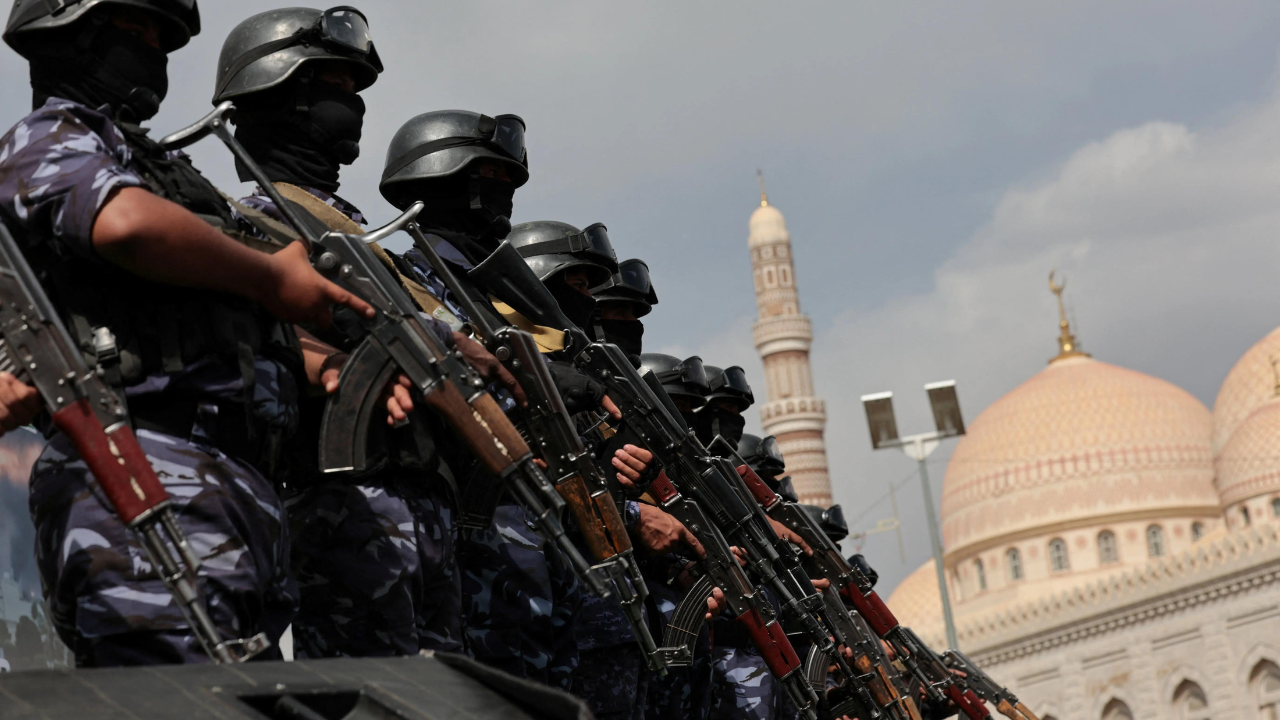
Hezbollah, backed by Iran’s Islamic Revolutionary Guard Corps, spent four decades perfecting the art of fighting a superior conventional military from the shadows. They built tunnels under Lebanese villages, mastered the telemetry of guided missiles, and turned a satellite television station, Al-Manar, into a psychological weapon. When the Houthi movement—officially Ansar Allah—swept down from the northern mountains of Saada and seized Yemen’s capital in 2014, they had fierce mountain fighters and ideological zeal. What they lacked was technical sophistication.
They needed instructors.
United Nations panels of experts, alongside intelligence assessments from Western and Gulf nations, have documented the migration of Hezbollah operatives into Yemen over the past decade. These weren't foot soldiers sent to die in the trenches of Taiz or Hudaydah. They were engineers, drone technicians, ballistic missile specialists, and communications strategists. Consider what happens when you drop a seasoned Hezbollah electronics expert into a makeshift workshop in Sanaa: suddenly, a ragged militia using stolen Kalashnikovs is launching ballistic missiles at Riyadh, striking oil facilities in Abu Dhabi, and choking off global maritime trade in the Red Sea with anti-ship cruise missiles.
Let's be honest about how confusing this web looks from the outside. Most people hear "Middle East conflict" and their eyes glaze over, overwhelmed by an alphabet soup of acronyms and centuries-old sectarian grievances. I used to feel that exact same fatigue, staring at wire reports from Beirut and Sanaa until the names blurred together. It takes sitting with a Yemeni journalist who fled Sanaa with nothing but a thumb drive of evidence to realize that this isn't an abstract chess match. It is an assembly line of violence, and the blueprints were drawn in Lebanon.
A Tale of Two Broken States
Picture a hypothetical meeting room in Beirut’s Grand Serail, the Ottoman-era palace housing the Lebanese Prime Minister's office. Outside, the city is running on diesel generators because the state electricity grid collapsed years ago. The Lebanese pound has lost over ninety-five percent of its value. Banks are barricaded with steel shutters to keep desperate depositors from demanding their own life savings.
Inside that room sits a Lebanese diplomat, reading the formal protest from Yemen’s Information Minister, Moammar al-Eryani, or Foreign Minister Shaya al-Zindani. The Yemeni government isn't just complaining about boots on the ground. They are pointing to Beirut’s southern suburbs, Dahiyeh, where the Houthi-run Al-Masirah television channel broadcasts its propaganda directly via Hezbollah-controlled infrastructure.
Here is the bitter irony that keeps diplomats awake at night: the Yemeni government is asking the Lebanese state to control an organization that is vastly more powerful than the Lebanese state itself.
"It is like asking a passenger tied up in the trunk to steer the car," a veteran Arab League diplomat once remarked to me over lukewarm Turkish coffee in Cairo. His voice wasn't angry; it was hollowed out by years of watching sovereignty evaporate across the Levant and the Arabian Peninsula.
Lebanon’s official military, the Lebanese Armed Forces, relies on international aid just to feed its soldiers and fuel its trucks. Meanwhile, Hezbollah maintains an arsenal that rivals the militaries of mid-sized European nations, operating its own telecommunications network, social services, and foreign policy. When Yemen demands that Beirut honor international resolutions—specifically UN Security Council Resolutions 2216, which imposes an arms embargo on the Houthis, and 1559, which calls for the disarmament of all militias in Lebanon—Sanaa is highlighting a terrifying precedent. If one non-state actor can hijack a country’s foreign policy to export war to another Arab nation, no border in the region is safe.
The Echoes of the Eighties
History rarely repeats itself cleanly, yet it has a habit of recycling its worst blueprints. In the early 1980s, when Iranian revolutionary guards first arrived in Lebanon’s Bekaa Valley, the world watched a fractured civil war slowly morph into a permanent Iranian forward operating base. Few outside the region paid attention to the early training camps. They seemed localized, a messy byproduct of Lebanon's internal collapse.
Forty years later, the exact same template was exported south to the Red Sea.
By looking at the pattern, the strategic logic becomes crystal clear, even if its human toll is horrifying. Tehran recognized early on that geography is destiny. Lebanon sits on the eastern Mediterranean, bordering Israel. Yemen sits on the Bab el-Mandeb Strait, the narrow maritime chokepoint through which roughly twelve percent of global trade and thirty percent of the world's container traffic must pass.
By empowering Hezbollah to mentor, arm, and coordinate with the Houthis, Iran linked two distant theaters into a single, coordinated front. When war erupted in Gaza in late 2023 and spilled across the Lebanese border in 2024, the Houthis didn't act out of spontaneous solidarity. They activated a pre-built infrastructure. They fired missiles toward Eilat and attacked commercial vessels in the Red Sea using targeting intelligence, naval mines, and drone swarms refined through years of Hezbollah tutoring.
Every cargo ship forced to divert around the Cape of Good Hope—adding ten days and millions of dollars in fuel costs to global supply chains—is a direct dividend of that invisible bridge between Beirut and Sanaa. Your grocery bill in London, your electronics delivery in Chicago, the price of grain in Mombasa: all of it is tethered to the workshops where Lebanese advisors taught Yemeni militants how to calibrate guidance systems.
What Sanaa Actually Wants From Beirut
When Yemen’s internationally recognized government ramps up its diplomatic pressure on Lebanon, skeptics immediately ask what the point is. Why demand action from a Lebanese cabinet that cannot even agree on electing a president without regional permission?
Because silence is complicity, and diplomatic legitimacy is the last weapon Yemen’s fractured government still holds.
Sanaa’s plea to Beirut rests on three concrete demands that test whether Lebanon still functions as a sovereign Arab state or merely as a diplomatic shield for Hezbollah:
- Shutting Down the Media Hub: The Houthis’ primary mouthpiece, Al-Masirah TV, operates openly out of Beirut, beaming incitement, recruitment videos, and operational claims across the Arab world. Yemen argues that hosting the propaganda arm of a group designated as a terrorist organization—and actively at war with a fellow Arab League member—violates every tenet of pan-Arab solidarity and Lebanese media law.
- Halting the Flow of Advisors and Logistics: Yemen has repeatedly presented intelligence detailing the movement of Hezbollah military experts traveling between Beirut, Tehran, and Houthi-held territory in Yemen, often using forged documents or clandestine maritime routes. Sanaa wants Lebanese border and airport authorities—specifically at Beirut’s Rafic Hariri International Airport—to stop turning a blind eye to these transfers.
- Diplomatic Isolation: By forcing the issue onto the agenda of the Arab League and the United Nations, Yemen is stripping away the plausible deniability that Lebanese politicians have hidden behind for a decade. Beirut can no longer claim neutrality while its territory serves as the rear base for Yemen’s destruction.
Consider the position of a Lebanese minister who genuinely wants his country to recover. To rebuild Beirut's shattered economy, Lebanon desperately needs billions of dollars in investment and tourism from Saudi Arabia, the United Arab Emirates, and Kuwait. Yet those very Gulf states have spent years fighting the Houthis and intercepting ballistic missiles built with Hezbollah’s help. Every time a Hezbollah technician trains a Houthi drone operator, another door slams shut on Lebanon’s economic rescue.
The Weight of the Unspoken
Back in the rubble of Marib, or along the mine-scarred roads outside Taiz, the geopolitical calculus narrows down to a much simpler equation. Yemen has suffered one of the worst humanitarian catastrophes of the twenty-first century. Over three hundred and seventy thousand people have died from direct combat, starvation, and preventable diseases like cholera. Millions of children have grown up knowing the sound of artillery better than the sound of a school bell.
I remember speaking with a Yemeni doctor who worked in a field hospital near Hudaydah, describing the specific type of shrapnel wounds caused by newer, Iranian-designed, Hezbollah-modified loitering munitions. He didn't use political jargon. He talked about tungsten ball bearings packed around explosive cores, engineered specifically to maximize soft-tissue damage in crowded areas. He held up a small, jagged piece of metal he had pulled from a twelve-year-old boy's shoulder, turning it between his thumb and forefinger under a flickering fluorescent bulb.
"Someone studied how to make this fly straight," the doctor said quietly. "Someone sat in a clean room far away from here and solved the math so this piece of steel would land right here."
That is the invisible stake buried beneath the headlines. When Yemen urges Lebanon to act against Hezbollah’s military support for the Houthis, it isn't merely filing a diplomatic grievance. It is trying to sever the nervous system of a war machine that spans two countries, three seas, and millions of ruined lives.
In Beirut, the coastal wind blows warm off the Mediterranean, carrying the scent of salt and exhaust fumes past the sleek glass towers of downtown and the bullet-pocked concrete of the southern suburbs. In Sanaa, the mountain air turns crisp at dusk, cooling the tin roofs of makeshift workshops where circuit boards are soldered together under bare lightbulbs. Between those two cities stretches an unseen wire, humming with money, weapons, and instructions—and until someone in Beirut finds the courage to cut it, the sky over Yemen will keep falling.