The salt air off the coast of Oman doesn't care about geopolitics. It simply corrodes. For the crew of an oil tanker navigating the Strait of Hormuz, the humidity is a physical weight, but the true pressure is invisible. It’s the knowledge that they are sailing through a needle's eye. On one side, the rugged coast of the Musandam Peninsula; on the other, the jagged Iranian shoreline. Between them lies a strip of water so narrow that it carries the pulse of the global economy.
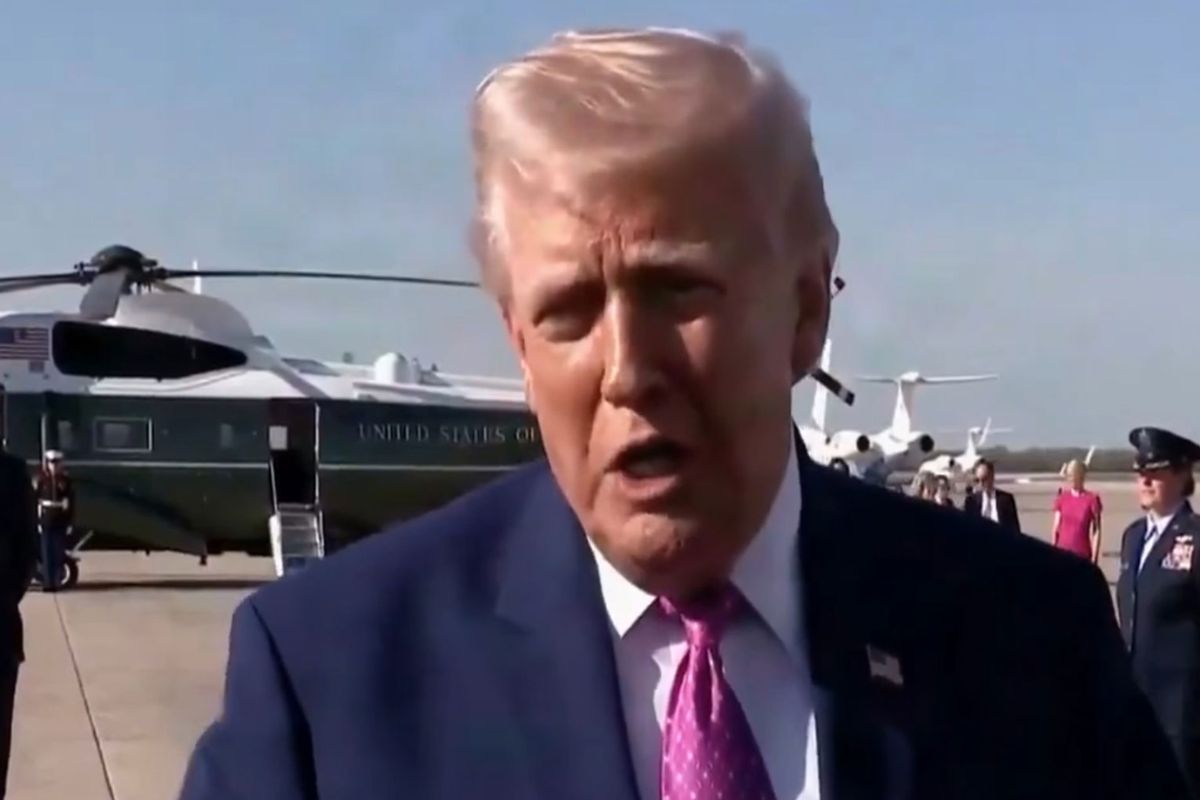
When Donald Trump speaks about this stretch of water, he isn't just talking about shipping lanes. He is talking about the jugular vein of the modern world. His recent assertion that Iran will not be permitted to "set a toll" in Hormuz isn't a mere budgetary dispute. It is a declaration of ownership over the concept of global movement.
The Ghost at the Table
Imagine a man named Elias. He isn't a politician. He’s a logistics manager in a small manufacturing town in the Midwest. He spends his days staring at spreadsheets, tracking the cost of plastic resins and fuel surcharges. To Elias, the Strait of Hormuz is a flickering line on a news crawl, a distant abstraction. But when the rhetoric sharpens in Washington and Tehran, the numbers on Elias’s screen begin to tremble.
A "toll" in Hormuz isn't just a fee paid by a captain to a coastal authority. In the language of international friction, a toll is a tax on stability. If Iran were to exert the kind of control that dictates who passes and at what price, the ripples wouldn't just stay in the Persian Gulf. They would travel through the deep-sea cables, into the commodities markets of London, and eventually, they would land on Elias’s desk in the form of a twenty percent spike in raw material costs.
Trump’s stance is built on the refusal to let that ghost sit at the global economic table. By stating that Iran cannot be allowed to monetize the passage, he is attempting to keep the ghost in the closet. The stakes are human because the cost of failure is felt at the kitchen table, not just the Situation Room.
The Geography of Anxiety
History has a way of repeating itself in these waters. During the "Tanker War" of the 1980s, the world watched in horror as merchant vessels were struck by mines and missiles. It was a chaotic era where the simple act of moving goods from point A to point B became an act of war.
The Strait is twenty-one miles wide at its narrowest point. But the actual shipping lanes—the deep-water paths capable of carrying massive Crude Carriers—are only two miles wide in each direction. There is a two-mile buffer zone between them. Think about that. The energy that powers the cities of Asia and the industries of Europe must squeeze through a gap narrower than most morning commutes.
Iran views this geography as its ultimate leverage. It is their backyard. When Trump draws a line in the sand—or rather, the water—he is challenging the very idea of "backyard" sovereignty. He is asserting that certain parts of the planet are too vital to belong to any one nation. They belong to the flow.
The Arithmetic of Defiance
The logic of the current administration’s "big statement" is rooted in a specific kind of American realism. The argument goes like this: if you allow a precedent where a nation can charge a premium for "security" or "passage" in international waters, you have effectively ended the era of free trade.
But the friction remains. Iran’s economy has been hammered by years of sanctions. For the leadership in Tehran, the Strait is more than a waterway; it’s a bargaining chip. They see the vast wealth floating past their shores—millions of barrels of oil every single day—and they see a world that is comfortable while they are constrained.
When the rhetoric heats up, the insurance premiums for these ships skyrocket. A single "war risk" surcharge can cost a shipping company hundreds of thousands of dollars per transit. This is the hidden toll that already exists. It’s a tax paid to uncertainty. Trump’s refusal to allow a literal toll is an attempt to prevent this psychological tax from becoming a permanent, legalized fixture of the Middle Eastern landscape.
The Weight of the Word
Words in diplomacy are often treated like currency. They have a value that fluctuates based on the perceived strength of the person speaking them. When a former and potentially future president makes a definitive claim about what a sovereign nation "will not be allowed" to do, he is betting on the shadow of American naval power.
But consider the perspective of the sailor on the deck. For them, these words are heavy. They change the atmosphere of the bridge. They turn a routine watch into a high-stakes vigil. The human element of this conflict is often lost in the talk of "strategic interests" and "crude exports." We forget that these ships are manned by people who have families in Manila, Mumbai, and Odessa. To them, the Strait of Hormuz isn't a point of leverage. It is a place where the world’s tension becomes a physical vibration in the hull of the ship.
The Logic of the Long Game
There is a fundamental disagreement at the heart of this. The United States views the Strait as a global common. Iran, historically, has viewed it as a zone of influence where they are the primary gatekeeper.
Trump’s approach skips the traditional diplomatic dance. He doesn't suggest a multi-party committee or a slow-walking of maritime law. He issues a blunt prohibition. The effectiveness of this style depends entirely on the belief that the other side will blink. It is a high-wire act performed over a sea of oil.
If the goal is to prevent a toll, the underlying mission is to maintain the illusion of a borderless world. We want to believe that we can buy a gallon of gas or a plastic toy without having to account for the ancient grievances of the Persian Gulf. We want the world to be flat, efficient, and quiet.
The Shadow of the Shoreline
Deep in the night, the lights of the Iranian coastal batteries are visible from the decks of the passing tankers. They are a constant reminder that the peace of the Strait is a fragile thing. It is a peace held together by the threat of force and the necessity of commerce.
When we strip away the headlines, we are left with a simple, terrifying reality: our modern life is built on a series of precarious permissions. We are permitted to fly through certain airspaces. We are permitted to sail through certain straits. We are permitted to trade across certain borders.
The "big statement" from Trump is a move to ensure that this permission remains in the hands of the global market, rather than a single, defiant actor. It is an attempt to lock the gates open. But as any sailor will tell you, a gate that cannot be closed is also a gate that cannot be protected.
The true cost of the Strait of Hormuz will never be found in a toll booth. It is found in the constant, grinding effort to keep the world’s most dangerous chokepoint from tightening. It is found in the eyes of men like Elias, who don't know why the prices are rising, only that they are. It is found in the silence of the Gulf at midnight, where the only sound is the water rushing past the steel, and the only certainty is that tomorrow, another ship will have to make the same narrow passage.
The horizon remains open for now, not because the tension has vanished, but because we have decided that the alternative is a price we simply cannot afford to pay.



