A cold breeze cuts through the cherry blossoms in Washington, but the real chill is radiating from a mahogany table thousands of miles away. Think of a high-stakes poker game where the players aren't just betting chips; they are betting the warmth of your home, the price of your morning commute, and the stability of the global map. On one side sits Donald Trump, a man who views diplomacy as a series of televised transactions. On the other is Xi Jinping, a leader who measures time in decades and centuries.
Between them lies a third party that wasn't invited to the summit but dominates the room: Iran.
For years, we have viewed the friction between the United States and China through the lens of microchips and soybeans. We argued over TikTok algorithms and steel tariffs. But as a new administration takes the helm in D.C., the focus has shifted toward a jagged piece of geography in the Middle East. Iran has become the proxy for a much larger struggle. It is no longer just about nuclear centrifuges; it is about who controls the flow of energy that keeps the world’s heart beating.
The Shadow in the Room
To understand why a conflict in the Persian Gulf keeps a factory worker in Ohio and a shopkeeper in Shanghai awake at night, you have to look at the math of survival. China is the world's largest importer of crude oil. It is a hunger that never ends. When the United States squeezed Iran with the "maximum pressure" campaign, the goal was to choke off Tehran’s oxygen. But China became the secret respirator.
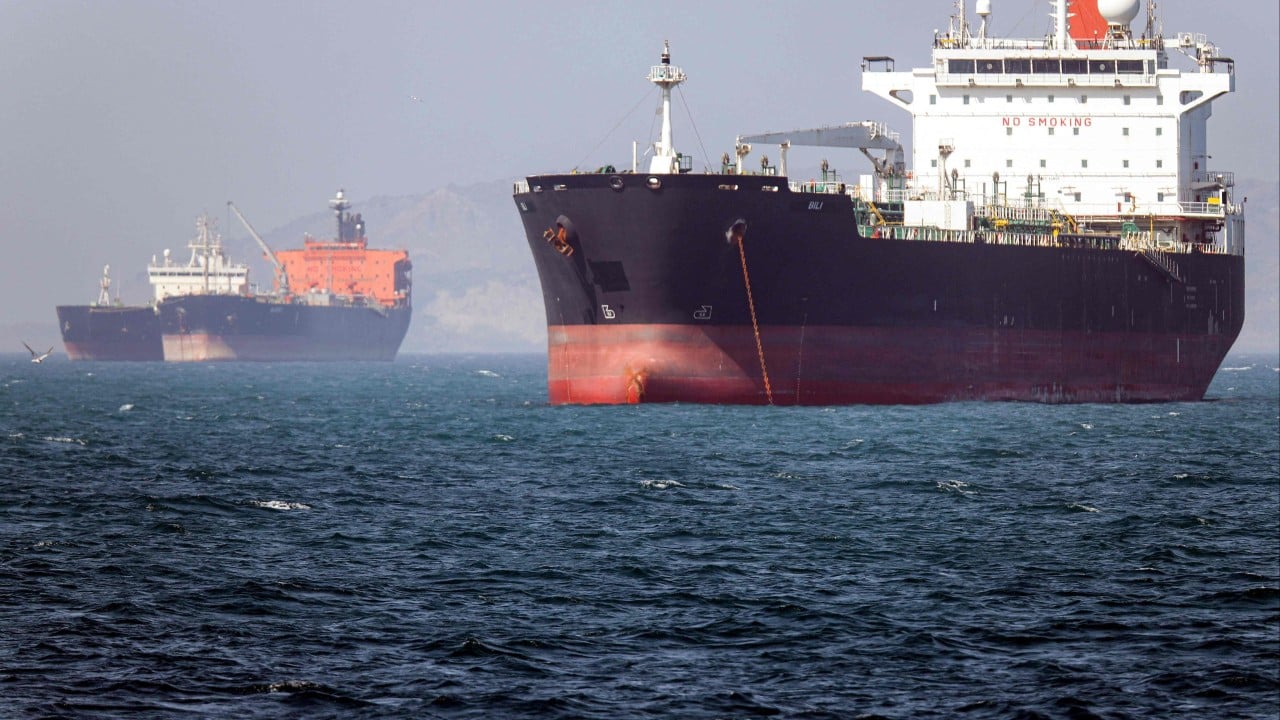
Consider a hypothetical tanker, let’s call it the Red Horizon. It drifts through the dark waters of the South China Sea, its transponders clicked off, vanishing from global tracking systems like a ghost. It carries millions of barrels of Iranian "teasing" oil—rebranded, transferred at sea, and eventually offloaded at Chinese ports. To Trump, this is a betrayal of a global order he seeks to dominate. To Xi, it is a strategic necessity. China cannot allow the United States to hold a total veto over its energy security.
This is the friction point. Trump sees Iran as a rogue state that must be dismantled economically. Xi sees Iran as a vital node in the "Belt and Road" initiative, a partner that provides a hedge against American influence. When these two men sit across from each other, they aren't just talking about trade deficits. They are talking about the right to exist without permission.
The High Cost of a Hard Line
The tension isn't theoretical. It shows up in the grocery aisle. If the U.S. decides to sanction Chinese banks for processing Iranian oil payments, the gears of global commerce don't just slow down—they grind.
Imagine the fallout. Washington blacklists a major Chinese financial institution. In retaliation, Beijing restricts the export of rare earth minerals essential for the battery in your smartphone or the motor in your electric car. Suddenly, the "Iran problem" isn't a headline about a distant desert; it’s the reason you can’t afford a new laptop.
The stakes are human.
There is a sense of exhaustion in the diplomatic corps. For decades, the goal was to bring China into the "international fold." Now, the strategy is containment. But you cannot contain a country that has become the world’s workshop. When Trump demands that Xi stop buying Iranian oil, he isn't just asking for a policy change. He is asking Xi to risk the stability of the Chinese economy to satisfy an American foreign policy goal. Xi, facing his own internal pressures and a slowing domestic market, cannot afford to look weak.
The Strait of Hormuz Dilemma
The geography of this conflict is terrifyingly narrow. The Strait of Hormuz is a maritime choke point where twenty percent of the world’s oil passes every day. It is a thin ribbon of blue water.
If tensions between Washington and Tehran boil over into kinetic energy—missiles, drones, or naval skirmishes—the price of oil doesn't just rise. It teleports. We saw a glimpse of this during previous spikes, but a sustained conflict would be different. China would be the first to feel the pain, but the United States would feel the echo. Inflation, which has already bruised the American psyche, would return with a vengeance.
Trump’s return to the White House signals a return to a specific kind of leverage. He believes that by threatening the Chinese economy, he can force Xi to abandon Tehran. It’s a gamble. It assumes that China values its trade relationship with the U.S. more than its long-term strategic autonomy.
But there is a flaw in that logic.
Beijing has spent the last decade diversifying. They have built pipelines through Central Asia and invested in Russian gas. They are preparing for a world where they don't have to listen to the White House. Iran is the testing ground for this new world order. If China can successfully defy American sanctions and keep the Iranian economy afloat, the "American Century" officially ends.
The Human Element of the Trade War
Behind the grand strategy are the people who get caught in the middle. I remember talking to a logistics manager in Ningbo who spent his days trying to navigate the shifting sands of maritime law. He wasn't a politician. He was a father of two who just wanted the shipping lanes to stay open. To him, the "Iran-U.S.-China triangle" wasn't a puzzle to be solved; it was a storm to be weathered.
"When the elephants fight," he told me, "the grass gets trampled."
We are the grass.
The summit between Xi and Trump is often framed as a clash of titans, but it is more like a tectonic shift. Deep beneath the surface, the plates are moving. Iran is the fault line. If the U.S. pushes too hard on the sanctions front, the plate snaps.
There is a psychological component to this as well. Trump prizes the "deal." He wants a clear win he can sell to his base. Xi prizes "harmony" and "face." He cannot be seen to be bullied. These two personality types are fundamentally incompatible when the subject is something as sensitive as a sovereign partnership with a Middle Eastern power.
Why the Middle Ground is Vanishing
In previous eras, there was room for "strategic ambiguity." The U.S. would complain about oil imports, China would make a few token gestures, and life would go on. That era is dead.
The world has become bipolar. You are either with the Western financial system or you are building an alternative. By pushing Iran into a corner, the United States has inadvertently forced China to accelerate the creation of that alternative. We are seeing the birth of a "shadow economy"—a parallel universe of trade that doesn't use the dollar, doesn't use SWIFT, and doesn't care about Washington’s approval.
This makes the world a more dangerous place. When we no longer share an economic language, we stop having a reason to prevent each other's collapse.
The upcoming meetings won't just be about car parts. They will be about the definition of power in the 21st century. Will the U.S. accept a world where it cannot dictate the energy partners of its rivals? Will China accept the risk of a total trade rupture to protect its interests in the Middle East?
The answers aren't in the briefing books. They are in the eyes of the two men sitting across from each other.
It is easy to get lost in the jargon of "secondary sanctions" and "geopolitical pivots." But strip it all away, and you have something much older and more primal. It is the story of two empires trying to occupy the same space at the same time. Iran is simply the match that could light the fuse.
As the sun sets over the Potomac and the lights flicker on in the Great Hall of the People, the tankers continue to move across the dark oceans. They are the silent witnesses to a struggle that is far from over. The real friction isn't what is said at the podium. It is the quiet, relentless pursuit of a future where no one person holds the keys to the world’s engine.
The table is set. The cards are dealt. The only question left is who is willing to lose everything to win a hand that never ends.