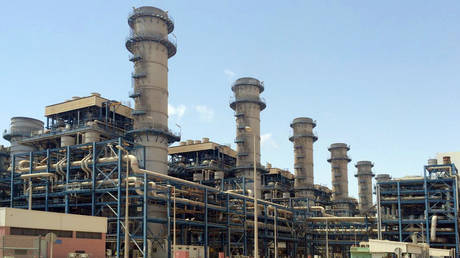
The recent disruption at Kuwait’s primary refining facilities is not an isolated mechanical failure or a simple act of regional aggression. It is a terrifying proof of concept. For decades, the global energy market has obsessed over the Strait of Hormuz, treating the physical transit of oil as the single point of failure for the world economy. That assumption is now obsolete. The sophisticated nature of the strike on Kuwait’s infrastructure reveals a shift from conventional kinetic warfare to a hybrid model that targets the precise intersection of industrial hardware and digital control systems.
Kuwait sits on roughly 7% of the world’s oil reserves. Its refineries, particularly the massive Al-Zour complex, are the crown jewels of a state that relies on petroleum for 90% of its government export revenue. When these nodes are compromised, the ripple effect moves faster than a tanker. It hits the insurance premiums in London, the strategic reserves in Washington, and the power grids in Southeast Asia within hours. Don't miss our recent article on this related article.
The Myth of Hardened Infrastructure
We have spent billions encasing our energy assets in concrete and steel. We surround them with fences, cameras, and private security details. Yet, the Kuwaiti incident proves that the most expensive "hardening" in the world is useless if the nervous system of the plant is exposed. Modern refineries are no longer just collections of pipes and furnaces; they are giant, interconnected computers that happen to process hydrocarbons.
The vulnerability stems from the legacy of Operational Technology (OT). Historically, these systems were "air-gapped"—meaning they were physically disconnected from the internet. That safety net has evaporated. To increase efficiency and allow for remote monitoring, these sensitive industrial controllers are now linked to corporate networks. This creates a bridge. An attacker does not need to fly a drone over a perimeter fence if they can send a malicious packet through a contractor’s laptop or a compromised sensor. To read more about the context of this, Business Insider provides an in-depth summary.
In the Middle East, this integration has happened at breakneck speed. The region is attempting to leapfrog decades of industrial evolution by adopting the most advanced automation tools available. The irony is bitter. The more advanced a facility becomes, the more entry points it offers to a motivated adversary.
Why Kuwait Became the Testing Ground
Geopolitics rarely operates on a single plane. Kuwait has traditionally positioned itself as a neutral mediator in a volatile neighborhood, often acting as the "Switzerland of the Middle East." This neutrality, intended to be a shield, has instead made it an ideal laboratory for deniable attacks.
By targeting Kuwaiti assets, an aggressor can send a message to the larger regional powers—Saudi Arabia and Iran—without immediately triggering a full-scale military retaliation. It is a calibrated escalation. The goal is to demonstrate that no amount of Western military hardware or local defense spending can guarantee the flow of oil if the underlying technology is compromised.
Furthermore, Kuwait's specific refining mix makes it a high-value target for economic sabotage. The country has pivoted toward producing "cleaner" fuels, such as low-sulfur fuel oil required by international shipping regulations. By knocking these specific units offline, an attacker isn't just stopping "oil"; they are specifically strangling the supply of the exact fuels the global shipping industry needs to function legally. It is a surgical strike on the global supply chain.
The Failure of Regional Deterrence
Current defense strategies in the Gulf are heavily weighted toward missile defense and naval patrols. The Patriot batteries and Aegis-equipped destroyers are designed to stop objects they can see on radar. They are effectively blind to the "gray zone" tactics used in the Kuwait plant disruption.
The Limits of Kinetic Defense
If a strike involves a swarm of low-altitude, small-signature drones combined with a localized cyber interference, traditional radar often fails to distinguish the threat from birds or ground clutter. Even if the hardware is detected, the cost-to-kill ratio is absurdly skewed. Using a $2 million interceptor missile to down a $20,000 drone is a losing game of attrition.
The Intelligence Gap
There is a profound lack of shared intelligence between the private entities operating these plants and the national security apparatus. Oil companies are notoriously secretive. They view data about system breaches as a threat to their stock price and reputation. This silence is the attacker’s greatest ally. While one facility might successfully defend against a specific type of digital intrusion, the lessons learned are rarely shared with the refinery ten miles down the coast. The attackers, conversely, are highly collaborative, sharing code and tactics across borders.
The Hidden Cost of the Energy Transition
As the world moves toward renewable energy, the "old" infrastructure of oil and gas is being starved of long-term capital. This creates a dangerous maintenance vacuum. In Kuwait and its neighbors, the focus is on building the "next big thing"—hydrogen plants, solar farms, or carbon capture hubs. Meanwhile, the existing refineries that actually fund these transitions are being run harder with less investment in their core security architecture.
We are seeing a divergence. On one hand, there is the high-tech facade of a modern energy superpower. On the other, there is the reality of aging valves and unpatched software running on Windows versions that haven't been supported in a decade. This "security debt" is coming due. The Kuwait incident is merely the first major installment.
Redefining the Secure Refinery
Protecting these assets requires a move away from the "fortress" mentality. A wall is a binary defense; it either holds or it fails. Modern industrial security must be resilient, meaning it assumes a breach will happen and focuses on maintaining core functions under fire.
This involves "Zero Trust" architecture applied to physical hardware. Every sensor, every pump, and every terminal must be treated as a potential threat. Data flowing from a pressure gauge should be authenticated with the same rigor as a bank transfer.
- Segmented Networks: Industrial processes must be physically and logically isolated from the business side of the company.
- Active Threat Hunting: Instead of waiting for an alarm, security teams must constantly probe their own systems for anomalies that suggest a "sleeper" presence.
- Redundant Manual Overrides: The industry needs to rediscover the value of the "analog." There must be a way to run a plant without a computer screen, even if it is less efficient.
The reality is that we have traded safety for efficiency. We removed the human operators who knew the "smell and sound" of a healthy plant and replaced them with algorithms. When those algorithms are subverted, the human at the desk is often the last to know something is wrong.
The Geopolitical Price of Inaction
If Kuwait cannot secure its refining capacity, the premium for Middle Eastern energy will rise permanently. This isn't about the price of a barrel of crude today. It is about the "reliability tax" that every manufacturer in Europe and Asia will have to pay. If the market loses faith in the physical safety of the world's primary energy hub, the shift toward decentralized energy will accelerate—not because of environmental concerns, but out of raw survival.
The attackers know this. Their objective is not necessarily to destroy the plant, but to destroy the certainty that the plant will work tomorrow. They are attacking the psychology of the market as much as the chemistry of the refinery.
Western allies often respond to these events with diplomatic condemnations and promises of more military cooperation. This misses the point entirely. You cannot "patrol" a server room with a fighter jet. You cannot "deter" a line of malicious code with an aircraft carrier. The battle for Kuwait's energy future—and by extension, the world's—is being fought in the milliseconds of data transfer between a control room and a valve.
The industry must stop treating security as a line-item expense to be minimized. It is now a core competency of energy production. Any nation that fails to realize this is not just vulnerable; it is a liability to the global economy. The smoke over Kuwait should be seen as a flare, a warning that the old rules of industrial protection have been burned away. The front line is no longer at the border; it is inside the machine.
Stop looking at the horizon for the next threat. It is already in the wires.