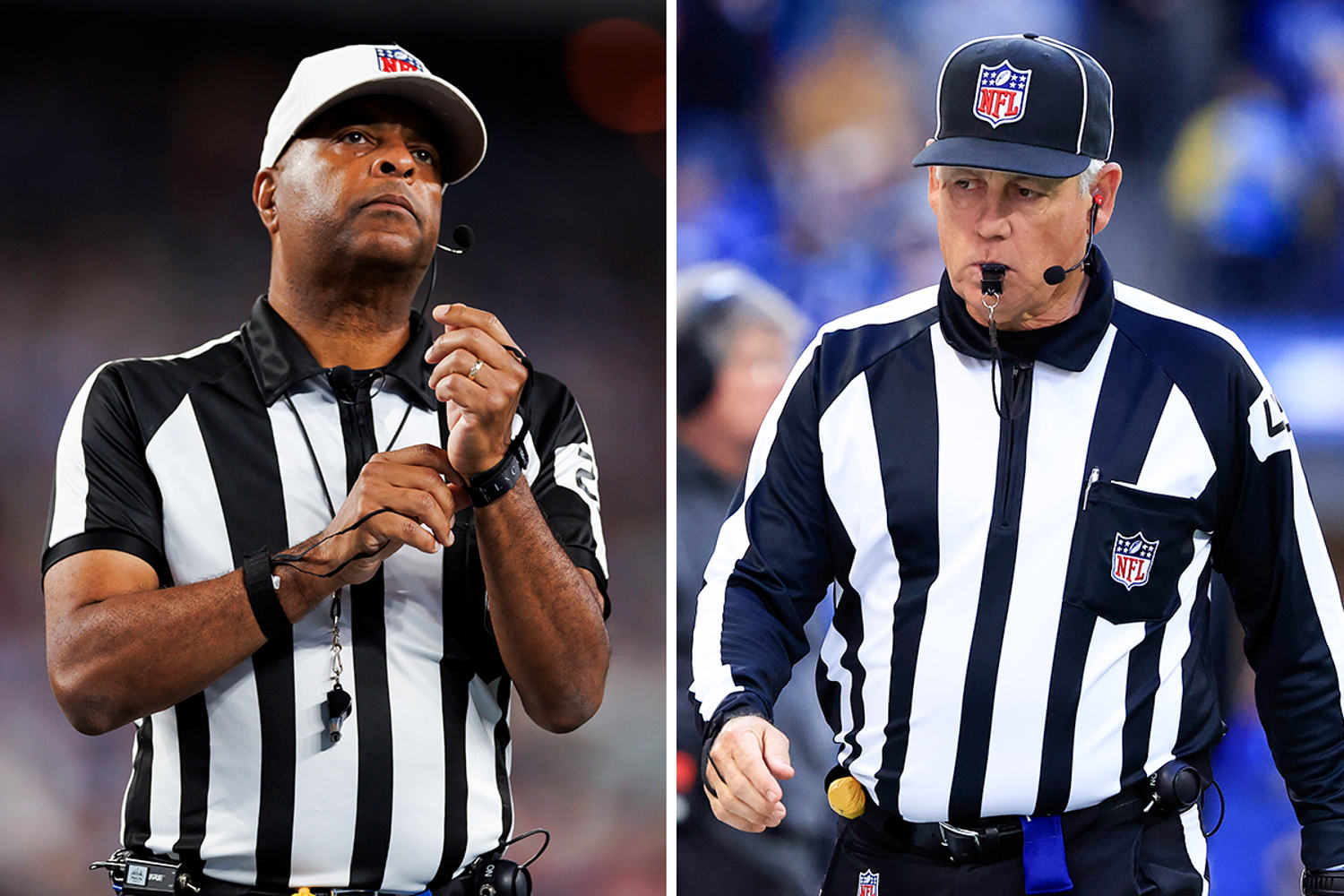
The whistle blows. A stadium containing seventy thousand roaring human beings holds its breath. Down on the manicured grass, beneath the blinding glare of high-definition lights, a man in a crisp white cap and black-and-white stripes reaches for his pocket.
To the fan in row twelve, it is just a penalty. To the bettor watching on a flickering screen three states away, it is a shifting point spread. To the athlete standing mere feet away, sweating through reinforced fabric, it is the difference between a triumphant career and a crushing exit.
But what happens when the keeper of the rules forgets that he is part of the system, rather than the master of it?
We rarely think about the human beings inside the striped uniform. We view them as immutable arbiters, mechanical gods programmed to apply the rulebook without a pulse. Yet, beneath those polyester jerseys beat human hearts susceptible to pride, frustration, and the intoxicating rush of absolute authority.
The Weight of the Striped Jersey
Consider the physical reality of officiating a professional football game. Every snap is a violent collision of titanium helmets and fiberglass pads. The velocity of a modern athlete defies common sense. A linebacker weighs two hundred and forty pounds and runs forty yards in less than four and a half seconds. When these bodies smash together, the sound echoes through the empty tunnels like a gunshot.
The officials are right there. They do not have the protection of a helmet. They stand inches from the wreckage, listening to the popping of shoulder pads and the heavy, ragged breathing of men pushing past their biological limits.
It is a pressure cooker. Decibels reach levels capable of inducing physical pain. The crowd screams for blood, or at least for a flag against the other side.
In that environment, communication breaks down. Words are exchanged in the heat of battle. A player, frustrated by a blown coverage or a missed assignment, barks an objection. An official, whose authority is the only thing keeping total anarchy at bay on the field, snaps back.
Usually, it ends there. A stare. A muttered curse. A quick jog back to the huddle.
Sometimes, it crosses a line.
When Authority Turns Toxic
The National Football League recently handed down a sharp reality check to its own workforce, suspending two referees for unprofessional conduct toward players.
Let that sink in. The league, an institution built on absolute discipline and rigid hierarchy, found it necessary to publicly bench the very people entrusted with maintaining order. This was not about a missed holding call or a botched spot of the ball. Human error is expected; perfection is an illusion in a game played at supersonic speed.
This was about conduct. This was about words spoken behind the mask, away from the broadcast microphones, or caught on sensitive directional field audio. This was about dignity.
When a referee steps onto the turf, their power is absolute within the four boundary lines. They can erase a seventy-yard touchdown with a flick of a yellow flag. They can stall momentum, break a team’s spirit, and alter the fortunes of billion-dollar franchises. That kind of power changes people. It creates a psychological trap known in behavioral science as the uniform effect, where the symbol of authority begins to warp the ego of the person wearing it.
Imagine, for a moment, being on the receiving end. You have spent your entire life sacrificing your body. You woke up at five a.m. in high school, lifted weights through college, endured surgeries that left your knees looking like roadmaps, and fought through training camps where ninety men competed for fifty-three jobs. You are elite. You are among the top one-tenth of one percent of human beings at what you do.
And then, a man who has never taken a blindside block from a defensive end looks down his nose at you and speaks with casual condescension. Or worse, disrespect.
Respect is a two-way street, even in combat sports.
The Anatomy of a Breakdown
Why did two officials cross the line to the point of suspension?
To understand, we must look at the psychological wear and tear of a grueling season. Officials work six-day weeks during the fall. They review game tape obsessively, grade every single decision, and face relentless public scrutiny from media analysts, coaches, and millions of fans on social media who slow down high-definition video to dissect their mistakes frame by frame.
They are defensive. They are human.
When a player challenges an official's competence in the heat of competition, the fragile ego of the man in stripes can fracture. The temptation to remind the player who is really in charge becomes overwhelming.
"Watch your mouth," turns into something sharper. Something personal. Something that strips away the professional distance required to keep the game safe and fair.
The NFL’s swift disciplinary action sends a clear, unvarnished message: the shield protects the integrity of the game above all else. And integrity is not just about gambling policies or correct ball placement. It is about how the powerful treat the vulnerable, even when the vulnerable happen to be towering athletic specimens.
The Ripple Effect Across the Sport
The suspension of these two referees is more than a footnote in an injury report or a minor transaction wire. It is a symptom of a broader cultural reckoning in sports.
We are demanding more emotional intelligence from our leaders. We expect coaches to connect with players rather than just scream at them. We expect leagues to protect player safety, not just from concussions, but from psychological degradation.
When an official loses their composure, the entire fabric of the contest frays. The players lose trust. Once trust in the neutrality of the referee dies, the game descends into theater. Conspiracy theories take root among fans. Every subsequent penalty is viewed through a lens of suspicion.
The league knows this. That is why the hammer fell.
Football is a metaphor for life. It features rules, boundaries, fierce competition, and an ultimate arbiter to keep us from tearing each other apart. But the system only works as long as the arbiter remains impartial, calm, and acutely aware of their own immense power.
The whistle is not a weapon. It is a tool for order.
As the stadium lights hum into the night and the empty field returns to silence, the grass is left untrodden once more, waiting for the next battle, and the human beings brave enough—and flawed enough—to try and keep the peace.