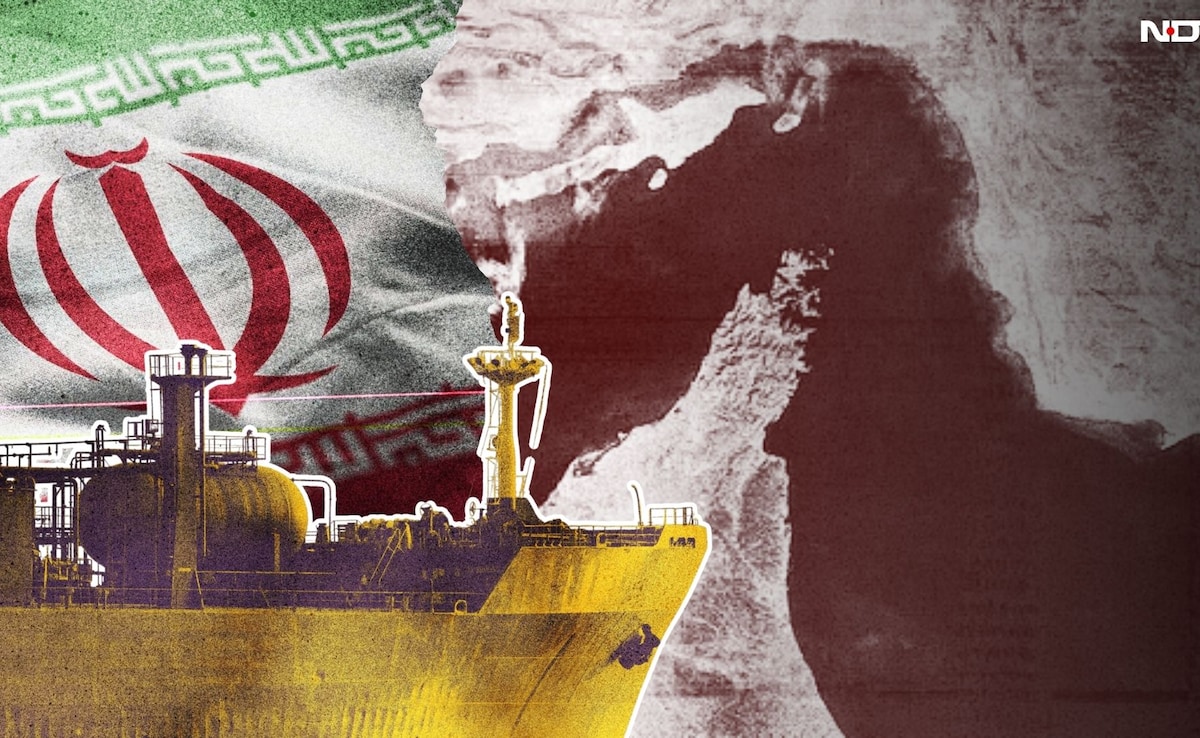
A single freighter sits motionless on the horizon. From the shore, it looks like a toy, a speck of rusted iron against an infinite blue. But inside that hull is more than grain or microchips. It carries the weight of a fragile peace, and right now, that weight is becoming unbearable.
In the corridors of power in Tehran, the talk isn't about shipping lanes or maritime law. It is about a "stranglehold." For weeks, the rhetoric has sharpened into a jagged edge. Iranian officials have made it clear: if the United States continues what they perceive as a maritime blockade—a systematic effort to choke off the flow of goods and influence—the ceasefire in the region won't just crack. It will shatter.
Imagine a merchant sailor named Elias. He is a hypothetical man, but his fear is documented in the rising insurance premiums of every vessel crossing the Bab el-Mandeb. Elias doesn't care about the geopolitical chess match between Washington and Tehran. He cares about the drone he can't see and the missile he can't stop. He knows that when the giants start shouting about "red lines," men like him are the ones who pay the bill.
The tension is a physical thing. You can feel it in the way oil prices jitter with every press release. You can see it in the redirected routes that force massive tankers to crawl around the Cape of Good Hope, adding weeks to a journey and millions to the cost of living for people who have never even heard of the Red Sea.
The Ghost of a Ceasefire
A ceasefire is a living thing. It requires constant feeding, a steady diet of concessions, and a terrifying amount of trust. But trust is a rare commodity in the Middle East right now. Iran’s warning is simple: you cannot expect us to hold back our allies if you are closing the door on our economy.
The United States views its presence as a shield. They see a necessary policing of a volatile waterway, a way to ensure that the global economy doesn't collapse because of a few well-placed mines. But through the lens of Tehran, that shield looks an awful lot like a sword. They see a blockade in all but name. When you stop the flow of a nation's lifeblood, you aren't just making a political statement. You are picking a fight.
The Red Sea is the world's jugular. Roughly 12% of global trade flows through those waters. When that vein is pinched, the whole body feels the cold.
Consider the mechanics of a modern blockade. It isn't just ships lined up like a fence. It is a digital and physical web. It is the denial of port access, the "random" inspections that last for days, and the looming presence of grey-hulled destroyers that make every commercial captain sweat. Iran’s signal is that they have reached their limit. They are hinting at retaliation that won't just target warships, but the very concept of "safe passage."
The Math of Escalation
Conflict is often a series of bad choices made by people who think they have no other options.
If the ceasefire collapses, we aren't looking at a localized skirmish. We are looking at a kinetic domino effect. Iran has spent decades perfecting its "asymmetric" capabilities. They don't need a navy that can go toe-to-toe with the U.S. Fifth Fleet. They just need a few dozen low-cost drones and a handful of loyalists who are willing to pull the trigger.
The cost of a single Iranian-made drone might be $20,000. The cost of the interceptor missile used to knock it out of the sky? Over $2 million.
That is the math of the new Middle East. It is a war of attrition where the richest powers can be bled dry by the most persistent ones. It’s a reality that makes the current standoff so dangerous. Washington is trying to maintain order, while Tehran is proving that order is a luxury the U.S. can no longer afford to guarantee.
The Human Cost of High-Stakes Poker
Behind the "signals" and "warnings" are real people who are watching their world narrow.
Think of a small business owner in a Mediterranean port. For years, she has relied on timely shipments of raw materials. Now, those shipments are delayed by twenty days. The price of her goods spikes. Her customers walk away. She isn't a general. She isn't a diplomat. But she is a casualty of the Red Sea blockade just as surely as if her shop had been hit by a mortar.
This is why the Iranian threat matters. It isn't just about military posturing; it is about the destabilization of the mundane. When the "invisible stakes" become visible, it’s usually because someone’s life has just been upended.
The rhetoric coming out of Tehran suggests a pivot toward a more aggressive posture in the Bab el-Mandeb strait. They are signaling that the Red Sea is no longer a neutral highway, but a tactical front. If the U.S. doesn't ease its pressure, the "retaliation" could take many forms: increased support for regional proxies, the deployment of more sophisticated sea mines, or direct harassment of commercial shipping.
The Weight of the Silence
There is a specific kind of silence that precedes a storm at sea. The air gets heavy. The birds disappear. The water takes on a leaden, oily sheen.
That is where we are now.
The diplomats are still talking, but their voices are drowned out by the sound of engines idling in the heat. Every day that the blockade—real or perceived—continues, the pressure inside the pressure cooker rises. Iran is betting that the West’s appetite for a prolonged, expensive maritime war is low. The U.S. is betting that Iran is bluffing to save its economy.
It is a game of chicken played with tankers the size of skyscrapers.
But what happens if neither side swerves? What happens if a stray missile hits a ship it wasn't meant for? What happens when the "signal" becomes a strike?
The tragedy of the Red Sea isn't that we don't know what's coming. It’s that we can see it clearly, like a ship on the horizon, and we still can't seem to change our course. We are watching the slow-motion collision of two different worlds, and the only thing we know for certain is that when the impact finally happens, the ripples will reach every shore on earth.
The freighter on the horizon is still there. It hasn't moved. The sun is setting, casting a long, blood-red shadow across the water. Tomorrow, the world will wake up and check the price of oil, the headlines of the day, and the status of a ceasefire that exists only on paper. But for the men on that ship, and the families waiting for the goods inside it, the peace has already ended. They are just waiting for the rest of us to notice.
The sea is a vast, indifferent place. It swallows secrets and ships with equal ease. But it cannot swallow the consequences of what is happening in the dark. The line has been drawn in the water, and once a line is drawn, someone always feels the need to cross it.