The sea does not care about borders, but the men who sail it do.
On a Tuesday morning shrouded in thick, heavy sea fog, the forty-foot pleasure yacht Bright Future was dead in the water. She was a private, British-registered sailing vessel, a quiet weekend escape for her crew, but today she had no wind. Without a motor to push through the soup-thick air twenty nautical miles south of the Isle of Wight, she did what unpowered boats have done for millennia. She drifted.
She drifted across international waters. She drifted through the blind white mist. And, entirely by accident, she drifted directly into the mental exclusion zone of a nervous Russian commander.
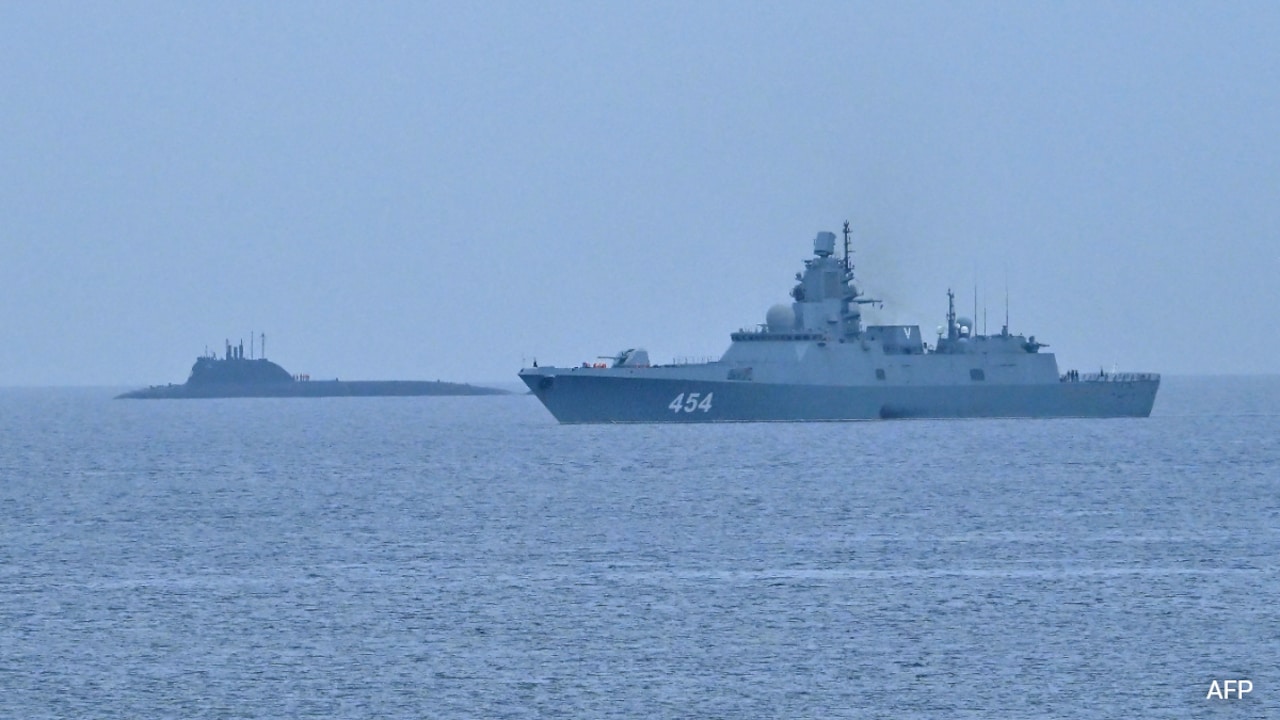
Imagine the sudden shift from peaceful, damp silence to the metal-tearing roar of small arms fire. At 11:40 a.m., the crew of the Bright Future heard the unmistakable crack of weapons cutting through the fog. The shots came from the Admiral Grigorovich, a heavily armed, 125-meter Russian naval frigate. The bullets did not strike the fiberglass hull. They skipped across the grey swells of the English Channel, landing roughly five hundred yards across the yacht’s bow.
Fear. It is a physical weight in the chest when you realize you are a speck of wood and cloth sitting next to 4,000 tons of hostile military steel.
The Admiral Grigorovich had been issuing warnings. The Russian Defense Ministry later claimed they fired signal rockets and sound signals to warn off a vessel on a dangerous, close-proximity course. But sound plays tricks in the fog. To a motorless yacht floating aimlessly, a radio call or a distant siren can easily be swallowed by the mist until it is too late. When the distance shrank to just 150 meters, the Russian captain, twitchy and running on high alert, did what Russian captains are trained to do. He escalated.
Geopolitics feels abstract when you read about it in the morning papers. It feels like a chess match played by politicians in distant, well-heated rooms. But geopolitics is ultimately an accumulation of human friction. It is a collection of young, exhausted sailors staring at radar screens, waiting for a spark.
To understand why a Russian frigate was lingering so close to the British coast in the first place, you have to look beneath the surface of the global economy. The Admiral Grigorovich was not on a standard patrol. For months, she had been operating as an armed escort for Moscow’s shadow fleet—a loose, deceptive armada of more than seven hundred aging oil tankers used to smuggle Russian crude past Western sanctions.
Just forty-eight hours before the shots cut through the fog, British Royal Marine commandos had rappelled onto one of those very tankers, the Smyrtos, seizing it in the first aggressive UK enforcement action of its kind. The Channel was already a tinderbox. The Russian crew on the frigate were expecting a fight. They were looking for threats in every shadow, every radar blip, and every drifting pleasure boat.
Naval experts later stressed that this was an isolated incident, a product of bad visibility and a motorless boat rather than an act of direct military retaliation for the Smyrtos. But the distinction matters very little when you are the civilian on the receiving end of live ammunition.
The Royal Navy was watching. HMS Mersey, a British offshore patrol vessel, had been shadowing the Russian frigate’s every move from a cautious distance. As soon as the reports of gunfire rippled across the radio waves, a sister ship, HMS Tyne, dispatched a rigid-hulled inflatable seaboat to intercept the Bright Future.
When the British sailors boarded the yacht to check on the passengers and gather details, they found a crew shaken but physically unharmed. There was no blood. There were no bullet holes to patch. The yacht eventually caught a breath of wind or a tow, turning her bow toward the coast of Normandy, continuing a journey that had accidentally taken her to the edge of an undeclared war.
The Bright Future escaped into the French haze, but she left behind an unsettling truth. The English Channel is one of the busiest shipping lanes on the planet, a maritime highway used by ferries, cargo ships, and weekend hobbyists alike. It is a space built for commerce and leisure, now being choked by the quiet, creeping machinery of global conflict.
We often treat international waters as a blank space on a map where the rules of normal life suspend. We assume that because the land is out of sight, the danger is too. But as the fog lifted over the Channel on Tuesday afternoon, it revealed a landscape where the margins for error have vanished entirely. A simple shift in the wind is no longer just a nuisance for a sailor. It can be the exact variable that carries an innocent civilian past an invisible line, into the path of a bullet.