The rain outside the laboratory in Shenzhen hits the reinforced glass with a rhythmic, impatient drumbeat. Inside, Dr. Chen holds a small vial between his thumb and forefinger. It looks like dirty water. It smells faintly of sulfur and stale air. But to the man who spent twelve years watching the electronics industry choke on its own ambition, this vial represents an escape hatch.
We live inside our devices. They are glued to our palms, glowing on our nightstands, humming quietly in our cars. We treat them like infinite extensions of our thoughts, forgetting the violent extraction required to give them birth. Every lithium-ion battery that makes modern life possible begins in a scar on the earth. Salt flats in Chile pumped dry until the water table collapses. Open-pit mines in Australia gouged into the ancient crust.
For decades, the story of green technology has been written in blood and dirt. We told ourselves that burning less carbon justified tearing up more ground. We looked away from the tailing ponds—vast, toxic lakes of mining waste where discarded acids and heavy metals settle into heavy, poisonous mud.
Then came the shift.
Consider what happens when a factory grinds down thousands of spent electric vehicle batteries. The valuable cobalt and nickel get stripped out first; they are expensive, fiercely guarded commodities. But what remains—the sludge, the wash-waters, the lithium-laced refuse that cannot be economically coaxed into a reusable state—usually gets pumped into containment sites. It is write-off material. Industrial ghosts.
Until now.
In laboratories across the globe, a quiet alchemy is rewriting the rules of material science. Researchers have begun treating industrial waste not as an ending, but as a dense, untapped deposit. By introducing selective chemical ligands—molecular cages designed to hunt down specific ions—they can snatch lithium molecules out of wastewater streams that were previously written off as dead.
It is an awkward truth of our industrial age: we are remarkably bad at keeping track of what we throw away. We mine the pristine mountains while letting the garbage heaps sit richer than the original ore.
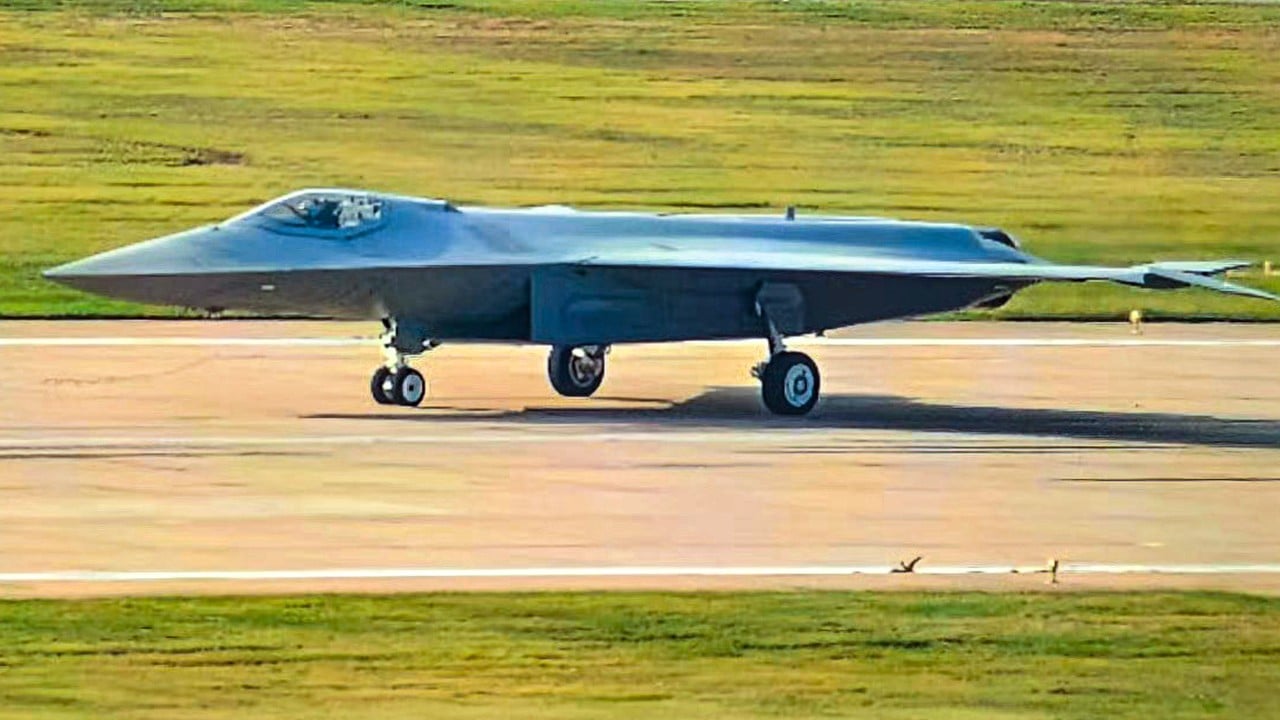
This technological pivot arrives at a moment of profound geopolitical tension. Far above the chemical plants, in the high-altitude testing corridors where aerodynamics meet national anxiety, another invisible battle is unfolding. Stealth fighters—those angular, carbon-composite ghosts engineered to evade radar beams—depend on microscopic precision. Their skin is not merely painted; it is layered with radar-absorbent materials, specialized polymers, and rare earth elements that bend electromagnetic waves around the fuselage like water parting around a stone.
When a nation secures its supply chain for critical minerals, it is not merely keeping factories running. It is buying sovereignty.
Think about the radar cross-section of a modern aircraft. It is measured not in meters, but in square centimeters. A bird looks larger on a screen than a fifth-generation fighter jet. To achieve this illusion of nonexistence, engineers rely on materials that are shockingly fragile to source. A single missing component from a restricted supply chain can stall an entire fleet.
This is why the breakthrough in lithium waste recovery matters so deeply. It bridges the gap between ecological survival and strategic independence. When you can pull battery-grade lithium out of an abandoned factory's drainage ditch, you stop begging foreign nations for the keys to your own defense.
You become autonomous.
Yet, the human cost of this transition remains stubbornly anchored in reality. Chemistry does not care about our political rhetoric. It requires precision, immense energy, and absolute chemical control.
I remember visiting a recycling facility in the rust belt three years ago. The air tasted of copper and burning dust. The workers wore heavy respirators, their faces obscured by plastic shields as they fed crushed electronics into industrial shredders. There was no poetry in the room. Just the deafening roar of machinery and the slow, grinding realization that we are buried waist-deep in the wreckage of our own convenience.
The engineers working on mineral extraction from waste are trying to change that ambient misery. They want to turn the shredder into a loop.
Imagine a closed circuit where nothing is truly lost. The phone in your pocket today becomes the electric car of tomorrow, which eventually becomes the raw material for a clean-energy grid, which ultimately cycles back into the stealth components defending the airspace above you. It is a tight, unbroken circle.
We are not there yet.
Scaling these laboratory triumphs to industrial volumes is a nightmare of engineering economics. It is cheaper, for now, to rip new earth open than to clean up the old mess. Corporations look at the balance sheets, see the high capital expenditure of advanced filtration systems, and hesitate.
That hesitation is a luxury we are running out of time to afford.
The earth has finite boundaries. Every ton of lithium pulled from a pristine salt flat leaves a permanent mark on an indigenous community’s water supply. Every discarded battery left to leach into a landfill is a failure of imagination.
The science highlights we celebrate this year—whether they involve radical new ways to harvest critical minerals or advances in aerospace materials science—point toward a single, unavoidable realization. The future will not be built by finding new places to conquer. It will be built by learning how to salvage what we have already abandoned.
Dr. Chen sets the glass vial back down on the steel workbench. The liquid inside swirls, catches the fluorescent light, and settles into absolute stillness. Outside, the rain in Shenzhen begins to ease, leaving behind the wet, heavy scent of a city holding its breath, waiting to see if we can fix our mistakes before they swallow us whole.


