The cardamom coffee was still hot when the sky cracked open.
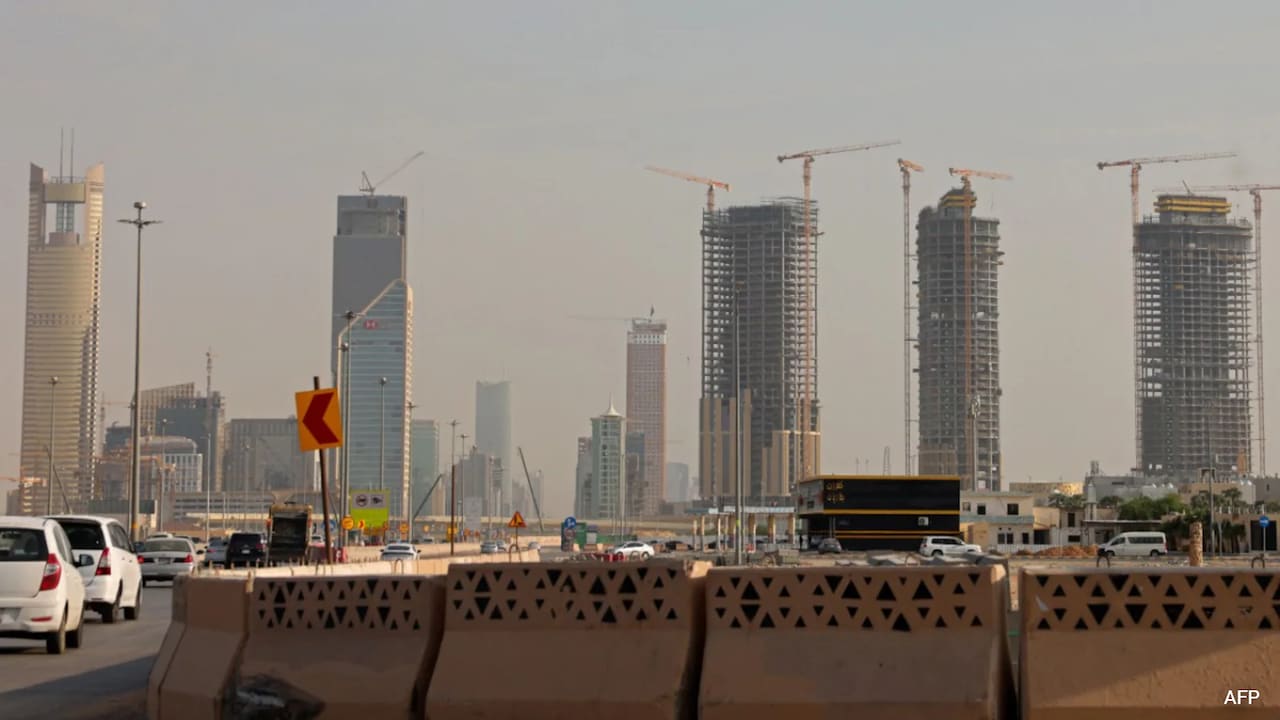
Picture a hypothetical Tuesday night in Riyadh. Let’s call our protagonist Tariq, a thirty-four-year-old structural engineer sitting on the tiled balcony of his fourth-floor apartment in the Al Olaya district. Below him, the King Fahd Road is a river of white headlights and red taillights, flowing past gleaming glass towers that look like they belong in a science-fiction film. It is 11:42 PM. The desert heat has finally broken into a mild, dry breeze. Tariq is scrolling through blueprints on his tablet, thinking about concrete load capacities and the weekend ahead.
Then comes the sound.
It is not the rumble of distant thunder—rain is a rare, celebrated guest in the Najd plateau. It is a sharp, tearing crack, followed by a deep, percussive thud that vibrates in the fillings of Tariq’s teeth and rattles the glass balustrade beside his elbow. He looks up. High above the neon glow of the Kingdom Centre, a brief, violent bloom of orange light flares against the velvet black of the Arabian sky, trailing a faint ribbon of white smoke before dissolving into nothing.
Six hundred miles to the southwest, in the rugged, mountainous borderlands of Jazan, another sound echoes through the night. A farmer—let’s call him Mansour, tending to his terrace crops in the cool mountain air—hears the familiar, terrifying shriek of an incoming ballistic projectile, followed seconds later by the roar of an interceptor climbing to meet it.
By morning, the global wire services will reduce Tariq’s spilled coffee and Mansour’s pounding heart into fourteen words of sterile, bureaucratic prose. Saudi Coalition Says Intercepted Drone Over Riyadh, Missile In South.
Fourteen words. Read them again. They are accurate, verified, and completely devoid of a pulse. When we consume news through the cold filter of military communiqués, we lose sight of what those interceptions actually represent. We forget the physics of the terror, the staggering asymmetry of modern warfare, and the quiet, exhausting psychological toll of living beneath an invisible shield that can never afford to miss once.
The Anatomy of a Modern Shadow
To understand what happened in the dark over Riyadh and the southern border, you have to strip away the military jargon and look at the mechanics of the threat. When the Arab Coalition reports the interception of an explosive-laden drone over the capital and a ballistic missile in the south, they are describing two entirely different beasts operating in the same ecosystem of conflict.
Think of a ballistic missile—like the ones frequently launched toward southern cities such as Khamis Mushait, Najran, or Jazan—as a heavy, brutal sledgehammer. Fired from hundreds of miles away, often from modified Soviet-era stockpiles or smuggled components assembled in Yemen, it arcs high into the upper atmosphere before plunging back toward earth at several times the speed of sound. It relies on raw kinetic energy and gravity. You have minutes, sometimes mere seconds, to calculate its trajectory, launch a counter-missile, and collide with a speeding bullet using another speeding bullet.
Now, think of the explosive-laden drone—the unmanned aerial vehicle, or UAV—as a persistent, low-flying wasp.
These are not the massive, multi-million-dollar reconnaissance aircraft you see in Hollywood movies. Many of the drones used in attacks against Saudi infrastructure and urban centers are delta-winged craft, like the Qasef or Samad series, built with fiberglass bodies, commercially available navigation electronics, and small combustion engines that sound like flying lawnmowers. They fly low to the ground, hugging the contours of the desert to slip beneath traditional radar horizons. They cost a fraction of the price of a luxury sedan, yet they carry warheads packed with high explosives and ball bearings designed to shred soft targets.
I still remember the first time I stood near a window in Riyadh during an interception several years ago. You don't process it intellectually at first; your nervous system reacts before your brain catches up. Your chest tightens. You instinctively step back from the glass, realizing that the thin pane separating your living room from the night sky is suddenly the most fragile thing in the world. Then, almost immediately, the city goes right back to what it was doing. Cars keep moving. Cafes stay open. People check their phones, confirm everyone is safe, and finish their conversations. That resilience is breathtaking, yet it masks a profound, simmering tension.
The Asymmetric Math of the Night Sky
Consider what happens next in the control rooms of the Royal Saudi Air Defense Forces.
While Tariq is drinking his coffee and Mansour is checking his irrigation lines, rows of operators are staring at phosphor-green and high-definition radar screens in darkened bunkers. Their job is governed by one of the cruelest equations in modern geopolitics: the cost-exchange ratio.
It costs an insurgent group roughly ten to twenty thousand dollars to assemble a long-range attack drone using off-the-shelf microchips, a GPS module, and a small engine. To shoot that drone down before it hits a crowded shopping mall, an airport runway, or a desalination plant, the defending military often has to fire a Patriot PAC-3 interceptor missile or deploy an F-15 fighter jet. A single Patriot interceptor costs roughly three to four million dollars.
Read those numbers again. Twenty thousand dollars versus four million dollars.
This is the invisible economic war happening every time a headline casually mentions an "intercepted drone." The attacker does not even need to hit their target to score a strategic victory. If they can force a nation to burn through millions of dollars in high-end munitions to swat down cheap plywood-and-fiberglass craft, they are bleeding the defender's treasury while keeping millions of civilians on edge.
Yet, what is the alternative? You cannot put a price tag on a residential neighborhood in Riyadh. You cannot calculate the cost-effectiveness of protecting a school in Jazan. When a warhead is heading toward a city of seven million people, the math stops being financial and becomes purely moral. You fire the four-million-dollar missile, every single time, without hesitation.
Why the South Bears the Brunt
If you look at a map of the Arabian Peninsula, the geography tells a story that press releases rarely capture. Riyadh sits roughly six hundred miles northeast of the Yemeni border, shielded by vast stretches of the Empty Quarter and the central plateau. For a drone or missile to reach the capital, it has to travel the distance from Washington, D.C. to Chicago, crossing layers of early-warning radar, airborne surveillance, and ground-based batteries. By the time a threat reaches Riyadh’s airspace, it has run a gauntlet.
The southern provinces—Jazan, Asir, Najran—have no such buffer.
They sit right on the seam of the conflict. In towns like Jazan, on the Red Sea coast, or Abha, perched high in the misty Sarawat mountains, the warning time isn't measured in ten-minute intervals. It is measured in heartbeats. Residents there have lived for years with the reality that a routine trip to the grocery store or an evening walk in the park can be interrupted by air-raid sirens.
Over the past decade, hundreds of ballistic missiles and over a thousand explosive-laden drones have been launched across that southern border. Most are intercepted. Some are not. When debris falls—even from a successful interception—gravity still demands its due. Twisted, jagged chunks of steel and unspent fuel plummet from thirty thousand feet, crashing through roofs, smashing parked cars, and occasionally wounding or killing innocent bystanders who had nothing to do with regional power struggles.
The Architecture of Calm
It is easy, from thousands of miles away, to view these events as distant geopolitical chess moves. Analysts debate proxy warfare, regional deterrence, and diplomatic backchannels in clean, well-lit television studios. They talk about ceasefires, de-escalation frameworks, and maritime security in the Red Sea.
And yes, those diplomatic threads matter immensely. Behind the scenes of every military interception is a frantic web of backchannel negotiations—efforts to turn a fragile truce into a lasting peace, to stabilize borders, and to shift the region’s focus from defense budgets to economic transformation. Saudi Arabia’s massive push toward Vision 2030, with its multi-billion-dollar investments in tourism, green energy, and global commerce, depends entirely on one foundational requirement: absolute, unquestioned security. Investors do not build resorts on the Red Sea coast, and tech companies do not open regional headquarters in Riyadh, if the sky isn't safe.
Which brings us to the strangest paradox of living in the Gulf today.
If you were to walk through Riyadh the morning after an interception, you would not see panic. You would not see boarded-up windows or empty streets. You would see construction cranes swinging steel beams into place against a bright blue sky. You would see families strolling through Boulevard City, baristas pulling espresso shots in minimalist cafes, and students rushing to university lectures.
Is that calm a sign of denial, or is it a triumph of trust?
I used to think it was denial. When I first experienced the surreal contrast of hearing an explosion at midnight and seeing traffic jams at 8:00 AM the next morning, it felt bizarre, almost eerie—as if an entire metropolis had collectively agreed to ignore the elephant in the room.
Then I realized I had it backward.
The calm isn't born from ignoring the threat; it is born from an extraordinary faith in the shield overhead. Over years of relentless testing, the air defense network protecting Saudi cities has achieved one of the highest operational interception rates in modern military history. People go back to their coffee because, time and time again, the flash in the sky stays in the sky. The thunder remains distant. The shield holds.
What the Wire Reports Miss
Still, trust does not erase the human weight of the night watch.
Somewhere in a radar facility outside Riyadh, a twenty-six-year-old lieutenant is ending a twelve-hour shift. His eyes are dry from staring at telemetry tracks. His coffee went cold hours ago. When he walks out into the bright morning sunlight, nobody on the highway knows his name, and nobody knows that at 11:42 PM the night before, his finger hovered over a console that kept a neighborhood intact.
Somewhere in the mountains of Jazan, Mansour walks out to his fields at dawn, scanning the red soil for any stray fragments of metal before letting his children walk down the road to school.
And back in Al Olaya, Tariq rinses his coffee cup, picks up his tablet, and heads out the door to build a tower that reaches toward the very sky that flared orange the night before.
The wire services will always give us the dry ledger of conflict: one drone intercepted, one missile destroyed, zero casualties reported. Those facts are the skeleton of the news. They tell us what happened.
They just never tell us what it feels like to stand beneath the flash, hold your breath for three long seconds, and listen for the silence that proves you are safe.


