The sting hits the eyes first. It is a sharp, chemical bite that makes the eyelids heavy and forces a tear down the cheek. Then comes the weight in the chest. For anyone who has sat in a small, unventilated kitchen in rural Kenya or Uganda while dinner is being prepared, this is not an abstract environmental concern. It is a physical assault.
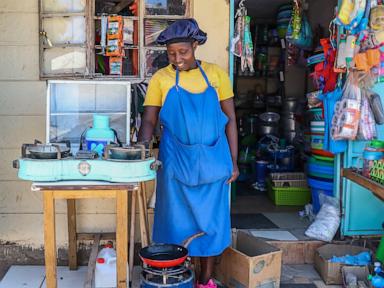
Consider a hypothetical but entirely typical morning for a woman named Amina. She wakes up at dawn in a small village outside Nairobi. Her first task is not checking a smartphone or turning on a kettle. It is gathering firewood, or checking if she has enough charcoal to last the day. She lights the open fire inside her home, and within minutes, the air becomes thick with a grey, suffocating haze. To cook a simple pot of beans, Amina will inhale a concentration of particulate matter that rival the most polluted industrial cities on earth.
She does this every day. Her children sit beside her, breathing the exact same air.
We often talk about energy crises in terms of grid collapses, soaring oil prices, or global shipping bottlenecks. But for nearly one billion people across Africa, the true energy crisis is intimate, domestic, and lethal. It happens three times a day at the cookstove.
According to data compiled by the International Energy Agency (IEA), roughly 850,000 people die prematurely every single year across the African continent due to illnesses directly caused by polluting cooking fuels. That is more than the annual death toll of malaria. It affects women and children disproportionately, trapping generations in a cycle of respiratory illness, lost time, and environmental degradation.
The tragedy is that the world has possessed the technology to solve this for decades. We know how to build clean bioethanol stoves, biogas digesters, and efficient electric or liquefied petroleum gas (LPG) infrastructure. What has been missing is not the engineering, but the political will and the cold, hard cash required to scale it.
But a massive, quiet shift in global finance is beginning to alter that reality.
The Price of Breathing
During a high-level virtual gathering convened by the IEA and the government of Kenya, global leaders announced $900 million in brand-new financial commitments dedicated entirely to expanding clean cooking access across Africa.
To understand why this matters, you have to look at the math of global development. For years, clean cooking was treated as a marginal issue—a footnote in climate reports or a small-scale charity initiative. In 2024, that narrative fractured when an inaugural summit in Paris mobilized an unprecedented $2.2 billion in public and private capital.
Skeptics whispered that international pledges are cheap, that grand announcements in European capitals rarely translate to actual change on the ground. But the latest IEA tracking data reveals that over $740 million of that original Paris funding has already been actively deployed across 22 African nations. Stoves are being bought. Infrastructure is being built.
This new $900 million injection pushes the total global commitment past the $3.1 billion mark.
Consider what that money actually buys. It isn't just about handing out a new gadget. It is about subsidizing the initial cost of low-emission stoves so a family living on a few dollars a day can actually afford them. It is about building the supply chains so that bioethanol or LPG is consistently available, even in remote communities.
When you change how a household cooks, you trigger a massive economic chain reaction.
Right now, a woman collecting firewood can spend up to twenty hours a week just searching for fuel or burning money on expensive charcoal. When she switches to a clean cookstove, those hours are suddenly returned to her. That is time that can be spent running a small business, learning a trade, or ensuring her children stay in school.
The Geopolitics of the Kitchen
But fixing this problem is not as simple as writing a check and shipping containers of equipment. The global energy market is volatile, and the systems that keep clean fuel moving are surprisingly fragile.
Consider what happened earlier this year. Shipping disruptions through the Strait of Hormuz choked off supplies and impacted roughly 30% of globally traded LPG. For a family in a developing nation that had recently transitioned away from charcoal, a spike in global gas prices or a sudden supply shortage means one terrifying thing: a forced return to the smoky fire and the toxic haze. Over 3.4 billion people worldwide rely on LPG as their primary cooking fuel, making fuel security a matter of national survival.
To combat this vulnerability, the IEA used the recent summit meeting to launch a new public-private initiative called the Clean Cooking Security Programme. The goal is to build resilience directly into the supply chains, ensuring that when a country commits to clean energy, its citizens aren't left stranded by geopolitical tremors halfway across the world.
Simultaneously, policy is finally catching up to the money. Since the Paris summit, governments have introduced 121 new clean cooking policies across more than 30 African nations. These are the regulatory frameworks that eliminate import duties on clean stoves, set safety standards for canisters, and incentivize local production. These 30 nations represent 80% of the population currently living without clean energy access.
Moving the Margins
For a long time, international climate policy suffered from a profound blind spot. It focused heavily on massive solar farms and electric vehicle grids while ignoring the billions of small fires burning in mud-walled kitchens.
As Norwegian Prime Minister Jonas Gahr Støre noted during the summit, clean cooking has historically been one of the most underfunded opportunities in global development. The technology exists. The economic case is undeniable. The moral imperative is stark.
The goal now is to reach one billion people. It is a staggering number, the kind of statistic that causes human empathy to short-circuit because it is too large to comprehend.
But that one billion is made up of individual lives. It is Amina, standing in a kitchen that no longer burns her eyes. It is her children, growing up with lungs that aren't scarred by carbon monoxide before they hit puberty.
The momentum is real, but the true test lies in the execution over the next several years. Ambition is a beautiful sentiment, but it must be bought and paid for. With $900 million more on the table, the world is finally treating the smoke in the kitchen like the emergency it has always been.
The fire is changing. The air is slowly clearing.