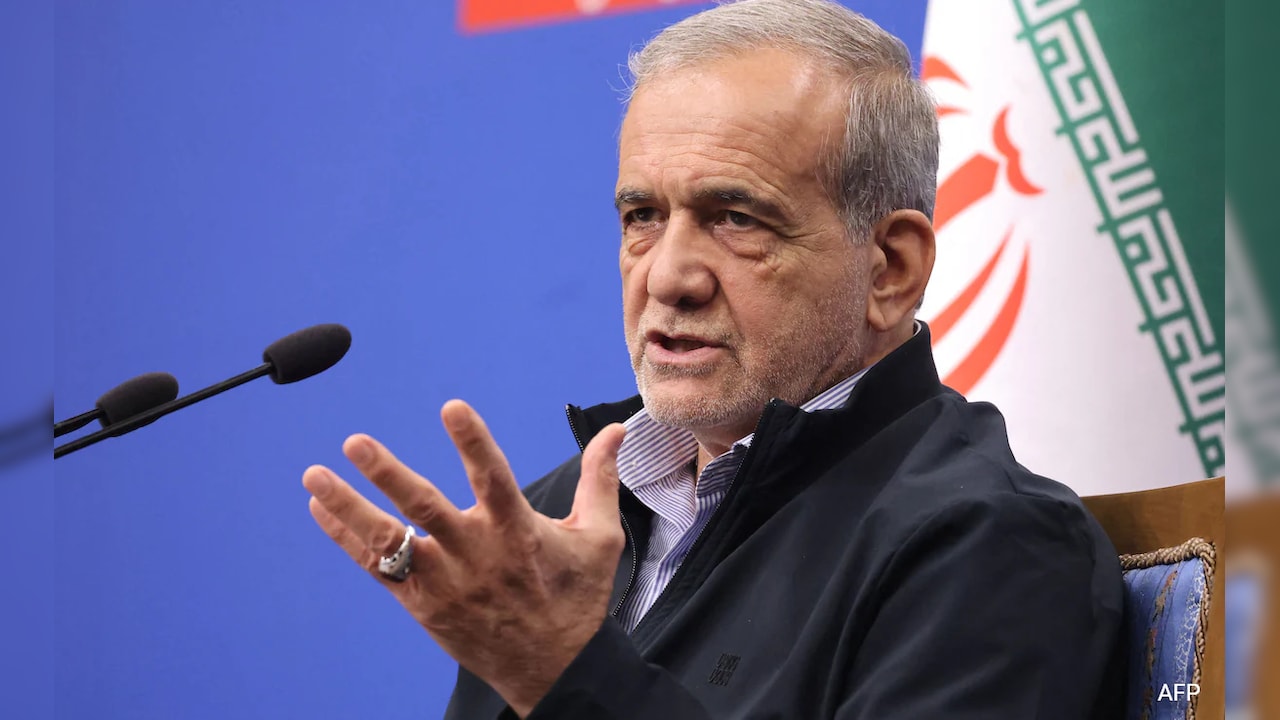
Iranian President Masoud Pezeshkian declared talks with the United States meaningless in October 2026, arguing that Washington and its allies repeatedly struck Iran immediately after diplomatic engagements. The assertion goes straight to the core of the current Middle East crisis: whether diplomatic channels between Tehran and Washington can survive when military force follows negotiation.
Surface wire dispatches treat Pezeshkian’s remarks as a routine rhetorical flare-up. They quote his complaint about three post-talk attacks, note his accusation that Washington seeks regime change through assassinations and sanctions, and move on. That misses the structural trap both capitals have built for themselves.
How Diplomacy Turned Into a Pretext for Force
Look closely at the sequence Pezeshkian described in Tehran on October 5, 2026. According to Iranian state media and wire accounts, Pezeshkian said that every time Tehran came to the table, war was immediately imposed on the country. He pointed to three rounds of attacks following dialogue, including the opening wave of US and Israeli strikes in late February 2026 that began the broader regional war while nuclear negotiations were underway.
Diplomacy is supposed to lower the temperature so politicians can bargain without looking weak. Here, the opposite happened. Talks became a cover for surprise military action, or at least were perceived that way in Tehran. Once a leadership group believes negotiations are either a trap or a smokescreen, sitting down at a table stops being a sign of flexibility and starts looking like strategic malpractice.
In Washington, the logic runs along a parallel track of mutual distrust. US President Donald Trump has publicly doubted whether lasting peace with Iran is possible, while signaling at moments that productive discussions exist or that military strikes are off the table ahead of US midterm elections. Mixed signals from the top of the American system make it hard for Iranian officials to tell whether a diplomatic opening reflects real policy or temporary political calculation.
The Domestic Math Behind Pezeshkian’s Hard Line
Pezeshkian entered office with a reputation as a relative pragmatist on engagement. By October 2026, his public posture sounded closer to hardline exhaustion.
Why the shift? Three pressures converge inside Tehran.
First is credibility inside the establishment. When military strikes follow diplomatic overtures, hardliners in Tehran’s security apparatus gain immediate vindication. Any president who defends talks after three post-dialogue attacks risks looking naive or isolated from the institutions that actually control missiles, air defenses, and regional militias.
Second is the narrative of existential threat. Pezeshkian explicitly tied his rejection of talks to what he described as an American objective to overthrow the Iranian system, citing targeted killings, sanctions, and broken commitments. Framing the conflict as survival rather than a technical dispute over enrichment levels narrows the room for compromise.
Third is regional realignment. Even while calling US dialogue pointless, Pezeshkian emphasized strengthening ties with neighboring states and claimed that external pressure had hardened internal unity. Whether domestic unity is as solid as Tehran claims is debatable, especially given severe internal unrest and heavy casualties reported earlier in 2026. Yet for a government under strain, blaming external adversaries is the fastest way to rally supporters and silence domestic critics.
What the Market and Maritime Chokepoints Reveal
Diplomacy does not fail in a vacuum. It fails inside an economy and a shipping corridor where every miscalculation carries an immediate price tag.
Since the war erupted in February 2026, crude oil markets have repriced risk sharply. Brent crude climbed above $100 per barrel in early October 2026, up from roughly $70 per barrel at the start of the year. The Strait of Hormuz has been effectively closed to Iranian exports, with international transit contested and maritime security frayed off Oman and across the wider Gulf.
Traders watched Pezeshkian’s October 5 remarks closely because rhetoric in this conflict often precedes either a fresh strike or a formal freeze in backchannel contacts. Even when Washington dialed back some overt military operations or announced coordinated G7 and International Energy Agency strategic reserve releases of 100 million barrels to cushion supply, physical bottlenecks and war-risk insurance kept energy markets on edge.
Consider a hypothetical example of how fragile this equilibrium is. Imagine a Gulf shipping insurer raising premiums again after a projectile hits a tanker near Oman, prompting an Asian refiner to divert cargoes through longer routes while Tehran insists it will not move enriched uranium abroad. Neither capital needs to declare a new offensive for prices and tensions to spike. The absence of a trusted channel turns every incident into a potential catalyst.
Why Standard Diplomatic Fixes Keep Stalling
When talks collapse, standard commentary usually calls for better mediation—Qatar, Oman, European capitals, or UNGA sideline meetings. Mediators have tried. Qatar and other regional actors have pushed for de-escalation and talks in venues like Doha, while proposals have circulated around diluting 60 percent enriched uranium or setting conditions to reopen the Strait of Hormuz.
None of those mechanisms solve the core verification and trust deficit.
| Obstacle | Tehran’s View | Washington’s View | Practical Consequence |
|---|---|---|---|
| Sequence of Action | Attacks have followed talks three times, proving bad faith. | Diplomacy cannot reward coercion or ongoing aggression. | Ceasefire and talk sequencing deadlocks. |
| Nuclear and Missile Limits | Rejects moving enriched uranium out of Iran. | Demands strict limits and credible enforcement. | Technical talks stall before drafting text. |
| Maritime Security | Links Strait of Hormuz reopening to US concessions. | Views transit freedom as non-negotiable. | Shipping risk remains elevated. |
| Political Timing | Domestic survival overrides tactical concessions. | Election cycles and domestic politics shape restraint. | Commitments look temporary to the other side. |
Notice what is missing from most proposals: a mechanism that separates immediate crisis management from grand political settlement. Trying to resolve regime survival, sanctions, regional proxies, and nuclear enrichment in a single package guarantees failure when neither side trusts the other’s word.
The Counter-Argument Nobody Wants to Admit
There is a hard counter-argument to Pezeshkian’s claim that talks are pointless. Critics of Tehran argue that Iran’s leadership has spent decades treating negotiations as a way to buy time, preserve core capabilities, and extract sanctions relief without abandoning its regional posture. From that vantage point, Washington’s strikes were not a rejection of diplomacy itself, but a reaction to what US officials saw as bad-faith bargaining backed by force.
Both narratives can be internally coherent and still lead to disaster. If Tehran believes talks invite bombardment, and Washington believes talks without military pressure invite stalling, neither side has an incentive to make the first real concession.
What happens next depends less on speeches in Tehran or social media posts in Washington than on whether third parties can construct narrow, verifiable guardrails around shipping and nuclear thresholds. Until a limited agreement survives a single crisis without gunfire, Pezeshkian’s verdict—that dialogue is pointless—will remain the default rule of the conflict.