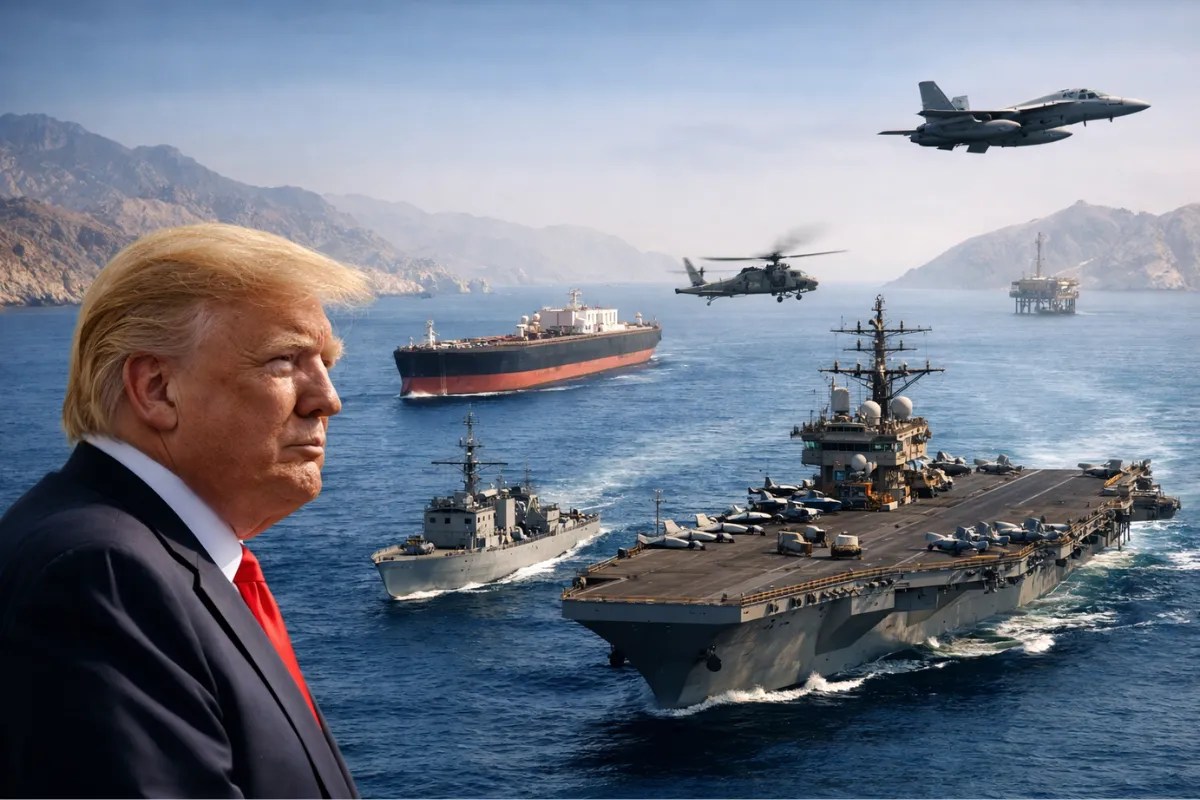
Donald Trump isn't exactly known for subtle diplomacy, but the high-stakes drama unfolding in Islamabad right now is next-level even for him. While Vice President JD Vance sits across from Iranian negotiators in Pakistan, the U.S. military is busy "reloading" its deck. It's a classic "carrot and stick" move, but the stick is a massive carrier strike group and the carrot is a fragile ceasefire that could vanish by dinner time.
If you're wondering why Islamabad is the center of the universe today, it's because the war that kicked off in late February has basically broken the global economy. Oil prices are through the roof because Iran has a literal chokehold on the Strait of Hormuz. Now, we're seeing the first face-to-face talks since 1979, and honestly, the tension is thick enough to cut with a knife.
Why Islamabad is the stage for this showdown
Pakistan hasn't just been a host; they’ve been the primary glue holding this together. Prime Minister Shehbaz Sharif and the Pakistani army chief managed to pull off a miracle by getting both sides to agree to a two-week pause. This wasn't some soft-hearted gesture. Both countries are hurting. Iran has taken a massive hit from U.S.-Israeli strikes, and the U.S. is facing a public that’s increasingly tired of "forever wars" in the Middle East.
The talks aren't just about stopping the bombs. Iran brought a 10-point plan to the table. They’re demanding $6 billion in frozen assets and compensation for the damage done to their infrastructure since February 28. But the real kicker? They want to keep a level of control over the Strait of Hormuz, including the right to charge "transit fees" for ships. Trump, unsurprisingly, has called that a non-starter.
The warship in the room
While the diplomats are talking peace, the USS Abraham Lincoln isn't exactly headed home. Trump has been very clear on Truth Social: the military is "hanging around" to make sure Iran behaves. He’s explicitly warned that if these Islamabad talks fail, the U.S. is ready to strike with "speed and violence."
It's a bizarre contrast. On one hand, you have JD Vance—who's historically been a skeptic of Middle Eastern intervention—trying to bridge a diplomatic gap. On the other, you have the Pentagon moving destroyers into the Strait of Hormuz to clear mines. The message is loud and clear: negotiate or face the fleet. Trump’s stated goal is 99% about nuclear weapons. He wants a guarantee that Iran will never have one, but Iran is using its current leverage—the shuttered oil route—to try and squeeze out concessions the U.S. usually wouldn't dream of giving.
What’s actually on the table
- The Hormuz Chokepoint: This is the biggest sticking point. Iran says they won't fully open it without sanctions relief. The U.S. says it’s an international waterway and they’ll clear it by force if they have to.
- The Nuclear Question: Trump wants a permanent "no-nuclear" deal. Iran wants guarantees that their civilian program won't be touched again.
- The Lebanon Factor: Israel is still striking Hezbollah targets in Lebanon, even while these talks are happening. Iran wants those strikes to stop as part of the package.
Don't expect a quick fix
Most people think a ceasefire means the war is over. It doesn't. A ceasefire is just a "pause" button. Right now, the U.S. has about 50,000 troops in the region. That’s the highest number since 2003. If the Islamabad talks break down, those troops aren't there for decoration.
The Iranian delegation is playing a dangerous game. They’ve lost thousands of people in the last six weeks, but they know that as long as the Strait is closed, they have a gun to the head of the global energy market. They're betting that Trump wants a "win" more than he wants a long, drawn-out conflict. But they might be miscalculating how much he's willing to escalate to get what he wants.
What you should watch for next
Forget the official press releases for a second. The real signal will be what happens in the water. If U.S. Navy destroyers start aggressively clearing mines without an agreement, expect Iran to react. If the "transit fee" idea gets even a hint of a "maybe" from the U.S. delegation, then you know the White House is getting desperate to end this before the oil shock causes a domestic recession.
The next 48 hours in Islamabad will determine if we’re heading toward a long-term peace or the largest naval battle of the 21st century. Keep an eye on the movement of the USS Gerald R. Ford in the Mediterranean. If it starts moving toward the Suez, the talks probably aren't going well.
If you're looking for a takeaway, it’s this: the ceasefire is a thin sheet of ice. Both sides are walking on it with heavy boots, and the warships are just waiting for the first crack.



