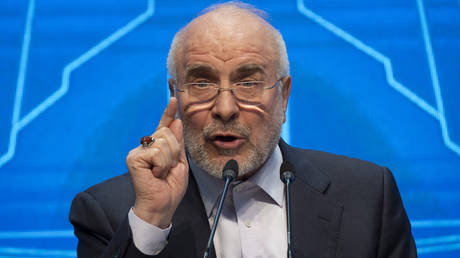
Donald Trump didn't just ruffle feathers during his time in the Oval Office. He fundamentally upended the way international diplomacy operates, specifically when it comes to the volatile relationship between Washington and Tehran. Recently, Iran’s top negotiator, Abbas Araghchi, claimed that Trump managed to pack seven distinct lies into a single hour of rhetoric regarding the Joint Comprehensive Plan of Action (JCPOA). While the "liar" label is a common political weapon, Araghchi’s specific breakdown offers a rare window into how the Iranian leadership perceives American reliability—or the lack thereof.
It's easy to dismiss this as mere propaganda from a hostile government. After all, the Iranian regime has its own complicated relationship with the truth. But if you look at the mechanics of the 2018 withdrawal from the nuclear deal, you see a massive disconnect between political messaging and technical reality. This isn't just about whether Trump told the truth. It's about the "trust deficit" that now makes any future negotiations almost impossible.
The Specific Claims That Broke the Deal
Araghchi pointed to several key assertions made by the Trump administration that, from the perspective of the Iranian negotiating team, were flat-out fabrications. The most prominent was the claim that Iran was not complying with the terms of the JCPOA. At the time, the International Atomic Energy Agency (IAEA) had issued multiple reports confirming that Tehran was indeed meeting its obligations.
When the U.S. executive branch contradicts the very international monitors it helped empower, it creates a vacuum. In that vacuum, facts become secondary to narrative. Trump argued that the deal was "decaying and rotten," suggesting that Iran would have a clear path to a nuclear weapon in a short period. Araghchi’s rebuttal is simple. The deal was designed to prevent that very path, and by walking away, the U.S. actually removed the guardrails that were working.
Think about the logic for a second. If you believe a contract is weak, you usually try to tighten it. You don't burn the contract and then wonder why the other party starts doing exactly what you feared. That’s the core of the Iranian frustration. They feel they played by the rules of a game only to have the referee flip the table because he didn't like the previous referee.
The Maximum Pressure Campaign Failed its Own Goals
We were told that "maximum pressure" would bring Iran back to the table for a "better deal." That didn't happen. Instead, we saw a significant escalation in enrichment levels. By 2024 and moving into 2026, the technical reality on the ground is far more advanced than it was during the JCPOA era.
The Iranian negotiator's focus on these "seven lies" is a tactical move. It's meant to signal to the rest of the world—specifically the EU, China, and Russia—that the United States is an "unreliable partner." This phrase has become a mantra in Tehran. When Trump claimed that Iran was a "failed state" or that the regime was on the verge of collapse due to sanctions, he was betting on a total surrender. He was wrong. The regime tightened its grip, pivoted its economy toward the East, and waited.
What the Seven Lies Reveal About Modern Statecraft
The accusations from Araghchi aren't just about counting falsehoods. They highlight a shift toward "post-truth" diplomacy. In the past, even enemies shared a basic set of facts. You might disagree on the solution, but you agreed on the problem. Now, the problem itself is a matter of partisan debate.
- The Verification Problem: Trump claimed the deal lacked "any" inspection rights for military sites. In reality, the "Additional Protocol" allowed for access under specific conditions.
- The Sunset Clauses: He often stated the deal would expire in a few years, ignoring the fact that certain bans, like the one on nuclear weapons themselves, were permanent under the Non-Proliferation Treaty.
- The Financial Narrative: The claim that the U.S. "gave" Iran $150 billion was a massive exaggeration of unfrozen Iranian assets, much of which was already tied up in debts.
When you're sitting across from a negotiator who uses these kinds of talking points, what do you do? You stop negotiating. You start preparing for a long-term siege. That's exactly what Iran did.
Why the World Isn't Buying the Narrative Anymore
The biggest mistake people make is thinking this is only about Trump and Iran. It's about how the rest of the world views American commitments. If a new president can simply tear up a multi-lateral agreement signed by his predecessor, why would any country take a risk on a long-term treaty with the U.S. again?
Middle powers in the Middle East, like Saudi Arabia and the UAE, have noticed this. They've started hedging their bets. They aren't just looking to Washington for security; they're talking to Beijing and Moscow. They saw the "seven lies" and the subsequent chaos as a sign that American foreign policy is too volatile to rely on for a twenty-year horizon.
The Reality of Enrichment in 2026
We have to be honest about where this leaves us now. Iran is enrichment-capable at levels that were unthinkable a decade ago. They've moved past 60% purity at sites like Fordow. The "lies" that Araghchi calls out served as the political cover for the U.S. to exit, but the consequence was that Iran felt "liberated" from its own commitments.
If you want to understand why there’s no new deal on the table today, don't look at the technical details of centrifuges. Look at the rhetoric. When one side feels the other side is fundamentally dishonest, the cost of the "first move" becomes too high. No Iranian politician wants to be the one who got fooled twice.
How to Move Past the Rhetoric
The only way forward is to move away from the "all or nothing" approach that characterized the Trump era. We need "small ball" diplomacy.
- Focus on de-escalation rather than grand bargains.
- Establish technical channels that exist outside the glare of presidential Twitter feeds or Truth Social posts.
- Acknowledge the domestic politics on both sides. Araghchi is playing to his base just as much as Trump was playing to his.
Stop expecting a "perfect" deal. It doesn't exist. The JCPOA was a compromise, and like all compromises, it was messy. But a messy deal that limits enrichment is better than a "perfect" sanctions regime that results in a nuclear-armed state.
Verify the facts yourself. Don't take a politician's word for it—whether they're in Washington or Tehran. Look at the IAEA reports. Look at the actual text of the agreements. The truth is usually found in the boring, technical annexes, not the sixty-minute speeches. Start by demanding transparency from both sides and stop rewarding the most extreme voices in the room. This isn't just about a past president's words; it's about whether we can ever trust each other enough to prevent a war. It’s time to get back to the table with a sober understanding of what’s actually possible.