You have probably heard about Pickaxe Mountain by now. President Donald Trump keeps mentioning it, warning that American bombers might target the secretive Iranian site soon. But what actually is this heavily fortified location, and why has it become such a massive flashpoint in the ongoing conflict?
Let's break it down without the political fluff.
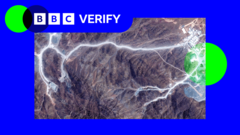
Known locally as Kuh-e Kolang Gaz La, Pickaxe Mountain is an underground complex situated roughly 140 miles south of Tehran. More importantly, it sits just over a mile away from the Natanz nuclear facility, which has taken direct hits during previous military exchanges between the U.S., Israel, and Iran.
The Origins of the Mountain Complex
Iran didn't just wake up and start digging yesterday. Construction at Pickaxe Mountain kicked off back in 2020.
Why then? An explosion had just ripped through an above-ground advanced centrifuge assembly plant at Natanz. Tehran blamed sabotage—widely attributed to Israel—and decided it needed to move its sensitive operations where prying eyes and conventional bombs couldn't easily reach them.
Iranian officials announced plans to carve a much larger, modern hall straight into the heart of the mountain. Years of satellite imagery have tracked steady construction, complete with reinforced tunnel entrances and newly completed security perimeters.
Why Trump Threatens to Bomb It
The tension flared up anew after intelligence assessments suggested Tehran might have moved thousands of uranium-enrichment centrifuges into the mountain.
Centrifuges are the spinning tubes required to enrich uranium gas for nuclear fuel or weapons. While international watchdogs and U.S. officials note there is no public proof the site is fully operational yet, the mere possibility has Washington on high alert.
Trump made his stance clear during Oval Office remarks and podcast appearances, vowing to hit any site attempting to reconstitute Iran's nuclear program.
The Hard Reality of Targeting Pickaxe Mountain
Bombing a mountain sounds simple in a press conference. In reality, it's a military nightmare.
Experts estimate that the underground facility sits buried roughly 260 to 330 feet—some estimates say up to 450 feet—beneath solid granite rock.
Even America's heaviest conventional bunker-buster, the GBU-57, is designed to plow through around 200 feet of earth. Granite is a different beast entirely. Hitting a target buried that deep might require consecutive strikes, specialized ground operations, or targeted attacks on ventilation shafts and tunnel portals rather than the mountain itself.
Iran's military command has already warned that any strike on Pickaxe Mountain will trigger a severe regional escalation, drawing counter-threats aimed at allied infrastructure in the Persian Gulf.
Keep an eye on how intelligence agencies verify the contents of these tunnels. The rhetoric is loud, but the engineering challenge of neutralizing what lies beneath the granite will dictate what happens next.