Baghdad's criminal court didn't hesitate. When six more French citizens tied to the Islamic State stood before an Iraqi judge in late May 2023, the verdict came down fast—life in prison for every single one of them. Among those convicted was Thomas Barnouin, a longtime jihadist recruiter whose name had circulated in French intelligence files for nearly two decades.
Most Western news coverage treated this as just another courtroom update from the Middle East. That's a mistake. If you want to understand how Europe quietly outsourced its biggest post-ISIS security headache to Baghdad, this specific trial is the smoking gun.
The Baghdad Verdict and Who Thomas Barnouin Actually Is
Let's look at the actual facts of the case first. An Iraqi court handed down life sentences to six French nationals for belonging to the Islamic State group, bringing the total number of French citizens convicted in Iraq for ISIS membership to over a dozen. Under Iraqi penal code, a "life" sentence translates to 20 years behind bars—still a massive stretch inside some of the toughest detention facilities on the planet.
Thomas Barnouin wasn't some naive teenager who got radicalized on YouTube in 2014. He's a veteran operative. Born in 1981 in Albi, southern France, Barnouin converted to Islam as a young man and quickly plugged himself into the Artigat network, a notorious radical cell in southwestern France led by Olivier Corel.
You might recognize the names connected to that exact circle. Fabien and Jean-Michel Clain—the brothers who voiced the official ISIS audio claim for the November 2015 Paris attacks—came out of that same orbit. Mohammed Merah, who murdered seven people in Toulouse and Montauban in 2012, knew them too.
Barnouin's rap sheet stretches back way before the Syrian civil war even started.
- 2006: Iraqi authorities arrested him in Syria near the Iraqi border while he was trying to join al-Qaeda in Iraq.
- 2009: After being handed over to France, a Paris court sentenced him to five years in prison for criminal association in relation to a terrorist enterprise.
- 2014: Once released, he packed up his family and traveled to Syria to join the Islamic State, slipping past French surveillance.
- 2017: Kurdish-led Syrian Democratic Forces (SDF) captured him in eastern Syria alongside fellow French jihadist Romain Garnier as the territorial caliphate collapsed.
He didn't stumble into extremism. He spent fifteen years actively chasing it.
How Six French Citizens Ended Up in an Iraqi Courtroom
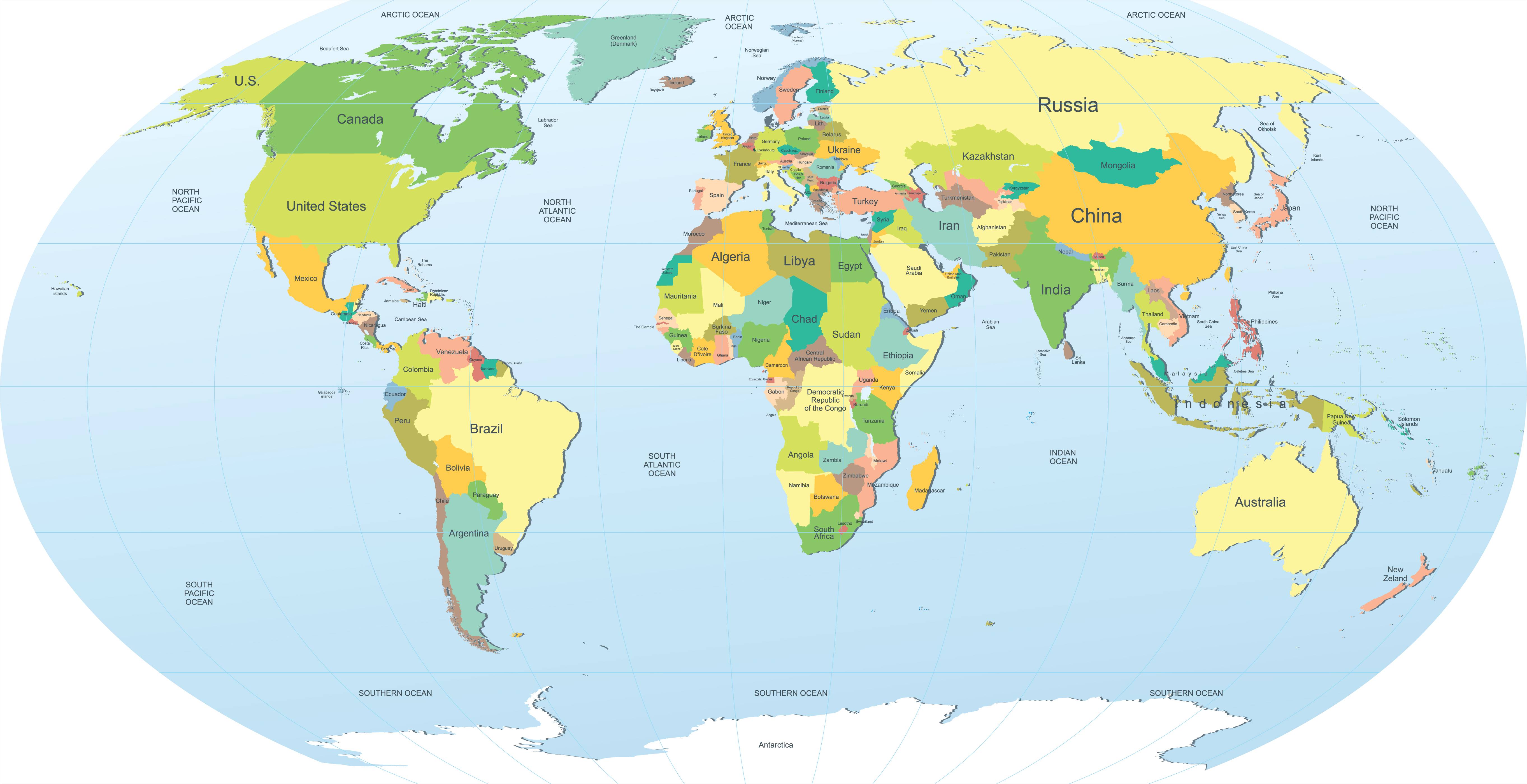
Here's the part that usually gets glossed over in quick news briefs. Barnouin and the other five men weren't even captured in Iraq. They were caught in Syria by the SDF, a U.S.-backed Kurdish militia that lacks the international legal standing of a sovereign state.
So how did they end up standing in a Baghdad dock under Iraq's 2005 anti-terrorism law?
In early 2019, as the last pockets of ISIS territory crumbled in Baghouz, Syria, the SDF transferred roughly a dozen high-profile French detainees across the border into Iraqi custody. Baghdad agreed to prosecute them, reportedly in exchange for financial and logistical backing from Western partners, though officials in Paris have always danced around the exact terms of those arrangements.
Think about the legal mechanics here. France officially opposes the death penalty everywhere in the world. It's written right into the French Constitution. Yet Paris repeatedly insisted that its adult citizens who joined ISIS should face justice "as close as possible to the place where their crimes were committed."
In plain English, France didn't want them back.
Bringing Barnouin and his associates home to face trial in Paris meant dealing with overcrowded prisons, expensive deradicalization programs, massive public backlash from terror victims' families, and the nightmare scenario of these men eventually walking free under French sentencing rules. Letting Baghdad handle the prosecution solved a domestic political crisis overnight.
Why Iraq Handed Down Life Sentences Instead of the Death Penalty
If you followed the earlier 2019 trials of French ISIS members in Baghdad, you might notice something surprising about the Barnouin verdict. In May and June 2019, an Iraqi court sentenced 11 French citizens—including Kevin Gonot, Leonard Lopez, and Salim Machou—to death by hanging under Article 4 of Iraq's counter-terrorism law.
Those death sentences triggered an immediate diplomatic firestorm. Human rights groups, French defense lawyers, and United Nations officials slammed the trials as rushed, pointing out that defendants had limited access to legal counsel and alleged that confessions were extracted under torture. President Emmanuel Macron had to publicly state that France opposed capital punishment even for its worst terrorists, quietly working behind the scenes to ensure those executions weren't carried out.
By the time Barnouin and the next group of six Frenchmen went on trial in 2023, the political calculus had shifted.
Iraq's judiciary still applied its strict anti-terrorism statute, which criminalizes mere membership in ISIS regardless of whether prosecutors can prove you pulled a trigger on Iraqi soil. However, handing down 20-year life sentences instead of death sentences achieved two things at once. It kept dangerous French operatives locked away far from European streets, and it spared Paris the diplomatic embarrassment of begging Baghdad not to hang French passport holders.
It was a pragmatic compromise. Nobody in Paris had to defend bringing Barnouin home, and nobody in Baghdad had to deal with European Union sanctions threats over executions.
The Human Rights Debate Nobody Wants to Touch
Let's be honest about the uncomfortable tension sitting right in the middle of this story. Two things can be true at the exact same time.
First, Thomas Barnouin and the men convicted alongside him voluntarily joined a genocidal death cult that enslaved Yazidis, beheaded journalists, and slaughtered thousands of innocent Iraqis and Syrians. Sympathy for them is virtually nonexistent, and understandably so.
Second, the Iraqi judicial process used to convict foreign ISIS suspects has serious, documented flaws. Organizations like Human Rights Watch and Amnesty International have monitored dozens of these trials in Baghdad and Nineveh. Their findings are blunt.
Hearings often last less than 15 or 20 minutes. Judges rely heavily on confessions signed during interrogations before defense lawyers are even allowed in the room. Court-appointed Iraqi attorneys frequently meet their clients for the first time minutes before the hearing starts, sometimes without a competent French translator present.
When Western democracies outsource terrorism trials to courts with lower due-process standards, they're making a deliberate trade-off. You get guaranteed convictions and long sentences without risking acquittals on technicalities back home. At the same time, you quietly undermine the exact rule-of-law principles that European governments claim to defend against extremism.
French lawyers representing the detainees' families have tried for years to force Paris to repatriate the men, arguing that France is violating international treaties against torture and unfair trials. French courts—and eventually the European Court of Human Rights—largely rejected forcing blanket repatriations for adult fighters, ruling that France doesn't exercise direct territorial control over Iraqi prisons or Syrian camps.
What This Means for the Remaining Foreign Fighters
Don't think this chapter is closed. Thousands of foreign ISIS detainees—including hundreds of Europeans—remain stuck in legal limbo across northeastern Syria in makeshift prisons run by the SDF.
The Kurdish authorities don't have the money, the court systems, or the international recognition to hold war crimes tribunals on their own. Meanwhile, security inside those detention facilities is fragile. In January 2022, ISIS fighters launched a massive assault on the Ghwayran prison in Hasakah, Syria, triggering ten days of brutal fighting that left hundreds dead and proved that the group's remnants are still capable of organized jailbreaks.
Iraq's willingness to prosecute foreign nationals like Barnouin created a template, even if it's a messy one. By absorbing transferred detainees and handing down long prison terms, Baghdad effectively became the holding cell for Europe's unwanted jihadists.
Still, relying on Iraq isn't a permanent fix. Iraq's own prison system is severely overcrowded, holding tens of thousands of domestic terrorism suspects in conditions that breed further radicalization. You can't lock hardened recruiters like Barnouin inside packed cellblocks for two decades and assume the problem disappears forever.
How to Track Ongoing ISIS Prosecution Cases
If you're researching counter-terrorism policy, European security, or international law, don't rely solely on wire headlines that only report the day of the verdict. Follow the primary documentation and legal filings that reveal how these transfers actually happen.
- Check European Court of Human Rights (ECHR) rulings. Look up cases filed against France regarding detainees in Syria and Iraq (such as H.F. and Others v. France) to see how European judges define a state's legal obligations toward its citizens abroad.
- Review Human Rights Watch and UNAMI reports. The United Nations Assistance Mission for Iraq publishes detailed monitoring reports on Iraqi counter-terrorism trials, breaking down conviction rates, sentencing trends, and procedural gaps.
- Monitor French National Anti-Terrorism Prosecutor (PNAT) announcements. While adult male fighters mostly stay in Iraq or Syria, France has selectively repatriated women and children from Syrian camps—and PNAT immediately indicts the adults upon arrival at French airports.
Watch what happens when those first 20-year Iraqi sentences begin nearing expiration in the late 2030s. That's when Paris will finally be forced to answer the question it has spent years avoiding—what happens when citizens like Barnouin walk out of an Iraqi prison gate with nowhere else to go.