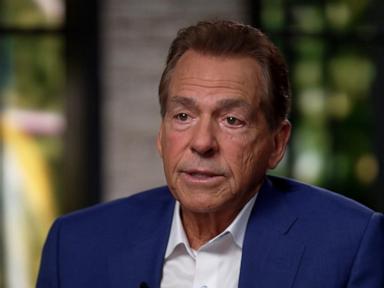
Aleksander Čeferin’s decision to reverse his earlier pledge and stand for a fourth term as UEFA president is less about unfinished administrative housekeeping and more about a calculated consolidation of continental power. Having previously insisted that European football needed fresh leadership beyond 2027, the Slovenian official bowed to what was termed a unanimous request from UEFA’s 55 national associations during a gathering in Berlin. This about-face exposes the deep institutional anxieties plaguing modern football politics, where stability is routinely prioritized over democratic renewal.
When Čeferin declared in early 2024 that he would step down, he painted himself as a defender of term limits, arguing that organizations grow stale when leaders overstay their welcome. That moral stance survived barely two years. The shifting winds of global sports geopolitics, persistent friction with FIFA, and the constant underlying threat of breakaway club tournaments created an environment where continuity trumped principle. Power, once acquired at the top of Nyon's hierarchy, proves remarkably difficult to surrender voluntarily.
The Mechanics of Institutional Lock-In
Understanding why Čeferin reversed course requires looking closely at how governance rules were quietly reshaped beforehand. Statute adjustments engineered ahead of time cleared the legal pathway for this fourth mandate, turning what would have been a hard stop into a negotiable timeline. In the upper echelons of sports administration, term limits are frequently treated as flexible guidelines rather than absolute boundaries, adjustable whenever an incumbent proves indispensable to the ruling coalition.
This dynamic creates a closed loop. National associations lean on the president to provide financial security and political protection against external commercial threats. In return, the president accommodates the associations' resource demands, securing a loyal voting bloc that will always beg him to stay. When 55 federations officially ask an incumbent to remain, it is rarely an organic grassroots outcry. It is usually a managed consensus designed to project absolute harmony to the outside world while insulating the leadership from internal dissent.
The Global Chess Match Against Zürich
The timing of Čeferin’s announcement cannot be separated from his escalating cold war with FIFA president Gianni Infantino. UEFA and its member associations have grown increasingly hostile toward FIFA’s calendar expansions, commercial maneuvers, and governance style. By committing to a fourth term running through 2031, Čeferin signals to Zürich that European football's institutional resistance will not experience a leadership vacuum.
UEFA views itself as the financial and cultural anchor of the global game, generating the wealth that sustains the broader ecosystem. From the perspective of Nyon's inner circle, allowing an untrusted hand to take the wheel during a period of structural disruption—marked by club-versus-country calendar fights and private equity overtures—was deemed an unacceptable risk. Čeferin’s return is framed internally as an act of defensive stewardship, a necessary stabilization measure to safeguard European dominance against external dilution.
Yet, this defensive posture carries a heavy toll. By neutralizing potential succession battles, European football stunts the emergence of new administrative talent. A system that relies perpetually on a single indispensable figure is inherently fragile. When institutional survival depends on circumventing previously championed term limits, the organization trades long-term democratic health for short-term executive certainty.
The upcoming election cycle will rubber-stamp a mandate that was never genuinely in doubt, securing half another decade of familiar oversight. The rhetoric may focus on unity, protection, and solidarity, but the underlying reality remains unchanged. In the high-stakes boardroom battles of modern soccer, power rarely changes hands until power itself decides the timing.