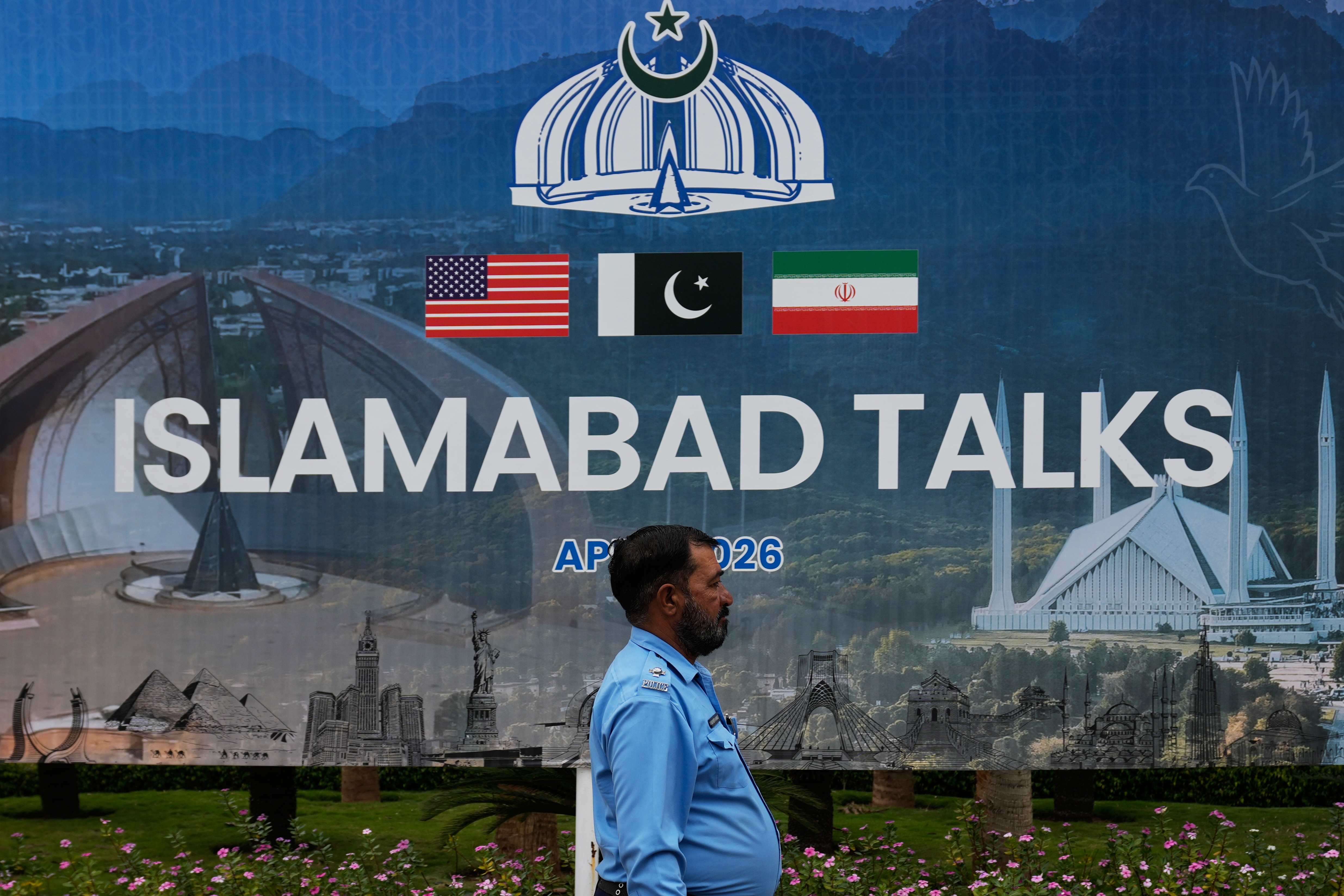
The collapse of the high-stakes negotiations in Islamabad between U.S. and Iranian officials marks a definitive end to the era of quiet, third-party mediation. While initial reports focused on scheduling conflicts or minor procedural disagreements, the reality is far more clinical. The talks failed because the fundamental mechanism of "strategic ambiguity" has finally broken under the weight of regional escalation. For years, Islamabad served as a neutral ground where messages could be passed without the political theater of Geneva or Vienna, but that buffer has evaporated.
Washington and Tehran arrived in Pakistan with irreconcilable mandates that no amount of diplomatic smoothing could bridge. The U.S. delegation, pressured by domestic election cycles and a hardening stance in Congress, demanded an immediate freeze on enrichment levels as a prerequisite for any sanctions relief. Iran, seeing its leverage tied directly to its nuclear stockpile and its regional proxies, viewed a freeze without upfront economic guarantees as a diplomatic surrender. They didn't just walk away; they let the clock run out to prove that the old rules of engagement no longer apply.
The Mirage of Neutral Ground
Pakistan has long positioned itself as the indispensable bridge between the Islamic world and the West. By hosting these sessions, Islamabad hoped to regain its status as a central player in global security. However, the geographic proximity to the conflict zones of the Middle East served as a reminder of the stakes rather than a calming influence.
The security apparatus surrounding the Marriott and Serena hotels in Islamabad was not just for show. It represented the extreme volatility of a process that was never meant to be public. When the details of the meeting leaked to regional press outlets early in the week, the "deniability" factor—the very thing that makes backchannel diplomacy work—was incinerated. Once the hardliners in both Tehran and Washington could see the outlines of a potential compromise, they moved to sabotage it from within.
The Enrichment Trap
At the heart of the failure is a technical deadlock regarding the purity of Iranian uranium. The U.S. remains fixated on the "breakout time"—the duration it would take for Iran to produce enough weapons-grade material for a single nuclear device.
Iran currently possesses a significant stockpile of uranium enriched to 60 percent. For context, power grade is usually around 3 to 5 percent, and weapons-grade is 90 percent. The jump from 60 to 90 is mathematically smaller than the jump from 5 to 20. This technical reality makes any "partial" deal a non-starter for U.S. defense analysts. They see 60 percent enrichment as a loaded gun. Tehran, conversely, views this stockpile as its only insurance policy against a repeat of the 2018 U.S. withdrawal from previous agreements.
Domestic Pressures and the Ghost of 2018
You cannot understand the Islamabad collapse without looking at the internal politics of the two capitals. In Washington, the administration is terrified of being seen as "soft" during an election year. Every concession offered to Tehran is dissected by a hostile legislature and used as political ammunition. This has forced U.S. negotiators into a corner where they can only offer "compliance for compliance," a formula that has failed for half a decade.
In Tehran, the situation is even more rigid. The internal power structure has shifted toward the "resistance economy" faction. These are individuals who believe that Iran can survive indefinitely under sanctions by deepening ties with Beijing and Moscow. To them, the Islamabad talks were not a necessity, but a test of Western desperation. When the U.S. didn't blink, the Iranian team took the next flight out, satisfied that they had held their ground.
The China Factor in the Room
While the talks were officially bilateral, the shadow of the Chinese-brokered Saudi-Iran deal loomed large. Tehran no longer feels the same urgency to mend fences with Washington because it has found a new economic and diplomatic lifeline in the East. This shift has fundamentally changed the power dynamic.
In previous decades, a failure in talks meant total isolation for Iran. Now, it simply means a pivot. Chinese investments in Iranian infrastructure and a steady appetite for discounted oil have created a floor for the Iranian economy that didn't exist during the Obama or Trump eras. The U.S. entered Islamabad thinking they held all the cards; they realized too late that the deck had been swapped.
The Proxy War Shadow
Negotiations do not happen in a vacuum. While the diplomats sat in air-conditioned rooms in Islamabad, the regional "Gray Zone" was heating up. Drone strikes in eastern Syria and maritime tensions in the Persian Gulf provided a grim soundtrack to the proceedings.
The U.S. tried to decouple the nuclear issue from regional security concerns, such as Iran’s support for various militias. Iran refused this separation. Their logic is simple: their regional influence is their primary conventional defense. Asking them to negotiate on nuclear issues while ignoring their regional "depth" is, in their view, asking them to disarm twice.
- Red Lines: Washington demanded a cessation of all drone transfers to third parties.
- The Iranian Counter: Tehran demanded a total lift of primary and secondary sanctions on its central bank.
- The Result: Total stalemate.
Neither side was willing to be the first to blink, because blinking in the current geopolitical climate is seen as an invitation for more pressure.
Why Technical Failures Are Actually Political Choices
The most common excuse for failed diplomacy is "technical disagreement." This is a lie used by officials to keep the door cracked for future meetings. In Islamabad, the technical disagreements over centrifuges and inspection protocols were merely symptoms of a lack of political will.
If both sides wanted a deal, the technicalities would be solved by engineers in forty-eight hours. The fact that these issues remained "insurmountable" after three days of meetings proves that the leadership in both countries has decided that the status quo—no matter how dangerous—is more politically survivable than a compromise.
This is the most dangerous phase of the standoff. When diplomacy is seen as a liability rather than a tool, the only remaining instruments of statecraft are economic warfare and kinetic action.
The Regional Fallout
The failure in Pakistan sends a chilling message to the rest of the Middle East. Neighboring states, specifically the Gulf monarchies, have spent the last year trying to de-escalate their own tensions with Iran. They did this under the assumption that the U.S. and Iran were moving toward a "thaw."
Without a U.S.-Iran framework, these regional actors are now forced to choose. They can either continue their independent rapprochement with Tehran, further eroding U.S. influence in the region, or they can prepare for a return to maximum pressure. Most are choosing a middle path: hedging their bets and buying more advanced defense systems from whoever is selling.
The Miscalculation of the Middleman
Pakistan’s role as the host has also been diminished. Islamabad desperately needed a success to bolster its own flailing economy and secure better standing with the International Monetary Fund. By failing to facilitate even a joint statement, Pakistan has shown that its influence over Tehran is more limited than previously thought. The "brotherly" ties between the two nations only go so far when the Iranian national security council sees its survival at stake.
Beyond the Brink
We are now entering a period where the "Nuclear Non-Proliferation Treaty" is effectively a dead letter in the Middle East. With the Islamabad talks in the rearview mirror, Iran has little incentive to slow its enrichment. The International Atomic Energy Agency (IAEA) is losing visibility into key facilities, and the "quiet" channels are silent.
The collapse of these talks wasn't an accident or a scheduling mishap. It was a deliberate choice by two aging regimes to prioritize domestic survival over international stability. The window for a negotiated settlement hasn't just closed; it has been boarded up from both sides.
The next time these two parties meet—if they ever do—it won't be in a luxury hotel in a neutral capital. It will likely be in the aftermath of a crisis that neither side can ignore. For now, the diplomats have been replaced by the generals and the sanctions enforcement officers. The silence following the Islamabad collapse is the loudest warning we have had in years.
Direct action is the only remaining currency. Expect an increase in "shadow" operations, more aggressive enforcement of oil tankers, and a continued ramp-up of enrichment levels that will eventually force a confrontation that the Islamabad talks were designed to prevent. The failure is absolute.