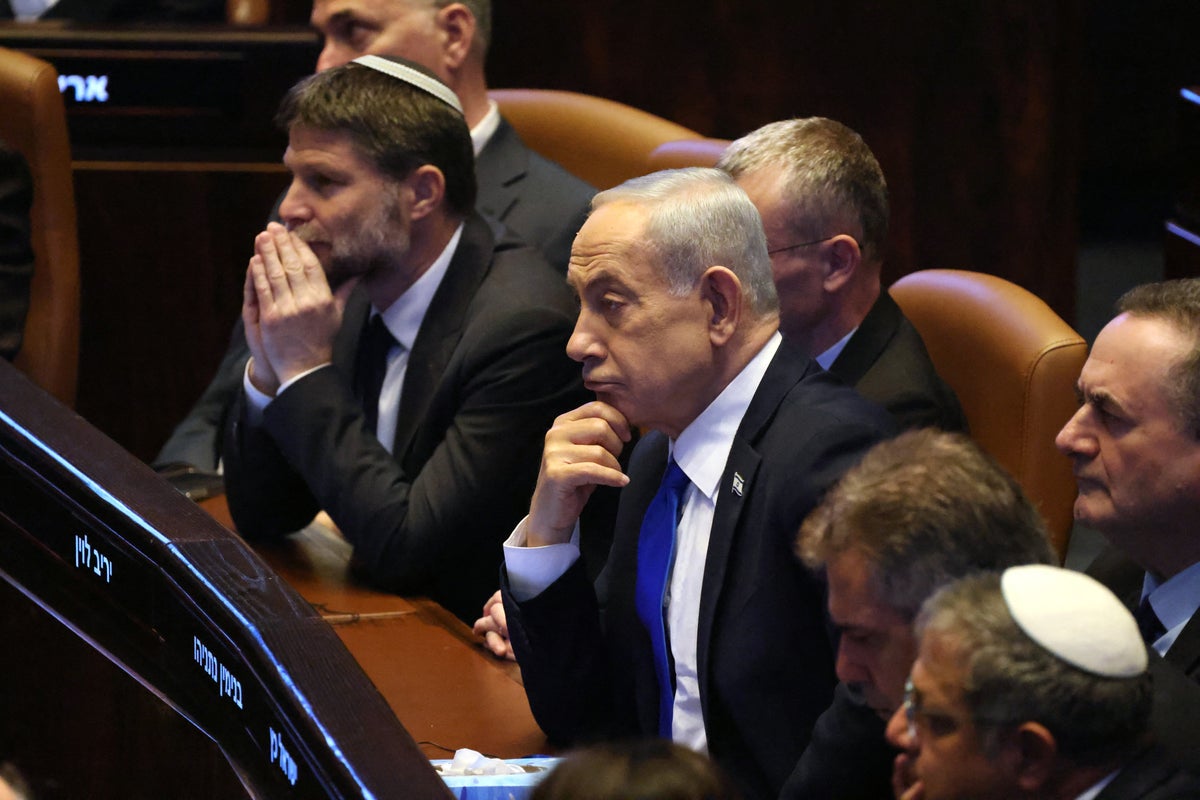
The Israeli government has fundamentally altered its legal and moral identity by moving to reinstate the death penalty for those accused of acts of terror. In a unanimous 93-0 vote, the Knesset signaled a departure from decades of judicial restraint, pushing a preliminary bill that targets "enemies of the state" with capital punishment. While the vote ostensibly focuses on those involved in the October 7 attacks and subsequent hostilities, the implications reach far beyond the immediate grief of a nation. This isn't just a policy shift. It is a seismic break from the status quo that has defined Israeli law since the execution of Adolf Eichmann in 1962.
By fast-tracking this legislation, the ruling coalition is responding to a visceral public demand for retribution. However, the legal mechanisms being dismantled to make room for the gallows suggest a permanent change in how Israel handles security and human rights. This move bypasses the long-standing hesitation of the security establishment, which has historically warned that executions do not deter suicide attackers and may instead create a new cycle of martyrdom.
The End of Judicial Exceptionalism
For over sixty years, Israel maintained a de facto moratorium on the death penalty. Though the law technically allowed for it in cases of treason or crimes against humanity, the state purposefully avoided its use. This restraint was a point of pride, a way to distinguish the region's only democracy from the authoritarian regimes surrounding it. That distinction is now being erased.
The new bill specifically targets "terrorist activities" carried out with the intent to harm the State of Israel and the rebirth of the Jewish people in their homeland. By using such ideological language in a legal statute, the government is moving away from objective criminal definitions and toward a more subjective, political application of the ultimate penalty. This creates a vacuum where the definition of "terrorist" can expand or contract based on the political climate of the day.
Critics within the legal community argue that the unanimous nature of the vote—93 to 0—reflects a parliament under immense emotional pressure rather than one engaged in rigorous legislative debate. When a chamber votes with such total uniformity on a matter of life and death, the traditional checks and balances of a democracy are usually the first casualty.
The Security Dilemma and the Martyrdom Effect
Military and intelligence officials have long been the loudest voices against the death penalty in Israel. Their reasoning isn't rooted in pacifism, but in cold, hard pragmatism. To a person prepared to die in a suicide mission, the threat of a state execution is not a deterrent. It is a promotion.
The concern among the Shin Bet and Mossad is that high-profile executions will lead to:
- Hostage Escalation: Retaliatory kidnappings specifically designed to trade captives for prisoners on death row.
- Global Incitement: Public executions provide powerful propaganda material for extremist recruitment.
- Intelligence Loss: A dead prisoner cannot provide information. The carrot of a reduced sentence or better conditions is often the only leverage interrogators have to break a cell or stop a future attack.
Proponents of the bill, led largely by National Security Minister Itamar Ben-Gvir, dismiss these concerns as "old thinking." They argue that the sheer scale of recent atrocities demands a punishment that fits the crime. To them, the cost of imprisonment—which includes education, healthcare, and eventual release in lopsided prisoner swaps—is an insult to the victims. They want a finality that only the state can provide.
A System Under Strain
The logistical reality of implementing the death penalty is a nightmare that the current bill barely touches upon. Israel’s civilian and military courts are already overwhelmed. Introducing capital cases requires a level of due process that can drag on for decades, as seen in the United States.
If the government intends to bypass these delays, they must erode the right to appeal or the standards of evidence. This puts the Israeli High Court in a direct collision course with the executive branch. If the court strikes down the law or complicates its use, it will likely trigger another round of the judicial overhaul protests that paralyzed the country before the war. The death penalty is being used as a wedge issue to further consolidate power within the cabinet.
The International Fallout
Israel’s allies in the European Union and the United Kingdom have largely abolished the death penalty and often have laws preventing them from extraditing suspects to countries where they might face execution. By enshrining this law, Israel risks further isolating itself from its primary diplomatic partners. This isn't just about optics. It affects military cooperation, intelligence sharing, and the ability to prosecute terrorists across borders.
Washington has remained uncharacteristically quiet on the specific 93-0 vote, but the State Department's historical stance against the expansion of capital punishment suggests a looming friction. In the eyes of the international community, the move looks less like justice and more like a retreat from the "moral high ground" that Israeli diplomats frequently cite in international forums.
The Question of Miscarriage of Justice
No legal system is perfect. In the chaos of a conflict zone, where evidence is often gathered in the heat of battle and witnesses may be traumatized or biased, the risk of a wrongful conviction is elevated.
In a standard criminal case, a mistake can be rectified through exoneration and compensation. In a capital case, the error is permanent. The 93-0 vote assumes a level of infallibility in the Israeli military and civilian justice systems that history rarely supports. By removing the possibility of life imprisonment as the ceiling for punishment, the state is gambling with its own moral legitimacy.
The Role of the Military Courts
A significant portion of these cases will likely be handled through military tribunals. These courts operate under different rules of evidence than civilian courts. Using a military tribunal to hand down a death sentence to a non-citizen or a resident of occupied territory is a move that frequently triggers investigations by the International Criminal Court (ICC).
The Israeli government is essentially betting that the current geopolitical situation provides them enough "cover" to execute this policy without immediate consequences. It is a high-stakes gamble. If the ICC views these executions as a violation of international humanitarian law, individual Israeli officers and politicians could find themselves facing arrest warrants in over 120 countries.
The Psychological Impact on Israeli Society
We must also consider what state-sanctioned killing does to the executioners and the society that authorizes them. Israel has spent decades trying to build a society that values life, often trading hundreds of high-risk prisoners for a single Israeli soldier. This ethos of "life at any cost" is being traded for a new doctrine of "death as a debt."
The shift in public sentiment is undeniable. Polls taken in the wake of recent violence show a majority of Israelis now support the death penalty for terrorists. This is a society in deep trauma, and the 93-0 vote is a mirror of that pain. But laws made in the peak of trauma are rarely the laws that sustain a nation in the long term.
The Logistics of Death
Where will the executions take place? Who will be the hangman? These are the grim, practical questions that the Knesset has yet to answer. In the 1962 Eichmann case, a special furnace had to be built to cremate the body so that no grave could become a shrine. The state had to find a person willing to pull the lever—a task that left a lasting psychological mark on those involved.
By moving toward a routine application of the death penalty, Israel is forcing its civil servants to become killers. This is a role that the Israel Prison Service (IPS) is not currently equipped or trained to handle. The transition from a rehabilitative or even a purely custodial system to an orgy of state-sponsored mortality will fundamentally change the character of the men and women who work within it.
The Legislative Path Forward
The 93-0 vote was only the first hurdle. The bill must now pass through committee and subsequent readings before becoming law. During this time, the "Quiet Opposition"—members of the security establishment and legal scholars who stayed silent during the initial wave of emotion—will likely begin to leak their concerns.
The government is counting on the momentum of the current conflict to carry the bill to the finish line. They are framing any opposition as a betrayal of the victims. This makes for effective politics but dangerous lawmaking. When a government uses the death penalty as a tool for political signaling, the legal system becomes an extension of the campaign trail.
The Risk of a "Point of No Return"
Once the first execution is carried out, the gate is open. There is no going back to the status quo of 1963-2023. The cycle of blood for blood will be institutionalized.
The Israeli government is not just voting on a punishment; they are voting on the future definition of the state. If they proceed, they must be prepared for the reality that the death penalty will not bring back the lost, nor will it stop those who view death as a doorway to paradise. It will simply ensure that the state is an active participant in the terminal violence it seeks to end.
The Knesset has spoken with a single, loud voice, but the silence that follows an execution is much harder to manage than the roar of a 93-0 vote. The true cost of this law won't be measured in shekels or votes, but in the fundamental hardening of a national soul that was once defined by its refusal to kill outside the battlefield.
Secure the perimeter. Prepare the gallows. The state has decided that the only way to prove its strength is to mirror the finality of its enemies.