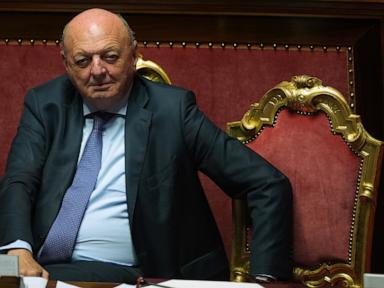
Rome is pretending the nuclear renaissance is just a vote away. Every few years, Italian politicians peer across the Alps, gaze longingly at French cooling towers, and draft a grand manifesto about bringing the atom back to the boot. The parliament thinks passing a bill or waving a bureaucratic wand revives an industrial supply chain that died in a referendum decades ago. It is a fairy tale told by people who have never managed a civil engineering budget or balanced an electrical grid in real time.
The lazy consensus in mainstream coverage suggests that political will is the only missing ingredient. The narrative goes like this: Italy banned nuclear power after the 1986 Chernobyl disaster, public sentiment has softened due to energy security anxiety, and now lawmakers are paving the way to flip the switch back on. This is complete nonsense.
Political will does not pour concrete, source specialized heavy forgings, or train nuclear engineers. Money does. And the Italian state is flat broke, saddled with a staggering debt-to-GDP ratio, while private capital knows better than to touch a multi-decade baseload megaproject with a ten-foot pole.
Let us look at the structural reality. Nuclear energy is not a technology problem; it is a capital allocation nightmare. Modern reactors like the EPR or AP1000 have become notorious for massive cost overruns, schedule blowouts, and regulatory friction across Western Europe and North America. Look at Flamanville 3 in France or Hinkley Point C in the UK. These projects routinely quadruple their initial budgets and slide a decade past their deadlines.
Now, drop that exact same financial profile into Italy. This is a country where major infrastructure projects face legendary bureaucratic gridlock, endless judicial appeals, and local NIMBYism that makes French environmental protests look like a polite garden party. If you think Italian permitting agencies move fast, try building a high-speed rail line through the Val di Susa and see how long it takes.
Proponents point to small modular reactors as the silver bullet. SMRs are supposed to be factory-built, standardized, and cheap. It is a seductive pitch. Yet not a single commercial Western SMR design is producing baseload power at scale today. They are still PowerPoint slides and regulatory filings burning through venture capital. Betting Italy's industrial energy future on unproven modular nuclear tech is like betting your retirement savings on a biotech startup that has only tested its drug on mice.
The grid does not care about your political ambitions. Italian industry, particularly in the manufacturing powerhouse of the north, needs reliable, affordable electricity right now. Energy-intensive sectors like ceramics, steel, and chemicals are already bleeding competitiveness because of structural power price disadvantages compared to parts of the US and Asia. Waiting fifteen years for a hypothetical Italian nuclear plant to come online is economic suicide. By the time the first kilowatt of domestic nuclear power hits the Italian transmission network, those factories will have either relocated to cheaper jurisdictions or shut down permanently.
Rome loves grand proclamations because they cost nothing to debate and sound visionary on the evening news. They distract the public from the gritty, unglamorous work of upgrading transmission lines, expanding domestic renewables with proper storage, and fixing the grotesque inefficiencies in the country's gas distribution networks.
When you strip away the political theater, Italy's nuclear daydream is a distraction from the real energy transition. You cannot legislate physics, and you certainly cannot regulate away the laws of compound interest on construction debt. Until Italian politicians learn to balance a spreadsheet with the same enthusiasm they reserve for drafting press releases, the country's nuclear renaissance will remain what it has always been: a monument to wishful thinking.