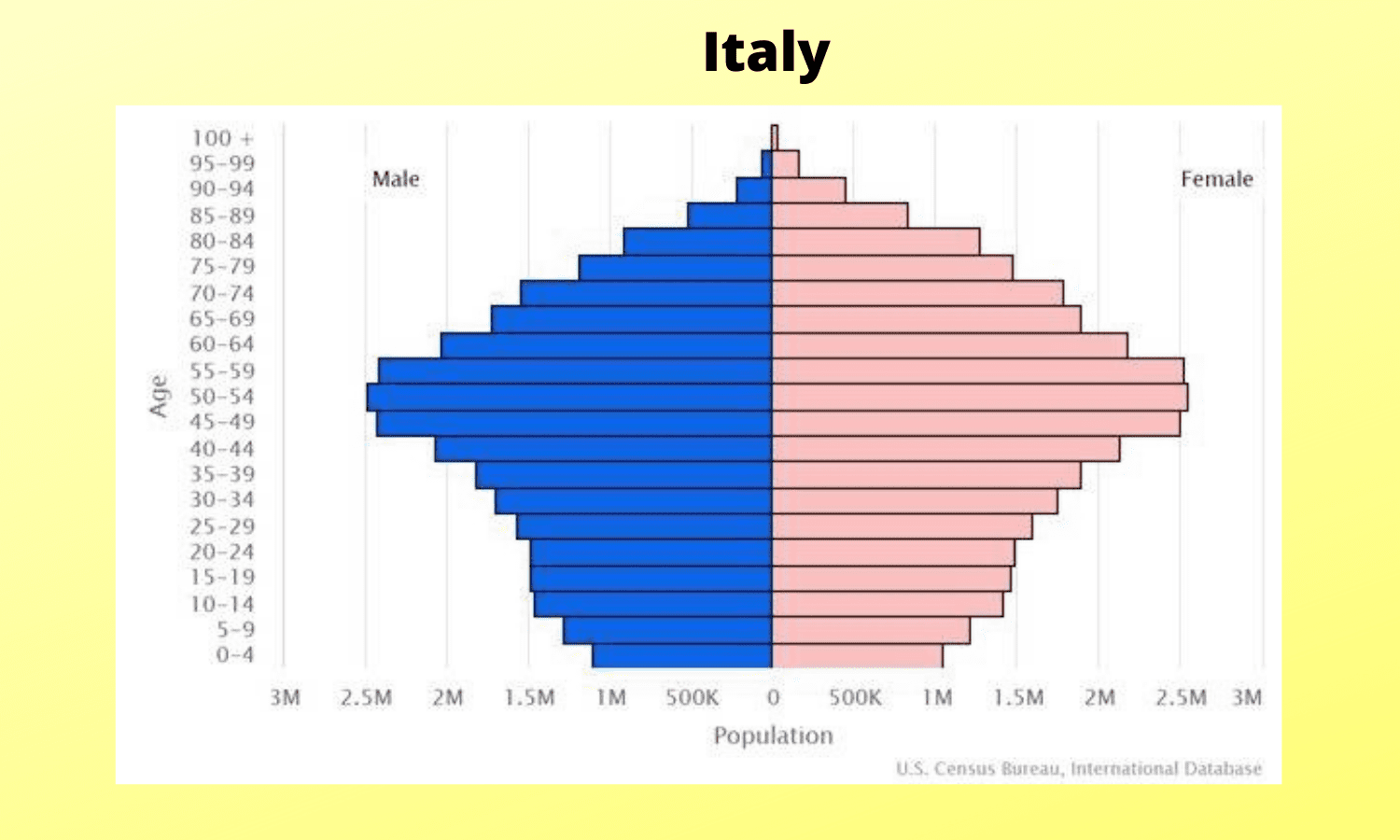
The headlines are celebrating a ghost. They tell you that Italy’s twelve-year demographic freefall has finally leveled off. They point to a statistical plateau in 2024 and 2025 as a sign of "resilience" or "recovery."
They are lying to you with math.
What the mainstream press calls a stabilization is actually a demographic Ponzi scheme reaching its inevitable friction point. The narrative is simple: migration saved the numbers. But numbers don’t pay for healthcare, and they don't fix a broken social contract. If you think a slight uptick in residency permits solves the problem of a nation that has forgotten how to replace itself, you aren't looking at the data—you're looking at a sedative.
The Migration Myth as a Band-Aid for a Bullet Wound
The "lazy consensus" suggests that as long as the total head count stays around 59 million, the Italian economy remains viable. This is a fundamental misunderstanding of economic vitality.
Migration is being used as a statistical lubricant to hide the fact that the internal engine of Italy has seized. In 2023, births in Italy dropped to a record low of around 379,000. To put that in perspective, in the mid-1960s, that number was over a million. We aren't just seeing a "dip." We are seeing the total evaporation of the Italian youth.
When you plug the hole with migration, you create a "Stability Illusion." Here is the reality I’ve seen across European markets: migration provides a short-term boost to the labor supply in low-skilled sectors—hospitality, agriculture, caretaking—but it does nothing to address the Dependency Ratio.
The Dependency Ratio is the only metric that actually matters for a sovereign nation's survival. It measures the number of dependents (seniors and children) against the working-age population. Italy has one of the highest in the world. Even with migration, the average age of the Italian resident is climbing toward 47. You cannot run a high-tech, innovative, "Made in Italy" economy on a workforce that is eyeing retirement and a migrant population that is often funneled into the informal or low-productivity economy.
The Productivity Trap
The argument for migration-led stabilization ignores the Output Per Worker.
If you replace a departing Italian engineer or specialized craftsman with three low-wage workers in the service sector, your "population" remains stable, but your GDP per capita—and your ability to fund a bloated pension system—collapses. Italy’s productivity growth has been essentially flat for twenty years.
I’ve watched analysts ignore this for a decade. They celebrate the "return to growth" when Italy hits 0.5% GDP growth, ignoring that the structural debt-to-GDP ratio is hovering around 140%. You don't "stabilize" your way out of that. You grow or you die. And you don't grow with a population that is top-heavy with octogenarians.
The "Great Wealth Transfer" That Isn't Coming
Common wisdom says that the aging Italian population will eventually pass down their massive savings and real estate holdings to the next generation, sparking a consumer boom.
This is a fantasy.
In a country where the median age is spiraling upward, that wealth isn't being "transferred." It’s being liquidated to pay for end-of-life care. The "silver economy" is a black hole. Money that should be going into venture capital, new businesses, and family formation is instead being swallowed by the healthcare system and private nursing.
Imagine a scenario where a 30-year-old in Milan expects an inheritance from their parents. By the time that inheritance arrives, the 30-year-old is 65. The liquidity is gone. The house in the southern village is worth zero because there are no buyers. The "stabilized" population count doesn't tell you that the geography of Italy is becoming a series of geriatric islands surrounded by ghost towns.
The Fallacy of "Replacement"
Let’s be brutally honest about the "status quo" logic. The idea that you can simply swap one demographic for another to maintain a "nation" is an accounting trick, not a social reality.
Social cohesion has a direct economic value. When a population stabilizes through rapid migration without the underlying economic engine to integrate, educate, and elevate those newcomers into high-productivity roles, you create a two-tier society.
- Tier 1: The aging Italian elite holding the debt and the remaining property.
- Tier 2: A transient workforce that has no stake in the long-term survival of the Italian state.
This isn't a "fixed" population. It’s a demographic friction fire.
Stop Asking "How Many People?" and Start Asking "Which People?"
People Also Ask: "Is Italy's population crisis over?"
The honest answer: No. It has just entered its most dangerous phase—the stagnation phase.
If you are a business owner or an investor looking at Italy, don't be fooled by the flat line on the population chart. A flat line in a hospital means the patient is dead. In demography, a flat line achieved through artificial life support (migration offset against a birth rate collapse) means the structural crisis is being masked, not solved.
The real questions you should be asking:
- What is the ratio of taxpayers to pension collectors in 2035?
- Why is the Italian brain drain—the exit of highly educated youth—still accelerating despite "population stability"?
- How does a country maintain its cultural and economic brand when its creative class is moving to London, Berlin, and Dubai?
The Counter-Intuitive Truth: Italy Needs a Controlled Contraction
The obsession with keeping the population at 59 million is the problem. We are terrified of a smaller Italy. But a smaller, younger, highly productive Italy would be infinitely more stable than a large, old, stagnant one.
Italy should stop trying to "fix" the total number and start aggressively incentivizing the quality of life for the people who are actually there. This means:
- Total deregulation of the labor market to keep the few young people they have from leaving.
- Scrapping the "job for life" mentality that protects 60-year-olds at the expense of 25-year-olds.
- Shifting migration policy away from "filling gaps" in low-wage labor and toward "poaching" global talent.
The current strategy is "Demographic Drag." You are dragging a massive, non-productive weight behind a shrinking engine. The fact that you added more weight to keep the total mass the same doesn't make the engine any stronger. It just ensures the eventual stall is more spectacular.
The Debt Bomb is Ticking Louder
Italy’s debt is only sustainable if there is a future generation to tax. By celebrating a "stabilized" population that is actually just an older population with more temporary residents, the government is essentially lying to the bond markets.
The social security system (INPS) is a demographic pyramid scheme. It requires a wide base of young workers to pay for the narrow top of retirees. That pyramid is now a rectangle. Soon, it will be an inverted triangle.
When that inversion happens, no amount of migration will save the Euro or the Italian state from a massive, forced haircut on its obligations. We are watching the slow-motion bankruptcy of a culture, and the media is cheering because the guest list at the funeral hasn't shortened this year.
The Actionable Reality
If you are waiting for a "rebirth" of Italy based on these latest figures, stop.
The "stabilization" is a statistical fluke caused by the post-pandemic reshuffling of residency and a desperate push for seasonal labor. It is not a trend. It is a plateau before the next cliff.
Invest in automation. Invest in decentralized technology. Stop betting on Italian real estate in "stable" zones that are actually just fancy retirement homes. The future belongs to nations that can produce more value with fewer people, not nations that try to maintain a headcount through desperation.
Italy isn't back. Italy is just holding its breath. And eventually, everyone has to exhale.
Burn the census reports. Watch the maternity wards. That’s the only data that isn't a lie.