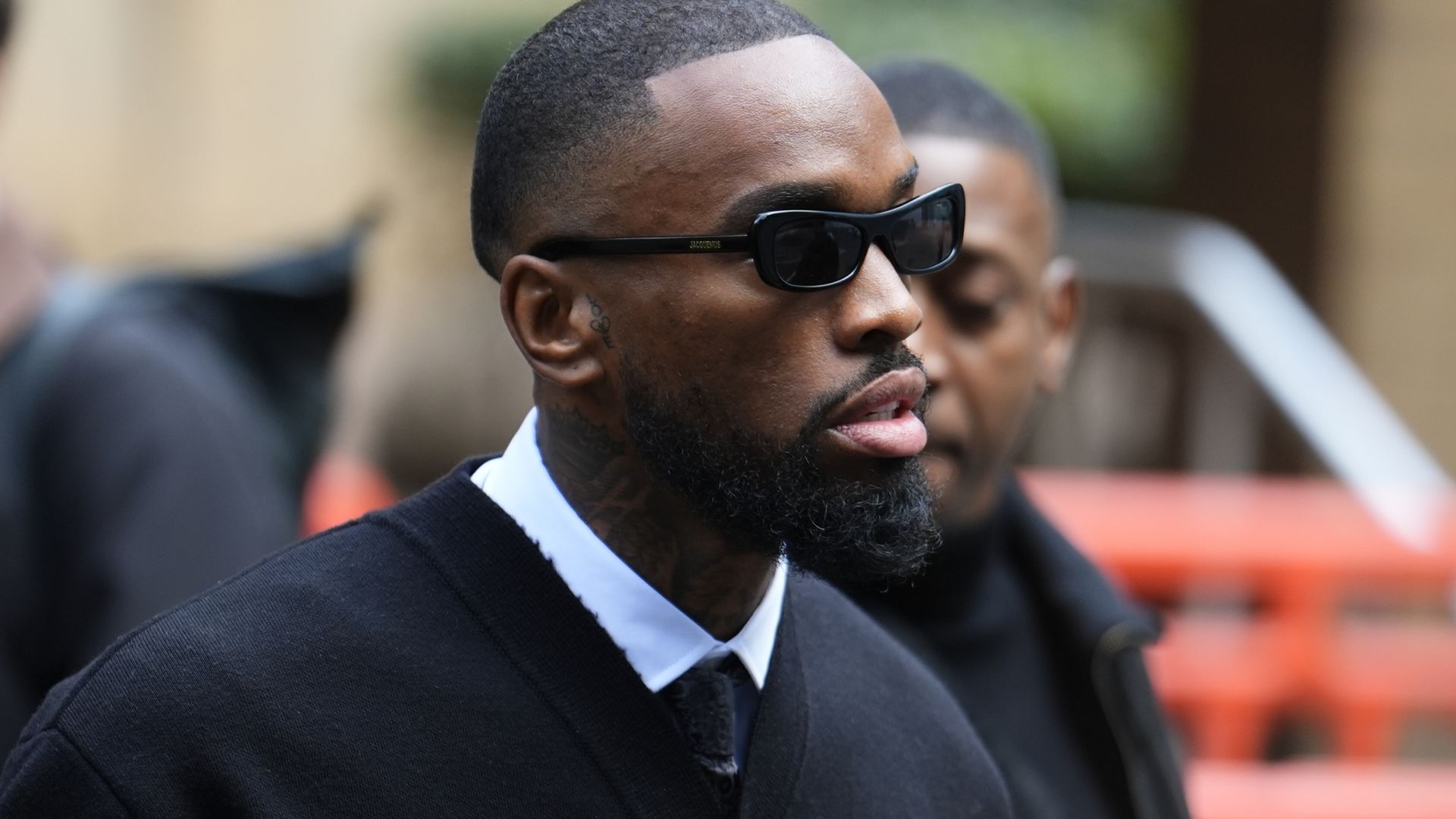
Football schedules rarely collide with crown court calendars, yet England striker Ivan Toney is staring down a legal timeline that drops right into the middle of Euro 2028. When reports surfaced that Toney is set to face trial during the summer tournament over an alleged assault, the immediate reaction from fans was pure confusion. How does a trial date get set years out, and what does this actually mean for an international forward trying to stay in the national team picture?
It's a messy collision of the British legal system and elite tournament football. You might also find this similar article useful: Stop Trying to Replace Ernie Johnson on Inside the NBA.
If you've followed English football over the last few years, you know Toney isn't a stranger to off-pitch drama. Between his lengthy suspension for breaching Football Association betting rules and his subsequent move to the Saudi Pro League with Al-Ahli, his career trajectory has refused to follow a straight line. Now, an alleged assault case threatens to overshadow his international ambitions just as the UK and Ireland prepare to host the 2028 European Championship on home soil.
Why the Trial Date Clashes With Euro 2028
People outside the UK legal system often assume criminal cases wrap up within a few months. They don't. Crown Court backlogs across England and Wales have pushed trial dates further and further into the future, sometimes stretching two or three years past the initial charge or plea hearing. As reported in latest articles by Yahoo Sports, the effects are significant.
When a defendant pleads not guilty and elects for a jury trial, the court clerk looks at available slots in a severely congested diary. Courts don't check UEFA's tournament calendar before listing a case. If a judge has an open week in June or July 2028, that's where the trial lands.
For Toney, the timing couldn't be worse. Euro 2028 kicks off in June 2028 across stadiums in England, Scotland, Wales, and the Republic of Ireland. It's a home tournament for the Three Lions. Every English player in the pool views that specific summer as the pinnacle of their career. Being required to sit in a courtroom instead of a training camp isn't just a distraction—it's a direct barrier to selection.
Can lawyers apply to move a trial date? Yes, they can, and they frequently try. Defense teams regularly submit applications to vacate or adjourn trial dates due to professional commitments, witness availability, or scheduling conflicts. Judges, however, rarely treat a football tournament as an automatic pass. Public interest and court efficiency come first. Unless there's a compelling legal reason—not just a sporting one—the court expects the defendant to show up when told.
What the Alleged Assault Case Means for Toney's England Future
Let's be honest about international selection. Managers hate distractions. Whether it's Thomas Tuchel or whoever holds the England reins heading into the 2028 cycle, selecting a squad for a major home tournament involves ruthless filtering.
When a coaching staff weighs two strikers of similar output, they almost always pick the one without a pending Crown Court trial. Even if Toney is scoring goals regularly at club level, an unresolved criminal case creates a logistical nightmare for the Football Association. You can't build tactical plans around a center-forward who might legally have to leave the team hotel in the middle of the group stage to give evidence in front of a jury.
There's also the precedent of how the FA handles players facing active criminal proceedings. Historically, the governing body prefers to step back and let the legal process play out before putting a player back into the spotlight of an England shirt. Look at past situations involving high-profile internationals:
- Harry Maguire was initially named in an England squad in 2020 following an incident in Mykonos, only to be withdrawn hours later once court developments escalated.
- Mason Greenwood never returned to the international fold after his arrest and subsequent legal proceedings, even after charges were eventually dropped.
- Kyle Walker and others have faced intense scrutiny over off-field headlines, forcing managers to answer awkward press conference questions instead of talking about tactics.
Toney's situation carries an extra layer of complexity because of his age. Born in March 1996, he'll be 32 years old when Euro 2028 begins. For a physical, penalty-box striker who relies on sharp movement and hold-up play, 32 is right around the time managers start looking closely at younger alternatives. He doesn't have the luxury of saying, "I'll just catch the next tournament in 2030." Euro 2028 is likely his final realistic shot at a major international tournament.
The Reality of Balancing Club Football and Legal Proceedings
Playing abroad while fighting a legal case in the UK adds another layer of friction. Since leaving Brentford for Al-Ahli in 2024, Toney has operated outside the weekly glare of the Premier League. While the financial rewards in Saudi Arabia are massive, playing outside Europe already makes it harder to stay top-of-mind for England selectors.
Flying back and forth between the Middle East and the UK for pre-trial hearings, legal consultations, and case management conferences takes a toll. Routine disappears. Preparation suffers.
Most fans only see the 90 minutes on television, so it's easy to underestimate how much mental bandwidth a criminal charge consumes. Preparing a defense for an alleged assault isn't something you hand over to your solicitors and forget about until the trial starts. You're reviewing statements, going over CCTV timelines, and preparing for cross-examination. Doing that while trying to maintain peak physical conditioning in a foreign league is exhausting.
The Presumption of Innocence vs Sporting Reality
It's worth stating clearly that facing a trial isn't the same as being found guilty. Under English law, Toney is innocent unless proven otherwise in court. Denying the allegation and letting a jury weigh the evidence is his fundamental right.
Sporting bodies, though, don't operate on the same timeline as criminal courts. A criminal trial requires proof beyond a reasonable doubt, and it moves slowly. International football operates on ruthless, immediate deadlines. A squad list has to be submitted to UEFA weeks before the opening match. If the trial hasn't happened yet—or is scheduled right in the middle of the tournament—the England manager can't wait around for a verdict.
How This Impacts England's Striker Depth Chart
If Toney is effectively ruled out of Euro 2028 contention due to the trial schedule, who actually feels the ripple effect?
Harry Kane isn't going to play forever. By June 2028, Kane will be nearly 35. England's coaching staff has spent years trying to figure out what life after Kane looks like, and Toney was supposed to be part of that bridge—an experienced, physical number nine who could lead the line or come off the bench to bully tired defenders and take high-pressure penalties.
Without Toney in the mix, the pressure shifts squarely onto the next wave of English forwards. Players like Ollie Watkins, Dominic Solanke, Liam Delap, and younger academy graduates suddenly have one fewer veteran obstacle blocking their path to a tournament squad.
For fans tracking England's buildup to 2028, the smartest move right now is to look past the sensational headlines and watch the actual court listings. Pre-trial review hearings usually take place months before the main event, and that's when you'll see whether Toney's legal team succeeds in shifting the date or if the collision with Euro 2028 becomes permanent. Until the Crown Court calendar moves, any talk of Toney wearing an England shirt at a home Euros remains pure wishful thinking.