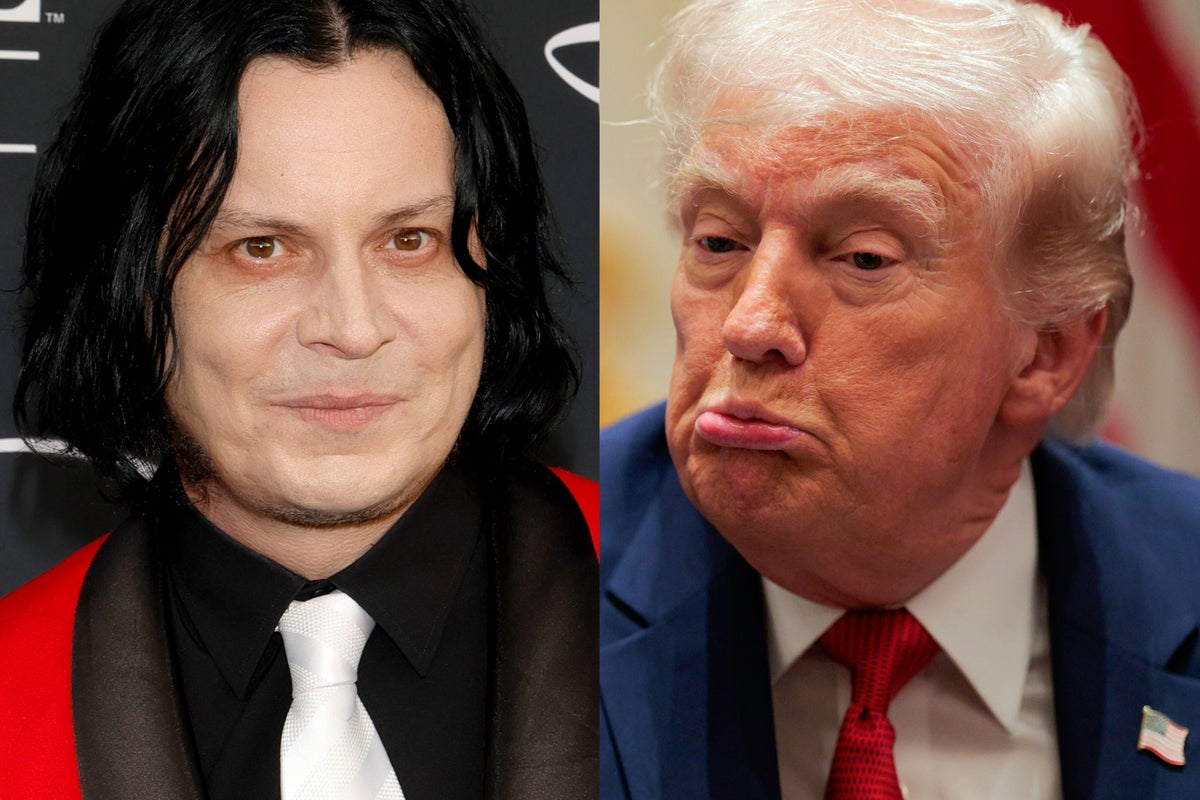
The American greenback has long been a static monument to dead presidents and the rigid traditions of the Treasury Department. That changed when Donald Trump proposed a shift that would see his own signature etched onto the physical currency of the United States. While the move was framed by his camp as a standard executive prerogative, it ignited a firestorm from one of the last remaining titans of analog culture. Jack White, the architect of the White Stripes and a man who has built a career on the preservation of mechanical and historical purity, didn't just disagree. He went for the throat.
White labeled the former president an egomaniacal conman for attempting to turn the federal reserve note into a piece of branded campaign merchandise. This isn't just a spat between a rock star and a politician. It is a fundamental collision between two different philosophies of value. One side views the dollar as a communal trust, while the other sees it as a platform for personal branding. To understand why this matters, you have to look past the social media headlines and into the mechanics of how currency functions as a symbol of national stability.
The Weight of a Signature
A signature on a dollar bill is traditionally a mark of bureaucratic accountability. It belongs to the Treasurer of the United States and the Secretary of the Treasury. These names are supposed to represent the office, not the individual. When Trump floated the idea of including his own name, he broke a psychological barrier that has existed since the inception of the modern Federal Reserve system.
Jack White’s reaction was rooted in his obsession with the "real." This is a man who refuses to allow cell phones at his concerts and records music on vintage tape machines. To White, the dollar is a piece of art and history. When a politician treats that history as a blank canvas for self-promotion, it devalues the institution itself. White’s critique suggests that if the face of the currency becomes a billboard, the underlying trust in that currency begins to erode.
The Brand of the State
The United States government has rarely used the dollar for contemporary political messaging. We see this restraint in how we choose whose face appears on our bills. It takes decades, sometimes centuries, for a figure to be deemed "safe" enough for the $20 or the $50. By attempting to bypass this historical vetting process, the Trump administration signaled a shift toward a more personality-driven form of governance.
From a branding perspective, the move was genius and terrifying in equal measure. Every time a citizen buys a loaf of bread or pays their rent, they would be reminded of the man in the Oval Office. It is the ultimate form of saturation. White’s "conman" descriptor isn't just an insult; it’s an industry analysis. He’s identifying the conversion of a public utility—the currency—into a private marketing asset.
Artistry Versus Ego
Jack White’s career is a masterclass in controlled aesthetics. Every choice he makes, from the color of his guitar cables to the layout of his Third Man Records headquarters, is deliberate. He understands the power of a visual. When he looks at a dollar bill with a presidential signature, he doesn't see a policy change. He sees a design failure and a breach of the "contract" between a creator and their audience.
The federal government is, in a sense, the creator of the American experience. The citizens are the audience. When the creator starts putting their name in neon lights on the props of the play, the immersion is broken. White’s vocal opposition is a defense of the "fourth wall" of American democracy. He argues that the president should be the steward of the currency, not the star of it.
The Legal and Moral Gray Zones
While the Treasury has the legal authority to change the design of currency, the tradition of presidential anonymity on bills has been a cornerstone of American fiscal identity. Critics of White argue that he is overreacting to a minor aesthetic choice. They point out that presidents have their names on plenty of things, from post offices to aircraft carriers.
But the dollar is different. It is the only government object that every single citizen touches every day. It is the physical manifestation of the country’s credit. Inserting a living politician’s name into that equation introduces a level of partisanship that the Fed has spent a century trying to avoid. White’s stance is that some things must remain sacred, or at least neutral, for a society to function.
The Death of the Analog Standard
We are living through the final days of physical cash. As digital transactions take over, the dollar bill is becoming a legacy product. This makes the battle over its design even more poignant. For Jack White, the preservation of the physical dollar is part of a larger fight against a digital world that he feels is becoming increasingly hollow and personality-driven.
If the dollar is to disappear, White wants it to go out with its dignity intact. He views the Trump signature as a tacky final chapter for a once-great design. It represents the "hustle" culture infiltrating the highest levels of the state. This isn't just about a name on a piece of paper; it's about the fear that nothing is beyond the reach of a personal brand.
Why the Industry is Watching
Financial analysts have traditionally stayed out of the business of celebrity feuds, but this one is different. The "Jack White vs. Trump" narrative highlights a growing trend where cultural gatekeepers are the only ones left willing to call out the blurring lines between public service and private gain.
The industry looks at the dollar as a tool of stability. If the currency becomes a flashpoint for cultural warfare, its utility as a neutral medium of exchange is compromised. When a high-profile figure like White uses his platform to highlight this, it forces a conversation that the Treasury Department would rather avoid. It forces us to ask what, exactly, we are holding when we pull a bill out of our wallet.
The Mechanics of Public Outrage
White’s outbursts aren't random. They are calculated strikes from a man who understands how to manage a narrative. By positioning himself as the defender of American tradition, he is effectively out-maneuvering a politician who built his entire career on that same claim.
This is a battle for the "blue-collar" soul of the country. White, a Detroit native who worked as an upholsterer before he was a rock star, speaks a language of craftsmanship. He frames the signature on the bill not as a sign of power, but as a sign of poor workmanship and a lack of respect for the trade. It is an argument that resonates far beyond the world of indie rock.
The Reality of Currency Design
Designing currency is a multi-year process involving the Bureau of Engraving and Printing and the Secret Service. It involves anti-counterfeiting measures that are among the most advanced in the world. To throw a signature into that mix for political reasons is a logistical nightmare.
Every time a bill is changed, billions of dollars must be spent on updating vending machines, counting devices, and international exchange protocols. The cost of a presidential ego trip on a dollar bill is measured in the hundreds of millions of taxpayer dollars. This is the "how" that the competitor's article missed. It’s not just a tweet; it’s an expensive, bureaucratic overhaul for the sake of a vanity project.
The Legacy of the Argument
Regardless of whether the signature ever becomes a permanent fixture of the $1 or $20 bill, the damage to the perception of the currency is done. Jack White’s intervention ensured that the conversation stayed focused on the integrity of the institution. He acted as a self-appointed auditor of American aesthetics and ethics.
The "conman" label sticks because it addresses the core of the issue: the attempt to trade something of lasting value (national trust) for something temporary and self-serving (political visibility). In the world of investigative journalism, we call this a "value-extraction" scheme.
If you want to protect the dollar, you don't do it by putting a name on it. You do it by ensuring that the bill represents a government that is more interested in the stability of the economy than the visibility of its leader. White isn't just complaining about a signature; he’s pointing out that the house is being sold for parts by the people who are supposed to be maintaining it.
Check your pocket. Look at the names on the bills you have left. Those people are gone, but the value remains. That is the point of the design. Once a living man’s name is on there, the bill is no longer a promise from the nation to its people. It’s just a flyer for a person who will be gone in four to eight years.
Stop looking at the dollar as money and start looking at it as a record of who we are. If we allow it to be turned into a business card, we have already lost the thing that gave it value in the first place.