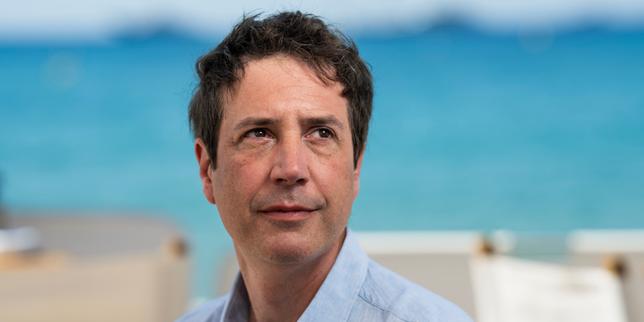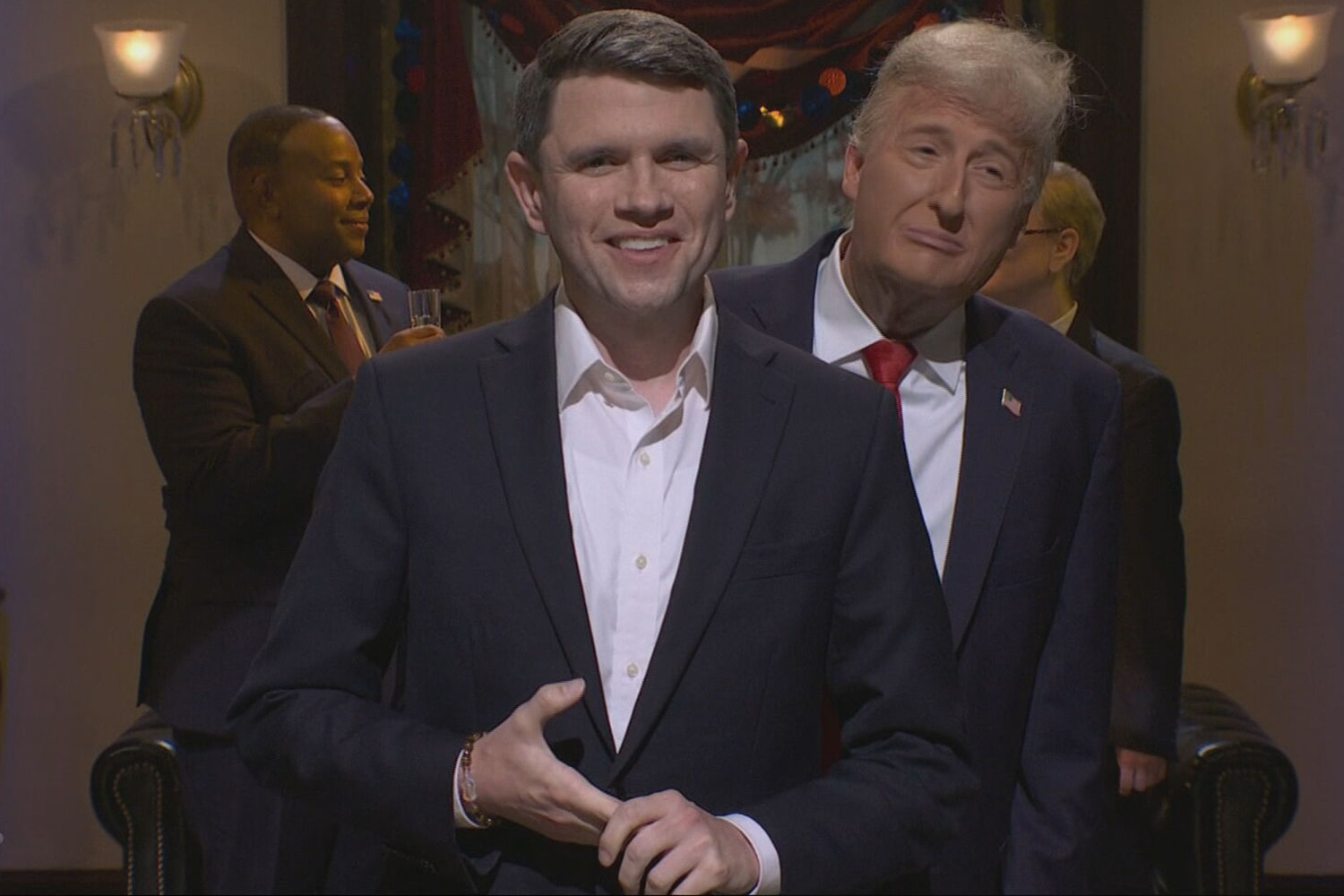
James Talarico opened Saturday Night Live just days after securing a historic Texas Senate victory, stepping onto the Studio 8H stage in a cold open that blended political satire with his signature pastoral cadence. The appearance marks a rare crossover where a newly minted Democratic senator-elect from a traditionally conservative stronghold commands network comedy’s biggest platform before even taking the oath of office. Beyond the viral clips and monologue jokes, the booking signals a sharp shift in how both political strategists and legacy television networks are fighting for cultural relevance in late 2026.
Most coverage of the broadcast treats the cameo as a standard victory lap. It is not. Network television has spent the last decade losing younger demographics to short-form vertical video, while political campaigns have grown increasingly skeptical of traditional media gatekeepers. By placing Talarico at the top of the show, SNL executives made a calculated bet on a specific brand of populist authenticity that translates across algorithmic feeds, and Talarico’s team seized an unmatched opportunity to cement his national profile outside the rigid constraints of cable news panels.
The Anatomy of a Modern Political Cameo
Television history is littered with politicians attempting to prove they can take a joke. Usually, it goes poorly. When candidates step onto the SNL stage, the resulting sketches often feel stiff, overly vetted by communications directors, and painfully transactional. Viewers can smell the desperation from a mile away.
Talarico’s cold open avoided that trap by leaning directly into the exact rhetorical style that powered his Texas campaign. Rather than forcing a former middle school teacher and Presbyterian seminarian into slapstick physical comedy, the writers built the sketch around deadpan contrast. Surrounded by cast members playing frantic, hyper-partisan Washington operatives, Talarico delivered lines with the calm, measured rhythm of a Sunday morning sermon—disarming the room through sheer tonal understatement.
The mechanics of how these bookings happen reveal why this specific appearance stands out. Historically, SNL producers wait until a politician is either a presidential frontrunner or a deeply entrenched national fixture before offering a cold open slot. A state-level figure making the jump to the U.S. Senate rarely registers on the radar of Midtown Manhattan comedy writers within the same week as Election Day.
Three factors accelerated the timeline in this instance:
- Pre-existing viral velocity. Talarico did not arrive in New York as an unknown entity; his committee hearings and town hall exchanges had already generated tens of millions of organic views across social platforms over the preceding two years.
- The novelty of the Texas shift. A Democratic statewide breakthrough in Texas carries massive narrative weight in national media circles, instantly elevating the winner from a regional story to a national bellwether.
- Scheduling alignment. With the post-election news cycle hungry for fresh faces rather than exhausted campaign surrogates, SNL had a rare opening to book someone who felt genuinely current.
What Legacy Television Actually Gets Out of the Deal
It is easy to assume the politician is the sole beneficiary of a late-night appearance. After all, free airtime in front of millions of live viewers—and tens of millions more on YouTube the next morning—is priceless for a incoming freshman senator looking to build fundraising lists and national influence. Yet the economics of broadcast television in 2026 suggest NBC needed Talarico just as much as he needed NBC.
Broadcast networks are fighting an uphill battle against audience fragmentation. Live linear viewership for late-night programming has steadily eroded, forcing shows like SNL to function primarily as digital content engines. A sketch only succeeds today if it can survive being stripped of its context, cropped into a 9:16 vertical frame, and watched on mute with captions on a smartphone screen at 8:00 AM on a Sunday.
Politicians who speak in cable-news talking points die in that environment. Their rhythms are too predictable, their soundbites too rehearsed. Talarico’s background in education and theology gives him a distinct vocal cadence—one built on narrative framing and moral plainspokenness rather than partisan buzzwords. For SNL’s digital team, that contrast is gold. It creates immediate friction against the heightened absurdity of sketch comedy, driving higher completion rates and shares among viewers who normally scroll right past political clips.
Furthermore, booking a figure associated with a breakthrough in a red state helps the show counter long-standing criticism that its political humor caters exclusively to coastal urban audiences. Whether fair or not, SNL has spent years trying to shed the perception that it operates inside a Manhattan bubble. Featuring a Texan who speaks fluently to both rural voters and progressive organizers offers the show a convenient bridge to heartland viewers without requiring the writers to fundamentally alter their comedic sensibilities.
The Risk Behind the Punchlines
Still, stepping onto Studio 8H carries real political hazards that campaign operatives often downplay in the glow of positive press clippings. Comedy is an inherently unstable medium for serious lawmakers, and the line between appearing relatable and appearing unserious is razor-thin.
Consider the historical precedent. Over the decades, countless politicians have used late-night television to soften their public image, only to find those exact clips weaponized against them during their next election cycle. Opposition researchers love SNL appearances. Every smirk, every self-deprecating joke, and every satirical premise can be stripped of its comedic framing and dropped into a thirty-second attack ad during a tight primary or general election.
For someone representing a state as politically complex and fiercely contested as Texas, the tightrope is even narrower. Voters in suburban Dallas, rural West Texas, and urban Austin hold wildly different expectations for how a U.S. Senator should comport themselves. A joke that lands effortlessly with a live studio audience in New York can read as dismissive or out of touch when replayed on local news broadcasts in Amarillo or Lubbock.
There is also the risk of overexposure. Modern political fame burns hot and fast. Lawmakers who become media darlings too early in their Senate tenure often struggle to transition from viral sensation to effective legislator. Washington has a brutal way of humbling newcomers who spend too much time chasing cameras and not enough time mastering committee procedure. If Talarico’s national media tour overshadows his legislative groundwork during his first hundred days in office, the very visibility that made him a star could quickly become a liability back home.
How Political Strategy Has Moved Beyond the Sunday Shows
To understand why a newly elected senator would prioritize a Saturday night sketch show over a traditional Sunday morning public affairs program, you have to look at how political communication has fractured.
Twenty years ago, the post-election playbook was carved in stone. You won your race on Tuesday, spent Wednesday and Thursday resting, and spent Friday preparing for a Sunday morning gauntlet on Meet the Press, Face the Nation, and This Week. Those broadcasts were where consensus was formed, where donor networks took cues, and where a new senator established credibility with the Washington establishment.
That ecosystem no longer holds a monopoly on influence. Sunday morning shows still matter to insiders, lobbyists, and print journalists, but their reach among actual voters has shrunk dramatically. Worse, the format itself—hostile cross-examination compressed into seven-minute segments—rarely allows a politician to communicate a coherent worldview. It rewards deflection and punishes nuance.
Late-night comedy, podcasts, and creator-driven platforms have filled that void. When a politician appears on SNL, they are bypassing the adversarial filter of traditional political journalism entirely. Instead of answering gotcha questions about procedural votes or hypothetical budget battles, they get to project character, humor, and poise directly to an audience that is relaxed and receptive.
To see how sharp this divide has become, compare the reach and mechanics of the two approaches:
| Metric | Traditional Sunday Political Shows | Late-Night Comedy Cold Opens |
|---|---|---|
| Primary Audience | Policy insiders, older demographics, political junkies | Broad general audience, under-45 digital viewers |
| Framing | Adversarial questioning, defensive posture | Collaborative script, humanizing and relatable |
| Shelf Life | 24 to 48 hours within the news cycle | Months or years via YouTube and social algorithms |
| Donor Impact | Appeals to institutional and PAC contributors | Drives high-volume small-dollar grassroots donations |
The strategic calculus is obvious. A successful SNL cameo generates an immediate spike in small-dollar grassroots fundraising—the lifeblood of modern Senate campaigns—while simultaneously introducing the lawmaker to millions of low-propensity voters who never watch cable news. For a politician eyeing long-term national viability, the return on investment dwarfs anything a traditional press tour can offer.
The Illusion of the Viral Mandate
Yet there is a trap hidden inside this new media playbook, and seasoned political observers have seen it play out repeatedly. Viral attention is not the same thing as durable political power.
When a politician crosses over into pop culture, the surrounding commentary often mistakes cultural fascination for ideological consensus. Pundits will dissect Talarico’s SNL appearance for days, treating it as proof that a new style of faith-rooted progressive populism has cracked the code of American politics. The reality on the ground is far messier.
Winning a historic race in Texas requires an intricate coalition of energized urban bases, shifting suburban demographics, and localized turnout operations that take years to build. A five-minute comedy sketch in New York had nothing to do with flipping precinct margins in Harris or Bexar County, and it will not pass a single piece of legislation once the 120th Congress convenes in January.
Networks understand this distinction even when political commentators forget it. Television producers are in the business of capturing fleeting cultural energy, bottling it for a single broadcast, and moving on to the next trending story by Monday afternoon. The spotlight SNL shines on a rising political figure is intensely bright, remarkably warm, and completely temporary.
What happens after the applause fades in Studio 8H is entirely up to the senator-elect. The cameras will eventually pack up, the viral clips will slip down the algorithmic feed, and the real work will begin in the quiet, unglamorous committee rooms of Capitol Hill—where punchlines do not count toward a floor majority.