The ground does not merely shake in Japan. It speaks, and its language is one of violent, tectonic inevitability. When a 7.7 magnitude earthquake struck off the Sanriku coast on April 20, 2026, the world focused on the immediate, binary outcome of the event: the tsunami alert was raised, and then, mercifully, it was lifted. The headline-driven narrative settled there, satisfied with the absence of a catastrophic surge. Yet, for those who understand the mechanics of the Pacific Ring of Fire, the focus on the immediate evacuation order misses the far more unsettling reality of what this event actually signifies for a nation built on shifting plates.
The seismic energy released off the northern coast of Japan represents more than a singular, contained tremor. It is a symptom of sustained, localized stress accumulation that has been building since the 2011 Tohoku megathrust event fundamentally altered the regional crustal geometry. By measuring the earthquake at a depth of 20 kilometers, geologists see a clear picture of the ongoing struggle between the Pacific Plate and the Okhotsk Plate. The Pacific Plate, relentless and heavy, continues to subduct, creating a perpetual state of tension that does not simply reset because a 7.7 magnitude quake has occurred. For another perspective, see: this related article.
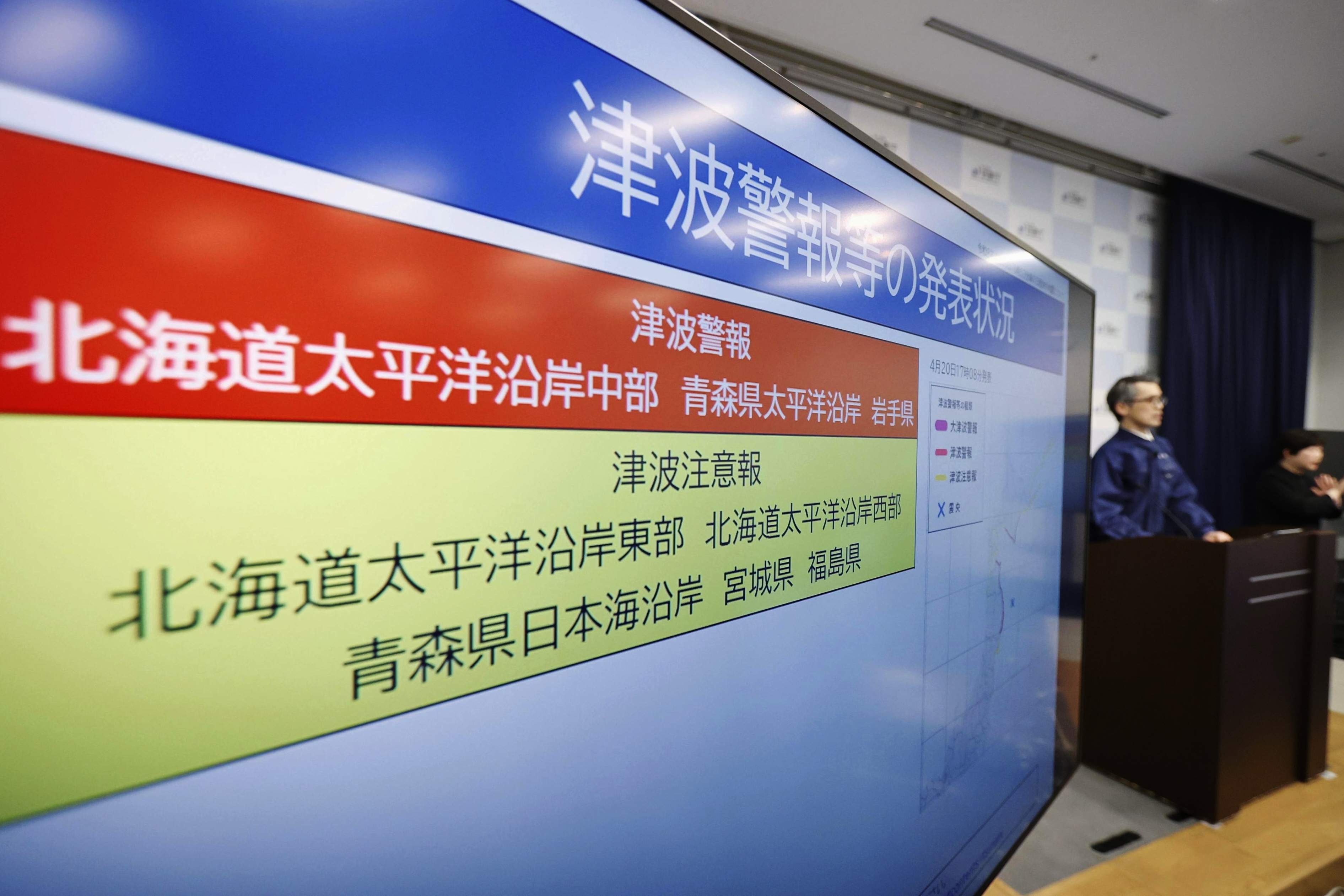
The Japan Meteorological Agency (JMA) issued a special weeklong alert covering 182 municipalities, a move that speaks louder than any initial evacuation order. This is not a standard precaution. It is a recognition that the tectonic environment is currently in a state of high volatility. The risk of another strong quake in the coming days remains statistically elevated. This is not the end of a cycle; it is a warning of an ongoing process.
Infrastructure serves as the ultimate litmus test for this reality. Japan maintains some of the most rigorous seismic standards on the planet. The transition from the 1981 seismic code to the even more stringent requirements implemented after 2000 has saved countless lives. However, the performance of these buildings during the recent quake—which reached an upper 5 on the local intensity scale—reveals the boundary between survival and functionality. While the structural skeletons of modern reinforced concrete buildings remained largely intact, the reality for occupants often involved non-structural failures. Windows shattered, furniture became projectiles, and utility lines—the silent, vulnerable veins of a city—faced significant strain. Related analysis regarding this has been published by NPR.
The myth that modern engineering renders an earthquake a non-event is dangerous. It obscures the economic and psychological toll of a society constantly operating in a state of high alert. A building that survives a magnitude 7.7 shock might still be effectively neutralized if its internal systems, water supply, or electrical grid fail. The evacuation of over 170,000 people across Hokkaido, Aomori, Iwate, Miyagi, and Fukushima confirms that even in a highly prepared state, the displacement of thousands remains the primary cost of doing business in this region.
Consider a hypothetical scenario where an earthquake of this magnitude strikes a more densely populated, older urban center during peak commuting hours. The current safety protocols, which emphasize structural integrity, would still face the insurmountable friction of human movement. Panic in high-density environments remains the most volatile variable in any disaster scenario. The structural capacity of a building is easily measured; the chaotic, unpredictable behavior of thousands of commuters is not.
Energy sector resilience has become the primary metric of stability. The fact that the Higashidori, Onagawa, and Fukushima Daiichi plants reported no abnormalities is a testament to the massive investment in post-2011 safety modifications. These facilities are designed to withstand forces that would liquefy standard residential structures. Yet, this reliance on hardened, centralized infrastructure creates a single point of failure that the public monitors with intense, justified anxiety. Every time the ground shifts near these sensitive sites, the memory of 2011 demands a level of scrutiny that goes beyond official statements.
The public response follows a learned, almost automatic routine. Citizens in the affected prefectures know the protocol because they have been forced to internalize it. This familiarity with disaster is a unique component of the Japanese psyche. It is not apathy; it is a grim, necessary adaptation to a geography that does not promise safety. The JMA’s call for daily preparedness checks is not a bureaucratic gesture, but a pragmatic requirement for survival in a region where the margin for error is measured in centimeters and seconds.
Ultimately, the lifting of the tsunami alert is not the conclusion of this story. It is merely the end of the first act. The tectonic plates do not stop. The stress remains, redistributed but not dissipated. Japan persists as a global model for earthquake mitigation, yet the very necessity of that model serves as a constant reminder of the extreme, unyielding forces that govern the landscape. The quiet return to normalcy in the affected ports and cities is temporary, a fragile peace maintained until the next release of subterranean pressure. The ground has spoken again, and the only certainty is that it will speak once more.