Let's not dance around it. The late, disgraced financier Jeffrey Epstein is the ghost that Washington simply cannot shake. Every time a politician tries to put the lid on the casket, some new development blows it wide open again.
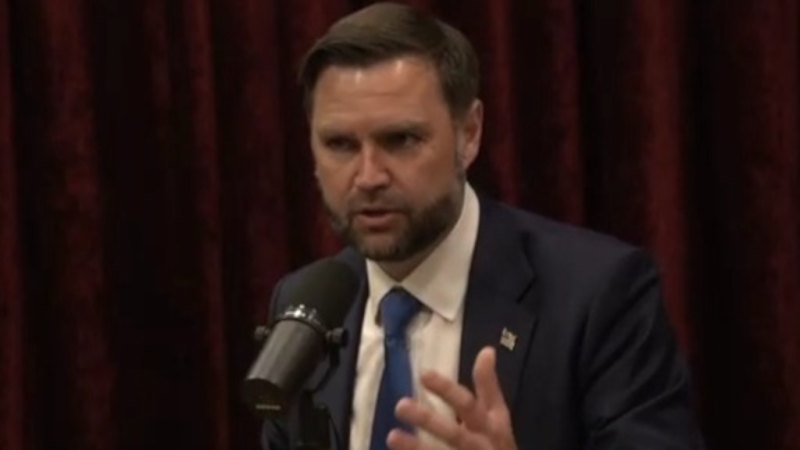
This time, it is Vice President JD Vance stoking the fire. During an appearance on The Joe Rogan Experience, Vance went somewhere very few sitting executive branch officials ever dare to go. He openly discussed the theory that Epstein was connected to the CIA, Mossad, or some other branch of the "deep state."
But this isn't just about a vice president validating what internet sleuths have been whispering for a decade. It's about a rare, behind-the-scenes admission of how badly the government handled the disclosure of the Epstein files, and the messy intersection of intelligence, leverage, and political survival.
What Vance Actually Admitted on Rogan
When Joe Rogan asked Vance about the prevailing belief that Epstein was tied to Israel's Mossad intelligence agency, Vance did not dodge.
"Yeah, Mossad or CIA or some other deep state, whether in America, Israel, or another country," Vance replied. "He clearly had connections to the upper, the highest levels of American intelligence. He clearly had connections to the highest levels of Israeli intelligence."
Vance went even further, pointing out a nuance that often gets lost in the noise. While Epstein was connected "across the board" in the United States—with high-profile friends in both Republican and Democratic circles—his Israeli connections were allegedly much more specific. According to Vance, Epstein was deeply tied to elements of the Israeli deep state that were left of center, rather than the right-of-center politics associated with figures like Prime Minister Benjamin Netanyahu.
This is a wild thing for a sitting Vice President to say on the record. Historically, the standard operating procedure for any official asked about Epstein's intelligence ties is a blank stare or a swift change of subject. Vance, instead, walked right through the front door.
We Screwed Up the Comms
Beyond the spy talk, Vance made a massive admission of administrative failure. He conceded that the Trump administration completely bungled how they handled the release of the Epstein files to the public.
"If people want to say we mishandled the Epstein release, guilty," Vance said. "We did mishandle, especially the communications of it. We absolutely screwed up the comms of the Epstein files."
Much of that blame was pinned on former Attorney General Pam Bondi. Bondi famously claimed that an alleged "client list" was sitting right on her desk. The Justice Department even distributed binders labeled "The Epstein files: Phase 1" and "Declassified" to conservative commentators.
According to Vance, Bondi was just trying to react to a hyper-charged political moment. She wasn't acting maliciously, but she "overstated what we had and what we didn't have." The result? Bondi got roasted, and the public's trust in the administration's transparency went up in smoke.
The Breadcrumbs of the Intel Theory
Why do these comments carry so much weight? Because Vance isn't throwing darts in the dark. The theory that Epstein was an intelligence asset—used to run a blackmail and "honey pot" operation to compromise global elites—is backed by an incredibly weird, highly documented paper trail.
Consider these facts:
- The Acosta "Above My Pay Grade" Admission: Back in 2008, when federal prosecutor Alexander Acosta signed off on a notoriously lenient "sweetheart deal" for Epstein in Florida, he reportedly told investigators he was ordered to back off because Epstein "belonged to intelligence" and the matter was "above his pay grade."
- The CIA Director Meetings: Current CIA Director William J. Burns met with Epstein three times after Epstein had already been convicted of sex offenses. A CIA spokesperson later claimed Burns was merely looking to transition to the private sector.
- The Israeli Intelligence Connection: Emails that surfaced in late 2025 revealed that an active Israeli intelligence officer stayed at Epstein’s Manhattan apartment multiple times between 2013 and 2016. Additionally, former Israeli Prime Minister Ehud Barak was a frequent guest at a Manhattan building managed by Epstein where the Israeli government had reportedly installed advanced security equipment.
- The Whistleblower Claims: Former CIA officer and whistleblower John Kiriakou publicly stated in 2025 that he believed Epstein functioned as a "Mossad access agent"—a textbook operative designed to get close to influential people and extract compromise.
When you look at the sheer volume of high-level contacts Epstein maintained, the idea of him operating entirely as an independent, wealthy predator starts to fall apart. Intelligence agencies run on leverage. Epstein’s entire operation was practically built on it.
The Political Fallout of Vance's Candor
It’s easy to look at Vance's comments as a play for the Joe Rogan audience, which loves a good deep-state theory. But there is a very real, very tense political battle happening behind the scenes in Washington right now.
Congressional Democrats are currently hammering the administration over what they call a coordinated cover-up. Representative Robert Garcia, a ranking member of the House Committee on Oversight, recently demanded that Vance and other top administration officials testify under oath. Garcia cited reports that Vance had actually presided over a Situation Room meeting with figures like Bondi, Kash Patel, and Susie Wiles to manage the political fallout of the Epstein files.
So, when Vance goes on a podcast and says "we screwed up," he’s playing defense by playing offense. He's trying to frame the administration’s failures as a sloppy public relations mess rather than a deliberate, sinister cover-up.
Demanding Real Answers
We are past the point of treating the Epstein case like a fringe conspiracy. When the Vice President of the United States openly talks about Epstein's ties to the CIA and Mossad on the world's biggest podcast, the window of what is considered acceptable public discourse has officially shifted.
If you actually want to make sense of this mess moving forward, don't get distracted by the political theater or the talking points. Focus on the actual documents. Keep an eye on the House Oversight Committee hearings and the ongoing document releases compelled by the Epstein Files Transparency Act. The truth isn't going to come from a polished press release or a defensive podcast appearance. It's going to come from the hard data, the redacted files, and the independent journalists willing to sift through millions of pages of evidence. Keep pressure on your representatives to keep those files flowing, because as Vance just proved, even the people at the top know there is still plenty left to hide.
For a deeper look into the official government documents and the public reaction to the ongoing investigations, watch this detailed breakdown of the congressional testimony surrounding the case House lawmakers speak ahead of Kathy Ruemmler interview in Epstein probe which highlights the bipartisan pressure to get answers on how these sensitive files were managed.