Diplomatic announcements usually read like a polite press release. Somebody gets appointed, somebody gives a speech, everybody claps, and nothing changes on the ground.
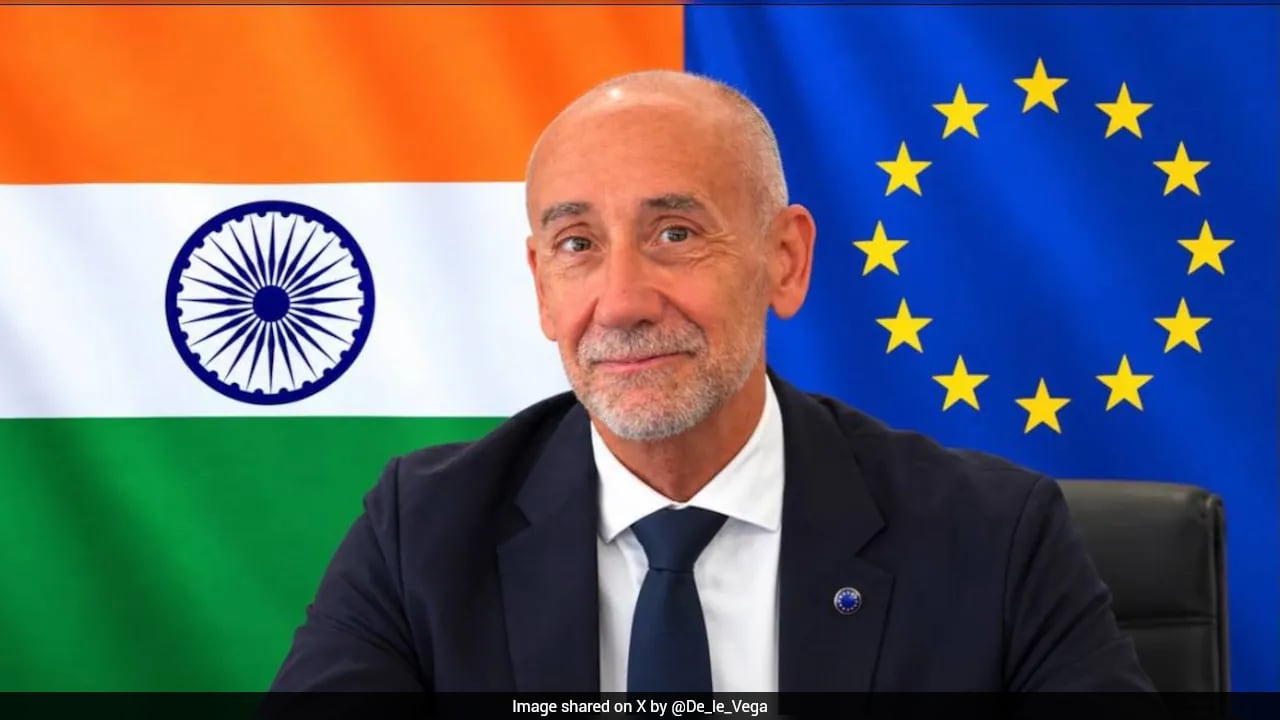
Jean-Eric Paquet showing up at the NDTV World Summit 2026 isn't one of those moments. He stepped into the role of European Union Ambassador to India after presenting his credentials to President Droupadi Murmu on September 25, 2026, arriving right as Brussels and New Delhi are trying to turn years of diplomatic chatter into actual trade, defense, and tech muscle. Put a veteran EU insider on a high-profile New Delhi stage at that exact juncture, and you're looking at a signal, not just a speaking slot.
Here's the catch that a lot of quick roundups miss. Paquet isn't a ceremonial envoy making small talk about shared values. He has spent more than three decades inside European institutions, running the machinery behind research policy and cross-border cooperation, before serving as EU Ambassador to Japan starting in autumn 2022. Bringing that kind of background to India tells you Brussels treats South Asia as an economic and strategic front line, not a side note.
Why Jean-Eric Paquet at the NDTV World Summit 2026 Signals Real Shift
When organizers put Jean-Eric Paquet on the NDTV World Summit 2026 billing—specifically tied to sessions wrestling with a shifting global order and a rewired transatlantic dynamic—they weren't just filling a diplomatic square. They were putting someone in the room who knows how Brussels actually writes rules, moves money, and negotiates industrial policy.
Too often, people treat EU-India relations like a slow-motion movie. Years of talks, occasional summits, lots of warm language about democracy and multilateralism, and then businesses go back to dealing with sluggish customs rules, standards friction, and overlapping geopolitical headaches.
Timing changes everything. Negotiations on the India-EU Free Trade Agreement concluded in January 2026, with legal finalization moving toward a targeted mid-December signing and potential entry into force in the first half of 2027 pending European Parliament scrutiny and approval. Meanwhile, trade in goods between the two sides hit €118 billion in 2025, making the EU India's third-largest trading partner at roughly 11.1% of India's total trade.
That's why Paquet's presence carries weight. A trade deal on paper doesn't automatically fix supply chains or get small exporters paid faster. Someone has to translate broad strategic promises into permits, industrial clusters, research access, and defense procurement.
Three Decades Inside Brussels Machinery
If you want to understand how Paquet approaches a summit stage, look at his resume rather than his title. He started his European Commission career back in 1993 in transport policy, worked on enlargement and research files, served as EU Ambassador to Mauritania from 2004 to 2007, and later led DG Research and Innovation.
Running research and innovation in Brussels isn't glamorous, and honestly it can be a grind. You're herding national ministries, university consortia, and tech firms with competing interests while trying to keep public funding tied to real scientific output. That experience matters right now because India's association with Horizon Europe is moving forward alongside deeper bilateral work on digital tech, AI, and clean energy.
Following that with four years as EU Ambassador to Japan gave him front-row exposure to Indo-Pacific security anxieties, supply chain vulnerabilities, and high-tech industrial competition. A diplomat coming out of Tokyo doesn't walk into New Delhi thinking Asia is uniform or passive. He knows regional players guard their strategic autonomy fiercely.
A Different Kind of Transatlantic and Indo-Pacific Pitch
Old assumptions about "the West" acting as a single, neat bloc have taken a beating. European leaders have been talking about mobilizing up to €800 billion by 2030 to close capability gaps in areas like air defense, satellite surveillance, communications, and logistics, while also pushing economic security and critical mineral resilience.
From an Indian vantage point, that creates a practical opening—and a real test. New Delhi isn't looking for lectures on foreign policy alignment, especially when capitals disagree on specific conflicts or major-power moves. What Indian policymakers and business leaders actually care about is whether European capital, technology transfer, and maritime cooperation show up when supply chains get squeezed.
Paquet has acknowledged openly that India and the EU don't see every geopolitical issue the same way, while arguing that shared commitments to a rules-based order and Indo-Pacific maritime security give them solid ground to cooperate—including alongside partners like ASEAN. That's a sharper, more realistic pitch than pretending two massive political actors agree on everything.
Where the Hype Outruns Reality on EU-India Ties
Let's be candid. Whenever a big trade agreement or high-profile summit appearance happens, commentary tends to swing straight into grand predictions. "Historic breakthrough." "Game-changing reset." You hear that line every few years whenever diplomats find a friendly headline.
Real life is messier. First, signing a Free Trade Agreement and getting it through ratification and implementation are two different things. European Parliament scrutiny brings real debates over sustainability standards, labor rules, market access, and sensitive sectors. On the Indian side, domestic industries still weigh import competition against export gains.
Second, "trustworthy AI" and digital governance sound great on a summit panel, yet compliance friction is a genuine worry for startups and mid-sized firms. Heavy regulatory rules can slow down smaller companies faster than giant multinationals with armies of lawyers. Paquet has pointed to the challenge of building common frameworks for trustworthy AI that support cross-border innovation without burying startups under disproportionate compliance weight. Getting that balance right in practice will be much harder than saying it on stage.
Third, geography and legacy ties don't vanish overnight. India's defense procurement, energy sourcing, and diplomatic relationships span multiple poles, and Europe has its own domestic fiscal pressures and industrial bottlenecks. Anyone expecting instant magic from a single summit appearance is setting themselves up for disappointment.
What Business Leaders and Watchers Should Actually Look For
If you run a company, invest across borders, or follow geopolitics closely, don't judge Paquet's summit appearance by applause lines. Watch the plumbing instead.
- Track the FTA calendar and customs readiness: Keep an eye on the mid-December signing target and the ratification steps heading into 2027. Businesses that wait until tariffs drop on paper often lose months sorting out rules of origin, certifications, and partner distribution.
- Look at state-level industrial platforms: Paquet has highlighted working with Indian states and instruments like Global Gateway to build dedicated industrial hubs and help firms handle land, permits, and local partners—such as efforts around clusters like Blue Valley. That's where physical investment actually happens.
- Follow research and MSME access: If you're in clean tech, life sciences, advanced manufacturing, or digital tools, pay attention to Horizon Europe association pathways and practical tools aimed at small and medium enterprises. Big deals grab headlines, but smaller firms often feel the day-to-day friction first.
- Separate rhetoric from procurement: In defense, cybersecurity, and critical minerals, watch for concrete joint projects, co-development, and supply chain agreements rather than broad statements of intent.
Paquet has made a point of saying he plans to travel widely across India's states and union territories during his tenure rather than staying locked inside a New Delhi bubble. That instinct is spot-on. India's growth isn't happening in one capital city, and European partnerships won't stick unless they connect with real factories, labs, and local entrepreneurs across the map. Start mapping how your sector fits into EU-India trade, research, and industrial corridors now—before your competitors get there first.


