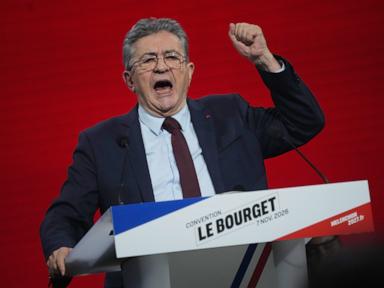
Jean-Luc Mélenchon built a fifty-year career on a single, uncompromising vow: stop the French far right from ever taking the Élysée Palace. Yet as France barrels toward the 2027 presidential election, the 75-year-old founder of La France Insoumise (LFI) is executing a political strategy that analysts, polling models, and his own former allies warn could finally shatter the Republican Front and hand power to Marine Le Pen’s National Rally. By refusing to step aside for a unified left-wing primary and banking on a divisive "noise and fury" populist mobilization, Mélenchon risks splitting the anti-far-right vote in the first round—or worse, advancing to a second-round runoff where centrist and conservative voters refuse to back him.
Politics rarely deals in clean ironies. Usually, a career ends with a slow fade into elder-statesman irrelevance or a miscalculated policy gamble that quietly erodes a legacy. What is unfolding on the French left in late 2026 is altogether sharper, louder, and far more consequential for the future of European democracy.
The Architecture of a Splintered Left
To understand how a lifelong anti-fascist became the far right’s greatest structural asset, you have to look at the cold arithmetic of France’s two-round electoral system. In the Fifth Republic, the first round is a brutal elimination tournament. Only the top two finishers advance to the decisive runoff two weeks later.
In 2017, Mélenchon missed the second round by roughly 600,000 votes. In 2022, he missed it again by just over 420,000 votes—a razor-thin margin of 1.2 percentage points behind Marine Le Pen. Those two near-misses did not humble the veteran tribune. They hardened his conviction that only his brand of rupture politics—aggressive, anti-capitalist, and unapologetically confrontational—can mobilize working-class abstentionists and suburban youth.
The problem is that the French left of 2026 is no longer willing to kneel at the altar of LFI.
Following the chaotic aftermath of the 2024 snap legislative elections, the fragile New Popular Front alliance began fracturing under the weight of Mélenchon’s maximalist rhetoric. Moderate Socialists, Greens, and Communists watched as LFI’s uncompromising stances on domestic institutional conflict, European treaties, and foreign policy alienated the exact center-left voters needed to build a governing majority.
For months, mainstream left-wing leaders—including figures around Socialist Party chief Olivier Faure and former President François Hollande’s camp—have pushed for a common primary to select a single, broadly palatable standard-bearer for 2027. Mélenchon has flatly rejected the idea. In his view, primaries are a bourgeois trap designed to dilute radicalism and hand the keys back to the moderate wing that governed under Hollande.
Instead, Mélenchon is running his fourth presidential campaign on his own terms. If the Socialists, Ecologists, and Communists field their own candidates in response, the left will enter April 2027 divided into three or four competing factions.
Numbers do not lie. When a fragmented left splits 28 to 32 percent of the electorate across multiple candidates, no single progressive contender reaches the 20 percent threshold required to survive the first round. The result is mathematical certainty: a second-round runoff between the National Rally and a fractured center-right, or worse, a scenario where Mélenchon squeaks into second place with a toxic ceiling that guarantees his defeat.
Why the Republican Front Has Collapsed
For decades, French politics operated on an unwritten moral rule known as the Republican Front. Whenever a candidate from the far-right National Front—now the National Rally—reached the second round of an election, voters from the left, center, and traditional right swallowed their ideological disgust and voted for whoever stood opposite the Le Pen family.
That barrier kept Jean-Marie Le Pen out of power in 2002, when Jacques Chirac won over 82 percent of the vote. It held again for Emmanuel Macron in 2017 and 2022, though by visibly shrinking margins.
Today, that dam is gone. And Mélenchon helped dismantle it from the left just as surely as Marine Le Pen and Jordan Bardella eroded it from the right.
Consider what happens in a hypothetical 2027 second-round matchup between Mélenchon and the National Rally candidate. According to repeated polling conducted throughout 2025 and 2026 by major French institutes like Ifop and Elabe, Mélenchon is the only major political figure in France who loses consistently to the far right in a head-to-head runoff.
The mechanics behind this polling disaster are straightforward:
- Asymmetric Rejection: While the National Rally has spent over a decade executing its dédiabolisation (de-demonization) strategy—swapping street-fighting rhetoric for tailored suits, parliamentary discipline, and cost-of-living populism—LFI has moved in the opposite direction. Mélenchon’s deliberate cultivation of institutional chaos inside the National Assembly has driven his personal rejection ratings above 70 percent among the broader electorate.
- The Center-Right Defection: Traditional conservative voters from Les Républicains and center-right Macronists historically held their noses to block the far right. Faced with a choice between the National Rally and Mélenchon, large swathes of moderate voters now tell pollsters they will either abstain or vote for the far right as the lesser of two perceived threats to economic stability and public order.
- The "Ni-Ni" Trap: During the 2022 presidential runoff, Mélenchon famously instructed his supporters to give "not a single vote to Madame Le Pen," while refusing to explicitly endorse Emmanuel Macron. That ambiguity taught millions of voters that withholding a vote in the second round is an acceptable tactical choice. Now, centrists and conservatives are prepared to return the favor.
From Trotskyist Street Fighter to Tribune of the People
To dismiss Mélenchon’s strategy as mere senile vanity is to misunderstand the man entirely. Everything he is doing in 2026 flows logically from fifty years of ideological conditioning.
Born in Tangier in 1951 to a Spanish-descended postmaster and a primary school teacher, Mélenchon cut his political teeth in the aftermath of May 1968. As a young militant in the Internationalist Communist Organisation, a hardcore Trotskyist sect, he learned that political power is never won through polite consensus or parliamentary compromise. It is seized through confrontation, polarization, and the sharp division of society into "the people" versus "the oligarchy."
When he joined François Mitterrand’s Socialist Party in 1976, Mélenchon spent three decades operating on its hard-left flank. He served as a senator and as a junior minister for vocational education under Lionel Jospin. He knew the machinery of the French state from the inside. Yet he grew increasingly convinced that the mainstream European left had surrendered to neoliberalism, particularly after France voted "no" in the 2005 European Constitution referendum only to see parliament ratify the Lisbon Treaty three years later.
That betrayal triggered his departure from the Socialist Party in 2008 and the birth of his modern populist project. Borrowing heavily from left-wing theorists Chantal Mouffe and Ernesto Laclau, Mélenchon abandoned traditional Marxist class jargon in favor of left-wing populism. He traded red flags for the French tricolor, replaced the Internationale with La Marseillaise, and positioned himself as the tribune of the forgotten majority against a corrupt political caste.
It was a brilliant tactical reinvention that revitalized a moribund radical left. Between 2012 and 2022, Mélenchon transformed a fringe movement into the dominant force on the French left, swallowing the Communist Party whole and reducing the once-mighty Socialists to single digits in 2022.
The Structural Trap of "Noise and Fury"
What worked as a insurgent strategy to conquer the left, however, has proved fatal as a strategy to conquer the country.
In political science, there is a hard limit to populist polarization. By intentionally inflaming tensions—calling police forces violent, defending controversial rhetoric surrounding Middle Eastern conflicts that alienated mainstream Jewish and secular voters, and refusing to condemn radical allies—Mélenchon successfully consolidated a loyal core of roughly 15 to 20 percent of the electorate.
In France’s urban centers and working-class suburbs (banlieues), his message resonates deeply. High turnout among young voters and marginalized communities delivered LFI decisive victories in key metropolitan districts during the 2022 and 2024 legislative races.
Yet outside those dense urban islands, the strategy backfires violently. In small towns, rural departments, and deindustrialized peri-urban zones—the exact battlegrounds where French presidential elections are won and lost—LFI’s constant theatrical outrage plays directly into the National Rally’s narrative.
Every time LFI deputies disrupt parliamentary sessions or refuse to shake hands with political opponents, Jordan Bardella and Marine Le Pen do not need to attack the left. They simply step back, look composed, and present themselves as the party of calm, order, and institutional seriousness.
Mélenchon believes that deepening the crisis of the Fifth Republic will eventually force voters to choose radical emancipation over authoritarian nationalism. History suggests the exact opposite happens when a democracy feels itself sliding toward disorder. Fearful majorities do not vote for revolution. They vote for the sheriff.
Inside the Succession Crisis of La France Insoumise
A veteran observer watching LFI’s internal dynamics over the past two years sees an organization built entirely around one man’s voice, charisma, and iron control.
Unlike the Socialist Party or the Greens, La France Insoumise is not a traditional democratic party with formal membership votes, transparent leadership contests, or institutionalized factions. It is a vertical movement run by a tight inner circle loyal to Mélenchon—figures like Manuel Bompard, Mathilde Panot, and Sophia Chikirou.
When prominent internal figures dared to question the movement's aggressive tone, lack of internal democracy, or Mélenchon’s dominance—most notably François Ruffin, Clémentine Autain, and Alexis Corbière—they were systematically marginalized or purged during the 2024 legislative candidate selections.
Ruffin, a charismatic documentary filmmaker and deputy from the northern Somme department who spent years trying to win back white working-class voters from Marine Le Pen, broke away entirely. He openly accused Mélenchon of preferring ideological purity and suburban clientelism over actually winning a national majority.
This internal purge left LFI structurally incapable of producing an organic successor. While Bompard and Panot are effective organizers and parliamentary brawlers, neither commands the oratorical power or national stature required to carry a presidential campaign.
Consequently, Mélenchon remains trapped at the center of his own creation. If he steps aside, the movement risks immediate implosion or absorption into a broader, more moderate center-left coalition. If he runs, his towering unpopularity acts as an anchor dragging the entire French left down with him.
The Overlooked Factor of the Post-Macron Vacuum
The danger of Mélenchon’s gamble is magnified by what is happening on the other side of the political spectrum.
Emmanuel Macron is constitutionally barred from seeking a third consecutive term in 2027. For ten years, Macronism functioned as a massive gravitational sinkhole that absorbed moderate voters from both the center-left and the center-right, starving traditional parties of oxygen while keeping the extremes locked out of the presidency.
With Macron exiting the stage, that centrist bloc is fragmenting. Potential successors like former Prime Minister Édouard Philippe, Gabriel Attal, and Gérald Darmanin are competing for the same dwindling pool of moderate voters, while the traditional conservative party remains weak and divided.
In a normal election cycle, a fracturing political center would create a golden opening for a united left to sweep into power. France faces deep anxieties over purchasing power, healthcare access, pension reform, and climate transition—issues where progressive policies enjoy broad public sympathy.
A disciplined, unified left-wing candidate capable of reassuring moderate voters on fiscal responsibility and institutional stability would stand a genuine chance of reaching the second round and defeating the National Rally.
Instead, by insisting on running as the uncompromising tribune of the radical left, Mélenchon ensures that the anti-Le Pen electorate enters 2027 shattered into competing tribes.
A Legacy Balanced on a Razor's Edge
Jean-Luc Mélenchon’s defenders argue that critics have written his political obituary before, only to watch him surge in the final weeks of a campaign through sheer rhetorical brilliance. They point out that in both 2017 and 2022, late-deciding left-wing voters rallied behind him as the "useful vote" (vote utile), lifting him far above his initial polling numbers.
That argument ignores a crucial shift in the political terrain. In 2017 and 2022, Mélenchon was still viewed by many hesitant progressives as a credible, albeit fiery, standard-bearer for a broader left. Today, after years of scorched-earth tactics against his own coalition partners, the "useful vote" dynamic works in reverse. Millions of left-leaning voters now view voting for Mélenchon not as a path to victory, but as a guaranteed ticket to a far-right presidency.
Half a century ago, a young militant stepped onto the streets of France determined to crush the heirs of Vichy and build a fairer, more egalitarian republic. He fought that battle in union halls, senate chambers, and packed public squares across five decades. Now, standing at the edge of his final campaign, the only person standing between the French left and a viable path to stop the far right is Jean-Luc Mélenchon himself.