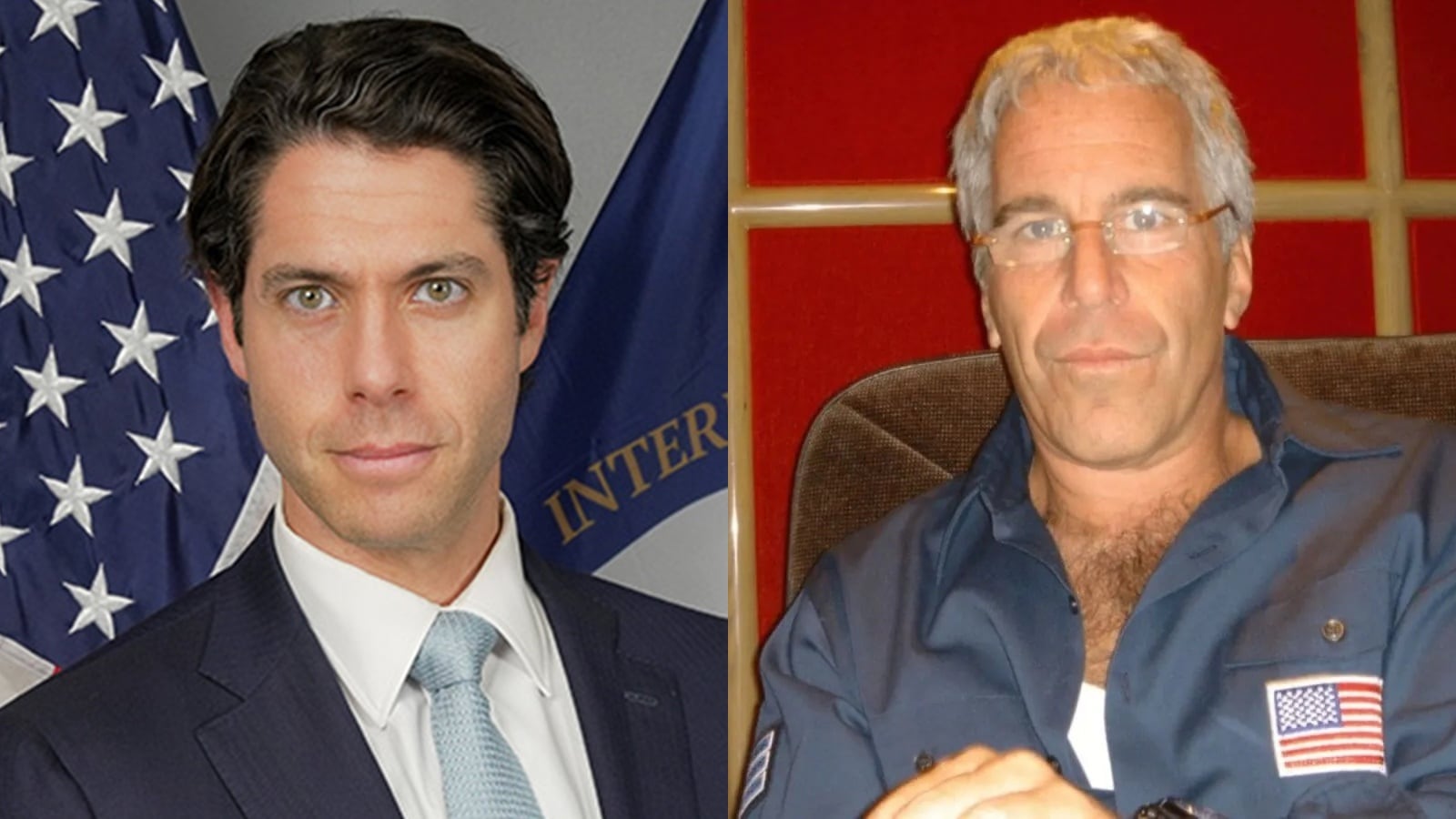
When Donald Trump hands you the keys to a federal agency controlling $205 billion in taxpayer-backed funds, people are going to dig into your past. They'll look at your track record, your investments, and inevitably, your social circle.
Ben Black, the newly minted head of the US International Development Finance Corporation (DFC), is learning this truth the hard way. Newly surfaced records from the Department of Justice have thrown Black into a political firestorm, revealing personal and professional ties to Jeffrey Epstein. You might also find this similar story useful: Why the Port Talbot Steelworks Fire is Bad News for British Manufacturing.
It's a bad look for an agency that uses billions in public money to bankroll overseas development projects. While Black hasn't been accused of any criminal wrongdoing, the newly leaked paper trail has ignited fierce scrutiny from watchdog groups and lawmakers who wonder just how deep these connections go.
If you're wondering why a government finance boss's old emails matter so much, you have to look at how Washington handles billions of dollars in public assets and who gets to pull the strings. As highlighted in detailed reports by CNBC, the implications are worth noting.
What the Leaked Epstein Files Actually Show
Let's look at the facts. A review of thousands of pages of Epstein’s private correspondence reveals that Ben Black’s relationship with the disgraced financier wasn't just a passing introduction at a New York gala.
The documents paint a picture of multi-layered connections. Back in 2011, Black and Epstein invested in the exact same company. Around that same time, Epstein claimed he attended Black's 30th birthday party and even offered advice on purchasing an $11.5 million luxury townhouse.
The paper trail gets weirder. In one instance, Epstein coached a young woman on how to draft text messages to Black. The next day, she messaged Epstein to let him know she and Black had kissed. Another log from a year later shows Epstein's staff coordinating with a Google administrator to set up a private tour of Google's New York headquarters for Epstein, his partner Karyna Shuliak, Ben Black, and his father, billionaire Leon Black.
Black’s representatives vehemently deny that any relationship existed, asserting that Epstein was a known liar and embellisher who fabricated associations to boost his own status. His team insists Epstein never actually showed up to that 30th birthday party, regardless of what his emails claimed.
The Family Business and the Billion Dollar Shadow
You can't talk about Ben Black without talking about his father, Leon Black, the co-founder of private equity giant Apollo Global Management. Leon Black’s deep financial entanglement with Epstein is already well-documented history.
A Senate finance committee investigation previously revealed that the senior Black paid Epstein a staggering $170 million for tax-mitigation strategies and estate planning, making Leon Black Epstein’s highest-paying client by a significant margin. An independent probe conducted by Apollo Management in 2021 cleared Leon Black of any connection to Epstein's criminal trafficking network, but the massive financial ties ultimately forced him to step down from his leadership role at the firm.
Now, those same ghosts are haunting his son's public career. Critics argue that Ben Black grew up in an ecosystem heavily influenced by Epstein's financial structures. He attended the exclusive Dalton School on Manhattan's Upper East Side, where Epstein once briefly taught math in the 1970s, before heading to the University of Pennsylvania.
For watchdogs, the worry isn't just about social interactions. It's about whether someone deeply tied to high-finance networks that tolerated Epstein should be running a federal agency funded by regular American taxpayers.
How the DFC Operates Under Intense Scrutiny
The agency Ben Black commands isn't a household name, but it wields immense economic power. The DFC partners with private investors to fund projects in developing markets, focusing on infrastructure, energy, and technology sectors across the globe.
With a portfolio value crossing $205 billion, the DFC acts as America's economic counterweight to foreign initiatives like China's Belt and Road project. Because it relies heavily on US taxpayer backing, the agency's leadership requires a high level of public trust.
The DFC has kept quiet and declined to issue formal comments on the matter. Meanwhile, a White House spokesperson quickly issued an unsolicited defense, affirming Black's fitness and capability to lead the agency effectively.
A Growing Pattern in the Federal Administration
Ben Black isn't the only official in Washington facing these uncomfortable questions. The administration has placed multiple individuals with past Epstein connections into prominent roles.
Take Howard Lutnick, the current US Commerce Secretary. Lutnick recently had to address a House oversight committee after admitting he once traveled to Epstein’s private Caribbean island, though he maintained those interactions were entirely inconsequential and has never been accused of any wrongdoing.
Interestingly, Lutnick also sits on the board of directors for the DFC. He and Black are part of an eight-member panel responsible for approving major overseas investments. Having multiple decision-makers on a $205 billion board with ties to the same disgraced financier has turned the agency into a primary target for congressional oversight.
What Happens to the $205 Billion Portfolio Now
The fallout from these reports is bound to trigger immediate consequences for how the DFC moves forward. Expect Capitol Hill oversight panels to launch formal inquiries into Black’s appointment, potentially stalling major foreign investment approvals while the administration plays defense.
If you are tracking federal investments, watch the DFC's upcoming board meetings closely. Lawmakers are going to demand transparency regarding how these multi-billion dollar projects get approved. The real test is whether the administration stands by Black amid escalating political pressure, or if the shadow of the Epstein files proves too heavy for a public official managing billions in taxpayer cash.