Jersey was supposed to be the world’s sandbox for the autonomous revolution. With its self-contained road network, unique legal jurisdiction, and a government-backed push for digital innovation, the island had the perfect blueprint to beat larger nations to the punch. Yet, recent revelations show that the dream of "Driverless Jersey" has stalled in a thicket of consultant fees and legislative hesitation. While the UK moves forward with the Automated Vehicles Act 2024, Jersey has shelved its plans after spending upwards of £50,000 on external advice that now sits in a digital drawer.
This isn’t just a story about a failed pilot program. It is a case study in how small jurisdictions can lose their competitive edge through a mixture of risk aversion and "analysis paralysis." The core problem is not the technology—which is maturing rapidly in hubs like San Francisco and Phoenix—but a failure to bridge the gap between aspirational press releases and the gritty reality of insurance liability and road safety law. For a closer look into this area, we suggest: this related article.
The Fifty Thousand Pound Paperweight
The recent disclosure that the Government of Jersey spent between £35,000 and £50,000 on "law drafting instructions" before ditching the project is a bitter pill for local taxpayers. In the grand scheme of government spending, fifty grand is a rounding error. However, in the context of missed opportunity, it represents a total collapse of momentum.
These funds were paid to external consultants to figure out how a driverless car could legally exist on an island governed by the Road Traffic (Jersey) Law 1956. The consultants did their job. They mapped out the requirements for a testing framework. But when it came time to actually draft the legislation, the political appetite vanished. The project is no longer "being progressed," leaving Jersey in a legal vacuum while the rest of the world builds the infrastructure for the next century of transport. For further details on this development, comprehensive analysis is available at Ars Technica.
Why Jersey is the Perfect (and Worst) Testing Ground
Industry analysts have long argued that Jersey’s geography makes it a "Goldilocks" zone for autonomous vehicles (AVs).
- Closed Loop System: You cannot drive off the island. This simplifies geofencing, the process of limiting a vehicle's operation to a specific geographic area.
- Low Speed Limits: With a maximum speed of 40mph and many lanes restricted to 15mph, the kinetic energy involved in a potential "edge case" accident is significantly lower than on a UK motorway.
- High Density: Jersey’s congestion is legendary. A fleet of shared, autonomous electric pods could, in theory, remove thousands of private cars from St. Helier’s choking arteries.
The flip side is the complexity of Jersey’s "green lanes" and narrow, stone-walled corridors. Most autonomous systems are trained on wide American boulevards or standardized European highways. Navigating a Jersey lane where a tractor might appear around a blind corner requires a level of spatial intelligence and sensor fusion that most off-the-shelf systems haven't mastered.
The Liability Trap
The real reason the project died wasn't because the cars couldn't handle the corners. It died because of the User in Charge (UiC) dilemma.
Under current Jersey law, a human must be responsible for the vehicle at all times. If a driverless car hits a granite wall, who gets the points on their license? If there is no steering wheel, who does the Honorary Police breathalyze? The UK’s new framework solves this by shifting liability to the Authorised Self-Driving Entity (ASDE)—essentially the manufacturer or software provider.
Jersey’s lawmakers hesitated to create a similar carve-out. By failing to establish a clear line of liability, they made the island radioactive to tech firms. No company is going to ship a multi-million pound prototype to the Channel Islands if their lead engineer risks a prison sentence for a software glitch.
The Cost of Caution
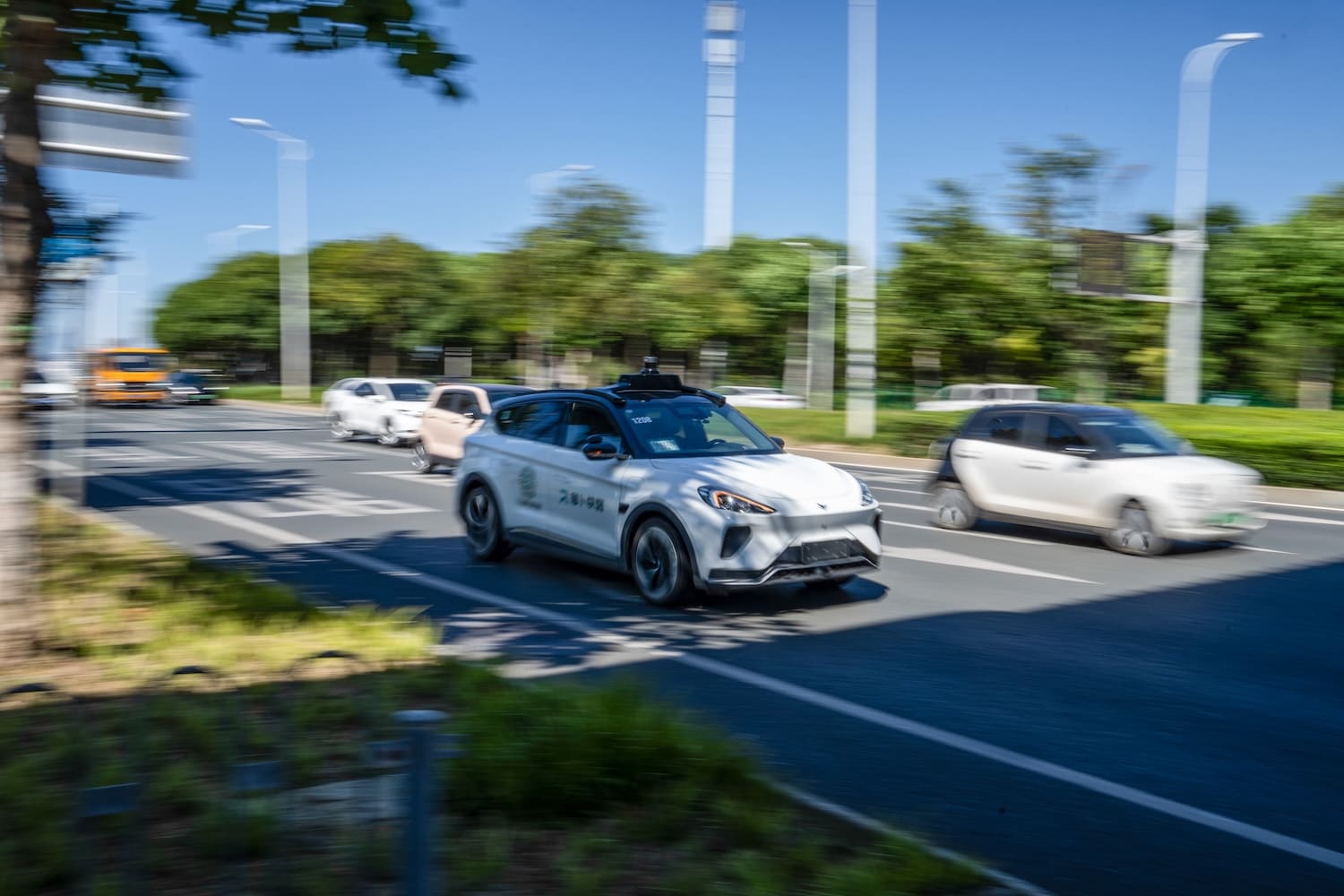
While Jersey pauses, the UK is hurtling toward a 2026 rollout of commercial self-driving services. The Automated Vehicles Act has created a "safety-first" framework that allows for "No User in Charge" (NUiC) operations. This means that by next year, residents in London or Manchester may be hailing robotaxis while Jersey residents are still sitting in traffic on Victoria Avenue.
There is a significant economic cost to this delay. The UK autonomous sector is projected to be worth £42 billion by 2035. Jersey, by positioning itself as a testbed, could have captured a slice of that pie through high-value jobs in remote vehicle monitoring, data annotation, and specialized insurance. Instead, the island is watching from the sidelines.
A Path Out of the Stagnation
If Jersey wants to revive these plans, it needs to stop treating autonomous vehicles as a "tech project" and start treating them as a public utility.
The "wait and see" approach is often touted as the safe move. In reality, it is the most dangerous. As private vehicles become increasingly automated—with Tesla’s FSD and Mercedes’ Level 3 Drive Pilot already hitting European roads—Jersey’s outdated laws will eventually be broken by the cars already sitting in local garages.
The island doesn't need to reinvent the wheel. It should:
- Adopt the UK Framework: Instead of paying consultants to write bespoke Jersey laws, the island should mirror the UK’s Automated Vehicles Act. This would provide immediate clarity for insurers and manufacturers.
- Focus on "Last Mile" Public Transport: Forget private driverless cars. The focus should be on autonomous shuttles connecting the airport to St. Helier.
- Create a "Sandbox" License: Issue temporary, site-specific permits for trials in controlled environments like the Waterfront or the Airport apron.
The technology is ready. The hardware exists. The only thing missing is a legislative signature. If Jersey continues to let its £50,000 drafting instructions gather dust, it won't just be losing money; it will be losing its status as a digital leader.
The infrastructure of the future is being built now. You are either at the table or on the menu. For Jersey, the clock is ticking, and the engine is idling.