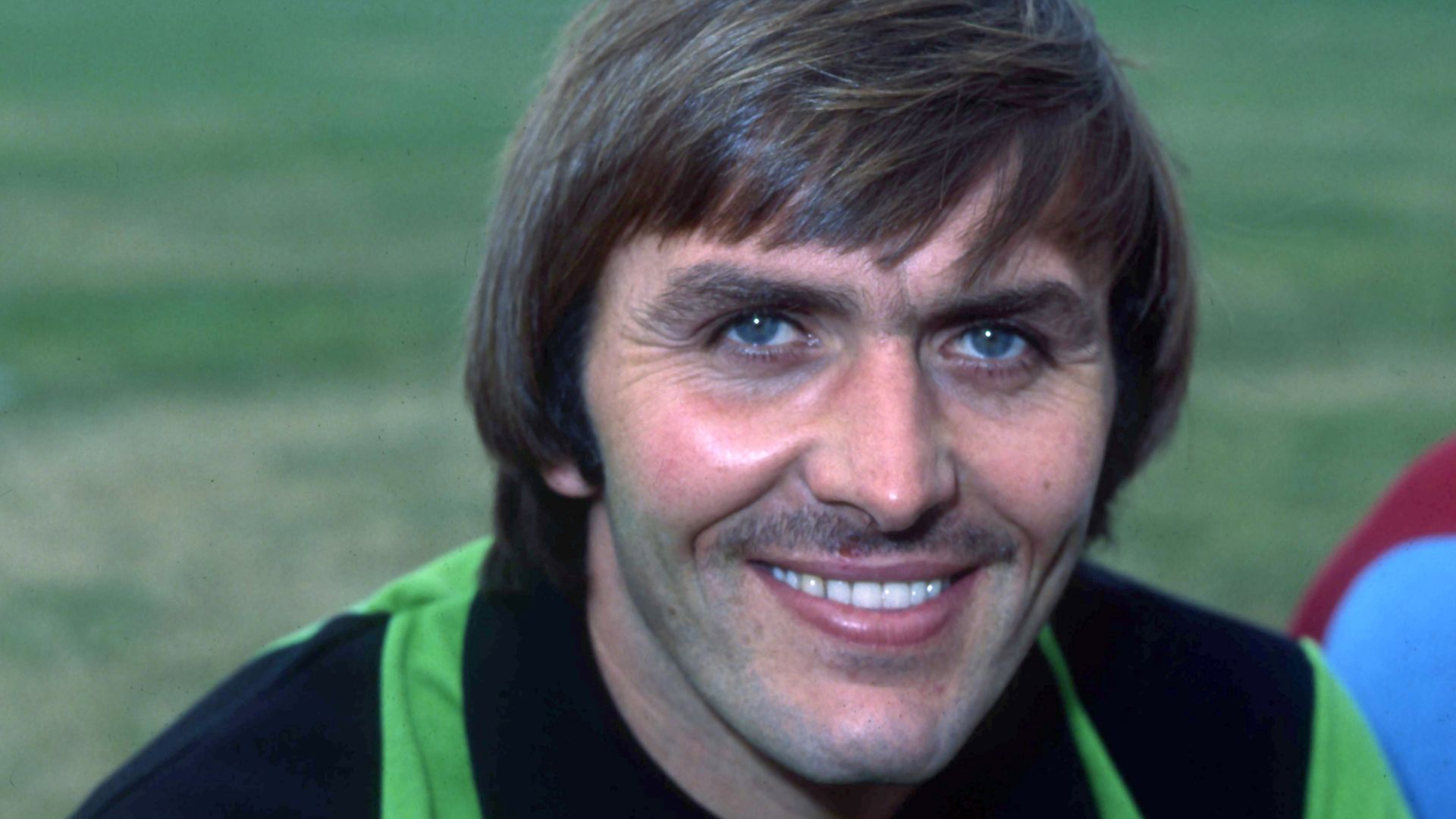
Jimmy Rimmer died at the age of 78, leaving behind a legacy defined by two European Cup medals. Yet the most enduring truth of his extraordinary career is that he spent both of those continental triumphs sitting on a bench or walking down the tunnel in tears.
History remembers the victors, but football history often treats its iron men with a distinct kind of irony. Rimmer was one of the finest shot-stoppers of his generation, a foundational pillar for Aston Villa and Arsenal, and a quiet occupant of Manchester United’s dressing room during the club's golden era under Sir Matt Busby. His passing at 78 invites a deeper look past the tidy Wikipedia summary of two European Cups with two different English clubs. Underneath those medals lies a narrative of agonizing proximity to glory, grueling patience, and the brutal reality of life as a goalkeeper.
The Long Shadow of Old Trafford
To understand Rimmer, one must understand the anatomy of a backup goalkeeper in an era before substitutes were common or tactical rotations existed. Signed as a schoolboy by Manchester United in 1963, the Southport-born youngster entered an institution swimming in post-Munich mythology and heavy expectations.
He found himself trapped behind Alex Stepney, an unshakeable presence who commanded the United penalty area with a booming voice and unwavering durability. Rimmer spent eleven years on the books at Old Trafford, the vast majority of them in the shadows. When United conquered Europe in 1968 by defeating Benfica 4-1 at Wembley, Stepney played every minute. Rimmer watched from the bench.
Modern football culture trains fans to view squads through an egalitarian lens, celebrating every member of the traveling party. But for a competitive athlete in the 1960s, sitting on the sidelines while your peers write immortality on the pitch is a special kind of purgatory. Rimmer did not sulk; he worked. But the frustration eventually boiled over. Loaned to Swansea City and eventually sold to Arsenal in 1974 to replace the retiring Bob Wilson, he finally broke free from the understudy curse.
North London Validation and the Arsenal Peak
At Highbury, Rimmer proved his worth. He claimed the number one jersey immediately, sweeping up Arsenal's Player of the Season award in 1975 and anchoring a defense that demanded absolute resilience. This was not the aesthetically pampered Arsenal of later decades; this was a side built on grit, discipline, and defensive organization.
Rimmer’s performances in north London finally earned him international recognition, albeit a fleeting and complicated one. In 1976, he earned his sole cap for England in a friendly against Italy. It was an eventful introduction to international football. He conceded two goals before being substituted at half-time, a harsh introduction that somehow never led to a sustained run with the national team, despite his domestic consistency. England’s goalkeeping hierarchy at the time was fiercely contested, and Rimmer’s international window slammed shut almost as quickly as it opened.
Yet his club reputation remained sterling. When Tottenham manager Terry Neill crossed the north London divide to take over Arsenal and subsequently brought in Pat Jennings, Rimmer became available. Ron Saunders, building a formidable, hard-nosed Aston Villa side, swooped in for a modest fee of roughly 65,000 pounds in 1977. It was the transaction that defined the rest of his career.
The Aston Villa Ascent
Under Saunders, Villa transformed into a domestic juggernaut. Rimmer was the missing puzzle piece at the back, bringing the composure of a veteran winner to an ambitious squad.
He was an ever-present fixture during the 1980-81 season, playing every single match as Aston Villa clinched the First Division title for the first time in 71 years. There was no bench-sitting here; Rimmer was the absolute bedrock of a championship-winning machine. His positioning was immaculate, his handling secure, and his communication organizing a backline that suffocated opposing attacks.
That domestic crown punched Villa's ticket to the European Cup for the following campaign. What followed was a grueling, brilliant march to the final in Rotterdam, with Rimmer starting all nine matches leading up to the climax against Bayern Munich.
Rotterdam and the Cruel Twist of Fate
May 26, 1982, should have been Rimmer’s ultimate coronation. He had carried the defensive load through Europe, guiding Villa through hostile away environments and tactical minefields.
Instead, fate intervened with staggering cruelty. Just nine minutes into the European Cup final against Bayern Munich, a sharp pain shot through Rimmer’s neck. A chronic muscle or nerve issue flared up catastrophically, rendering him unable to continue. Tears streaming down his face, he trudged off the pitch, replaced by a 23-year-old rookie named Nigel Spink, who had played only one senior match for the club prior to that night.
What happened next belongs to football folklore. Spink played the game of his life, turning away wave after wave of Bayern attacks before Peter Withe bundled home the historic winner. Villa won 1-0. They were champions of Europe. And Rimmer, once again, was forced to collect a winner's medal without being on the pitch at the final whistle.
He became only the second player in history to win a European Cup with two different clubs, yet he spent both finals as a spectator or an early casualty. It is a statistical trivia question that masks a deeply human narrative of bad luck.
The Unsung Architecture of Success
Football pundits often obsess over the marquee names who score the goals or lift the trophies under a shower of confetti. They forget the quiet professionals who absorb the pressure, organize the chaos, and provide the psychological floor upon which dynasties are built.
Rimmer's career spanned eras, from the fading glamour of the Busby setup to the tactical pragmatism of 1980s English football. He wasn't flashy. He didn't cultivate a celebrity persona. He simply went out, caught crosses in packed goalmouths, and commanded his boxes with quiet authority.
When tributes poured in from Manchester United, Aston Villa, and across the football landscape following his passing, they did not speak of a man broken by his misfortunes on the biggest stages. They spoke of a titan of his generation, a teammate of immense integrity, and a goalkeeper whose contribution to English football history far outweighs the simple count of minutes played in two specific finals.
The medals in his drawer tell an incredible story of two clubs reaching the summit. The way he earned them tells an even more compelling story about the unpredictable, sometimes brutal nature of the sport he gave his life to.