Political memoirs are where bold ideas go to die, buried under sixty layers of ghostwritten self-justification.
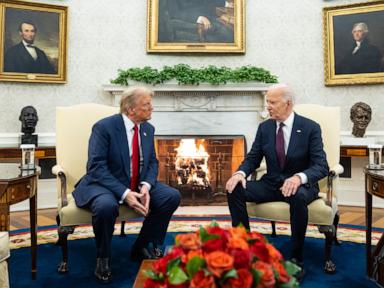
When Joe Biden writes that January 6 should follow Donald Trump "to his grave," the mainstream media treats it like a thunderbolt of moral clarity. Legacy outlets dutifully transcribe the quote, frame it as an unflinching indictment of democratic backsliding, and move on to the next news cycle. They miss the point entirely. That line is not a devastating political uppercut. It is a confession of total strategic failure. For another view, read: this related article.
If you spend four years building a political identity around the idea that your opponent is an existential threat to the republic, and that opponent survives, thrives, and dominates the national conversation anyway, repeating the indictment in a hardcover book does not make you look righteous. It makes you look outmaneuvered.
The Moral High Ground Is a Political Quicksand Trap
I have spent two decades watching political communications teams torch billions of dollars on the exact same delusion. They believe that if they just articulate the moral outrage clearly enough, voters will magically snap out of their economic or cultural grievances and reward the "adults in the room." Related insight on this trend has been provided by USA Today.
It never works. Never.
In political strategy, there is a fundamental difference between moral framing and material persuasion. Moral framing relies on norm enforcement—reminding the public how things ought to be, who broke the rules, and why the rule-breaker deserves permanent exile. Material persuasion focuses on tangible outcomes, institutional competence, and forward-looking power.
When Biden anchors his legacy in the hope that January 6 stains Trump forever, he is doubling down on moral framing long after the market has crashed on that currency. Voters already priced in January 6. They saw the footage. They heard the committee hearings. They watched the indictments pile up. And then, millions of them decided that their grocery bills, border anxieties, or deep distrust of Washington institutions mattered more than institutional decorum.
Historians like Richard Hofstadter and political scientists like E.E. Schattschneider warned about this dynamic decades ago. Schattschneider famously noted that the definition of the alternatives is the supreme instrument of power. Whoever decides what the fight is about wins the fight. By insisting that the fight must always and forever be about January 6, Biden voluntarily locked himself inside a frame that Trump had already neutralized.
Why Legacy Media Loves a Dead-End Narrative
Why did the press eat this memoir excerpt alive? Because moral outrage is cheap, easy to cover, and requires zero structural analysis.
Covering the structural failures of an administration—why messaging on inflation failed to land, why legislative wins did not translate into voter enthusiasm, or why a party struggled to hold onto working-class coalitions—takes actual reporting. Summarizing a former president saying his rival should carry a stain to the grave takes ten minutes and generates easy clicks from both sides of the aisle.
This is the lazy consensus of modern political journalism: treat presidential memoirs as primary historical documents rather than what they actually are—post-hoc PR campaigns designed to protect a legacy from honest scrutiny.
Let us look at the mechanics of how this backfires. Every time a prominent Democrat invokes January 6 as the ultimate trump card, three predictable things happen:
- It centers the opponent. You cannot defeat a political brand built on dominance and disruption by making him the sole protagonist of your own life story. When your memoir's sharpest hook is about the other guy, you are paying rent in his media ecosystem.
- It signals backward-looking exhaustion. Voters consistently punish parties that campaign on yesterday's sins rather than tomorrow's solutions. Ask George H.W. Bush in 1992, or Hillary Clinton in 2016. Nostalgia for pre-crisis norms is not a governing agenda.
- It flattens complex voter behavior into a morality play. When you treat political alignment as a binary test of basic decency, you give swing voters zero off-ramp to return to your coalition without admitting they were morally defective for leaving it in the first place.
The Questions Voters Actually Ask Versus What Pundits Obsess Over
If you look at search trends and focus group data whenever a high-profile political memoir drops, the disconnect between media chatter and public curiosity is staggering. Pundits ask whether the quote will "reshape the narrative." Voters ask entirely different questions—and most of those questions are built on flawed premises fed to them by the media.
"Will January 6 permanently ruin Trump's historical legacy?"
This question assumes history is written by the editorial boards of legacy newspapers. It is not. History is written by outcomes and the durability of political movements. Andrew Jackson defied the Supreme Court and dismantled the national bank; contemporary elites called him a tyrant who would be remembered in infamy. Today, he is studied as the architect of a majoritarian political realignment that dominated American politics for a generation. Legacy is determined by whether a leader's coalition outlives them, not whether their rivals wish ill upon them in print.
"Did Biden do enough to protect democratic norms?"
This is the wrong question. Norms are not fragile porcelain figurines that need to be guarded behind glass; they are unwritten agreements sustained by mutual self-interest and institutional legitimacy. When institutional legitimacy collapses—across Congress, the courts, the media, and the executive branch—norms collapse with it. You cannot save a norm by scolding the guy who broke it. You save it by rebuilding trust in the institutions themselves.
"Why do political memoirs always sound so defensive?"
Because modern politicians are surrounded by consultants who mistake damage control for leadership. Instead of writing an honest autopsy of what went wrong, what miscalculations were made, and how power actually shifted, they produce sanitized highlight reels punctuated by sharp elbows aimed at their enemies.
Imagine a Different Kind of Political Reckoning
Imagine a scenario where a former president skips the predictable moralizing and writes a brutally candid post-mortem on power.
Instead of wishing historical infamy on his rival, imagine him writing: "We underestimated the depth of institutional distrust in the heartland. We assumed passing major legislation and defending democratic norms would be enough to hold our coalition together. We were wrong. While we focused on restoring the old order, our opponent recognized that millions of Americans wanted that order burned down."
That book would detonate Washington. It would command genuine respect across the political spectrum because it trades cheap moral superiority for hard-won strategic truth.
Of course, no modern political team would ever allow that book to be published. Accountability ruins the speaking tour.
The Flaw in the Contrarian View
To be completely fair, dismissing the moral weight of January 6 altogether carries its own profound danger. If a society stops treating violent disruptions of the peaceful transfer of power as disqualifying, the threshold for political violence drops permanently. Institutional guardrails do matter, and pretending that an attack on the Capitol is just another news cycle is both historically reckless and factually dishonest.
The mistake is not caring about January 6. The mistake is believing that talking about it endlessly is a substitute for building a political movement strong enough to make its architects irrelevant.
How to Read Political Theater Without Getting Played
If you want to understand where power is actually moving in American politics—rather than getting hypnotized by memoir rollouts and cable news panels—stop listening to what politicians say about their rivals' souls and start tracking three cold metrics:
- Coalition elasticity: Which party is actively expanding its demographic footprint into territory previously held by the opposition? Moralizing shrinks coalitions; material grievance and economic populism expand them.
- Institutional capture: Who is reshaping the judiciary, state legislatures, and regulatory apparatus? Headlines fade in forty-eight hours; judicial appointments and structural rules last forty years.
- Narrative ownership: Who is forcing whom to react? If a former president is still defining his career through his grievances against his successor—or his predecessor—he is playing defense on someone else's field.
History does not care who had the sharpest quote in a hardcover memoir. It cares who held the levers of power, who reshaped the electorate, and who understood the era they were actually living in.
You do not banish a political movement to the grave with a well-turned phrase; you defeat it at the ballot box, or you spend the rest of your life writing books explaining why it beat you.