Billionaire sports executives rarely expect an easy ride, but the mutiny brewing in international ski racing is reaching an unprecedented pitch.
Johan Eliasch, the hyper-aggressive president of the International Ski and Snowboard Federation (FIS), is facing a brutal re-election battle at the FIS Congress in Belgrade, Serbia. In Olympic sports administration, challenging an incumbent after one full term is considered a political declaration of war. Doing so when that president is backed by a massive personal fortune and holds a seat on the International Olympic Committee is practically unheard of. Don't forget to check out our earlier coverage on this related article.
Yet, the core powerhouse nations of the winter sports world have had enough. Eliasch, who built his reputation and fortune transforming the Head sportswear brand, is finding out that running a global sports federation like a private equity firm alienates the very people who make the sport watchable. When icons like Mikaela Shiffrin and Marco Odermatt publicly demand your ouster, it's not a minor policy disagreement. It's a fundamental rejection of your leadership.
The Passport Maneuver that Shocked the Grid
To understand how broken the relationship is between Eliasch and the skiing establishment, you only need to look at his election paperwork. FIS rules are clear. A presidential candidate must be nominated by a national federation and hold a valid passport from that country. If you want more about the background of this, The Athletic provides an excellent breakdown.
Eliasch holds dual British and Swedish citizenship. In a normal political climate, either nation would gladly back a sitting president. Instead, Great Britain and Sweden flatly refused to sponsor him. The British federation actively put forward their own candidate, Victoria Gosling, to replace him, though she later stepped aside.
Desperate for a nomination, Eliasch went passport shopping. After failed overtures to other nations, he managed to secure a passport and a nomination from the country of Georgia. Let that sink in. The head of global skiing is running for re-election representing a nation with zero historic footprint in elite World Cup racing, simply because the countries where he holds actual citizenship want him gone.
Where Did the Millions Go
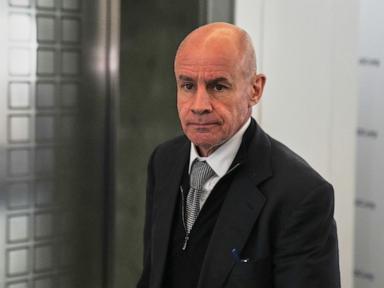
The immediate threat on the ballot is Alexander Ospelt, a respected lawyer and FIS Council member from Liechtenstein. Ospelt is positioning himself as the stable, transparent alternative to Eliasch’s autocratic regime. While other challengers from the United States and Denmark withdrew before the final ballot, Ospelt stands as the unified option for a coalition of frustrated alpine nations.
The core of their anger boils down to cash. When Eliasch took over the federation in 2021, the FIS bank accounts were flush. According to internal data brought forward by athlete representatives, the federation had roughly 130 million Swiss francs in reserve. Fast forward to mid-2026, and that war chest has withered to just under 43 million francs.
Eliasch claims he put that money to work. He bought the Freeride World Tour, launched the FIS TV streaming platform, and acquired a travel agency to handle event logistics. He wants a centralized, corporate entity that controls all commercial and television broadcast rights, stripping that power away from local national federations.
But alpine giants like Austria, Switzerland, and Germany see this as a hostile takeover. They argue his aggressive centralization risks their financial stability. Diego Züger, the CEO of Swiss-Ski, summarized the panic bluntly by noting the federation is driving at full speed into a wall and needs to pull the handbrake immediately.
Star Athletes Rejection of the Corporate Promise
When Eliasch was elected, he promised to make ski racing rival professional tennis in terms of global reach and athlete compensation. It was a seductive pitch. Skiers risk life and limb on sheet ice for a fraction of what a first-round loser makes at Wimbledon.
The reality has been a massive disappointment for the athletes. Mikaela Shiffrin, the greatest alpine skier in history, explicitly called out the administration for a total lack of transparency. She noted that despite big promises, FIS contributions to athlete prize money are actually projected to decrease in the coming seasons. Under current rules, local race organizers are forced to bear the brunt of the 153,000 Swiss franc minimum prize purse, while the central FIS bureaucracy chips in a meager 24,000 francs per event.
It's a sentiment shared across the board. Overall World Cup champion Marco Odermatt publicly stated there is little choice but to change leadership. Swiss star Loïc Meillard was even more direct, telling media he wants a president who does less for his own ego and more for the actual sport of skiing.
Eliasch dismisses these criticisms as a vocal minority. He insists the vast majority of smaller, non-traditional skiing nations support his global vision. He points to his 42-page campaign document highlighting the centralization of TV rights through 2034, a new carbon calculator, and the successful integration of para-disciplines as proof of progress. He even claimed his biggest flaw was being too diplomatic. Anyone who watched fifteen national associations walk out of his 2022 re-election vote in protest would find that claim hilarious.
The Immediate Financial Reality Check
The path forward for winter sports cannot survive this level of civil war. If Ospelt pulls off the upset, national federations will need to immediately audit the remaining 43 million francs in the FIS treasury and draft a realistic financial plan that restores local control over broadcast rights.
If Eliasch survives the vote through the support of smaller nations, the elite alpine countries will have to decide how far they are willing to push their resistance. We could see top-tier nations threatening to boycott central FIS commercial deals or staging independent breakaway events.
For the everyday fan and athlete, the immediate priority is protecting the physical and financial health of the competitors. You can track individual athlete reactions and official federation statements through the Swiss-Ski and US Ski and Snowboard portals as the vote counts finalize. The era of treating global sports federations like personal tech startups is facing its ultimate trial in Belgrade, and the athletes have made it clear that corporate slogans don't pay the bills on the World Cup circuit.