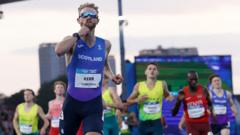
The roar inside Scotstoun Stadium on that Saturday afternoon was loud enough to shake the Clyde. Tens of thousands of Scottish fans packed the stands, draped in blue and white, waiting for a single moment to justify every mile they had travelled and every ounce of hope they had invested. Josh Kerr didn't just deliver that moment. He manufactured a masterclass in front of a home crowd that watched him grow up.
Winning a global medal is hard. Winning on home soil, fresh off breaking a 27-year-old world record, carries a weight that crushes most athletes. But Kerr isn't most athletes. For a closer look into this area, we suggest: this related article.
The Chaos of the Mile Final
Anyone who watched the men's mile final at the 2026 Commonwealth Games saw a race that looked less like a tactical track event and more like a high-speed game of bumper cars. The pace was slow early on. Runners jostled for position. Elbows flew. Kerr found himself trapped on the rail, forced to navigate the physical argy-bargy of a stacked international field that included Kenya's Timothy Cheruiyot and fellow Scot Jake Wightman.
Instead of panicking, the 28-year-old stayed patient. To get more information on the matter, extensive reporting is available at NBC Sports.
- The early trap: Kerr stayed tucked on the inside lane to conserve energy against a stiff wind on the back straight.
- The physical battle: Shoving matches and tactical boxing in the pack threatened to derail his rhythm, but he held his ground.
- The decisive break: With 250 metres remaining, he launched a devastating kick that completely shredded the field.
When he hit the front, the race was effectively over. He crossed the line in 3:54.12, pointing to the grandstands and soaking in the deafening cheers.
Reclaiming a Historic Distance
Bringing the one-mile race back to the Commonwealth Games was a masterstroke by World Athletics. It revives memories of the legendary 1954 "Miracle Mile" between Roger Bannister and John Landy. Placing that historic distance back on the schedule in Glasgow connected past athletics folklore directly to the present day.
Kerr understood the poetry of it all. Just weeks prior, he tore up the record books in London by clocking 3:42.66 in the mile, erasing Hicham El Guerrouj's historic mark. Coming into Glasgow, the target on his back was massive. Everyone expected a victory, which usually spells danger in championship racing.
Australia's Cameron Myers took silver, while Cheruiyot grabbed bronze. Another heavy favorite and local hero, Jake Wightman, faded to sixth after trying to match Kerr's brutal final-lap acceleration.
What This Proves for the Sport
Too often, modern track stars dodge regional or multi-sport championships to prioritize lucrative Diamond League meetings. Kerr took a different path. He chose to represent Team Scotland at Scotstoun, bringing authentic star power to a home games that needed an emotional anchor.
He didn't just run. He connected. Watching him smile down the home straight with the race already won showed an athlete completely in tune with his supporters.
Track and field needs more of this raw, unfiltered passion. When elite competitors embrace the chaos, speak their minds, and deliver under extreme pressure, the sport wins. Kerr took the pressure, weaponized it, and gave Glasgow a memory that will echo for decades.
Go watch the final stretch of that race again. That is what racing is all about.


