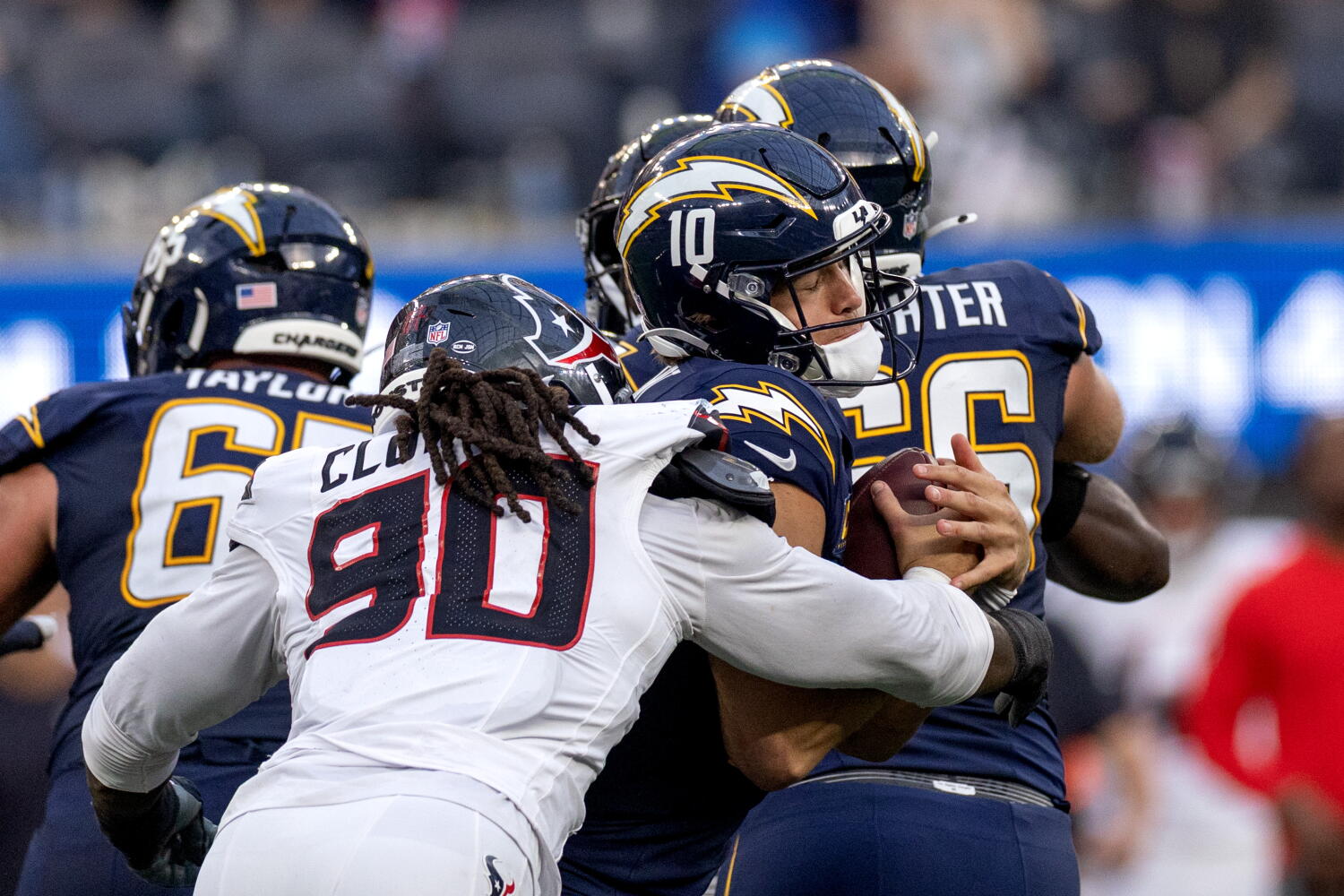
Watching Justin Herbert peel himself off the turf eight separate times while the Los Angeles Chargers fell to 0-8 felt like watching a franchise quarterback get broken in real time. "It hurts the soul," the postgame quote echoed across social media, capturing the exact mood of a fanbase staring at a winless record and a battered franchise cornerstone.
You don't need an advanced analytics degree to see what went wrong. When a quarterback absorbs eight sacks in a single afternoon, the offensive structure has completely rotted from the inside out.
The Anatomy of Eight Sacks
Let's be brutally honest about what eight sacks actually means in modern football. Most NFL offenses panic if their quarterback hits the ground three times in four quarters. Giving up eight is a systemic failure that spans coaching, personnel, and situational awareness.
People love to blame the offensive line immediately, and honestly, they deserve a massive chunk of the heat here. Edge rushers were winning off the snap without even needing complex stunts or delayed blitzes. Tackles got beat around the corner. Interior guards collapsed straight into Herbert's lap before he could even finish his three-step drop.
But pinning all eight sacks on five linemen is lazy analysis. Quarterbacks own a share of their sack totals, especially when a team is trailing and pressing for explosive plays.
Herbert holds the ball looking for downfield windows because he trusts his right arm more than anyone else's physics. When your receivers can't separate against man coverage, those windows never open. He pats the ball once, twice, and suddenly a 260-pound defensive end is folding him in half.
Why an 0-8 Start Changes Everything
Falling to 0-8 isn't just a bad stretch of football. Statistically, your season is dead and buried before November even gets comfortable.
In the history of the NFL, teams starting 0-8 don't mount miraculous playoff runs. The math simply doesn't work, even with a 17-game schedule and an expanded wild-card format. Every Sunday from here on out becomes an audition for jobs, draft positioning, and basic professional pride.
That emotional toll shows up in the locker room quotes. Phrases like "it hurts the soul" don't come from players who think a few minor tweaks will fix things next week. They come from guys who realize the foundational plan they spent all offseason building has failed entirely.
What People Get Wrong About Protecting Franchise Quarterbacks
If you listen to standard sports talk radio, the solution sounds simple. Just draft more linemen! Run the ball more! Tell the quarterback to throw it away!
It's never that clean on Sunday afternoon.
- Running the ball doesn't automatically slow down a pass rush. If your offensive line can't generate push on first down, running into eight-man boxes just puts you in 2nd-and-9 and 3rd-and-10. Defenses pin their ears back on third-and-long, and that's where Herbert gets hammered.
- Quick game concepts get jumped when defenses don't respect the deep ball. You can call slant routes and bubble screens all afternoon, yet if safeties squat at ten yards because nobody threatens them vertically, those quick throws turn into hospital balls or pick-sixes.
- Max protection shrinks your passing options. Keeping a tight end and a running back in to block means you're sending two or three receivers out against six or seven coverage defenders. Herbert is great, but nobody consistently beats triple coverage.
I've watched film on plenty of collapsing offenses over the years, and the pattern is always identical. Once protection breaks down early in a game, the play-caller panics, the quarterback loses trust in his pocket, and the whole operation speeds up in the worst way possible.
The Coaching Accountability Problem
You cannot separate an 0-8 record and an eight-sack afternoon from the people holding the play sheets. Great coaching staffs adjust when their tackles are getting smoked.
Look at how smart offensive coordinators handle a mismatch on the edge. They use moving pockets, bootlegs, screen passes to the aggressive side, and tempo changes to keep defensive linemen from timing the snap. When a quarterback gets sacked eight times, it usually means the coaching staff stubbornly kept calling slow-developing dropback passes despite clear evidence that the front five couldn't hold up for two seconds.
Defensive coordinators around the league aren't stupid. Once they see on tape that your staff won't punish aggressive upfield rushes with screens or draws, they'll send five and six rushers on every obvious passing down. The Chargers walked straight into that buzzsaw and refused to step out of it.
Protecting Justin Herbert's Long-Term Future
Here is the real danger of an 0-8 season with a compromised offensive line. Cumulative trauma ruins quarterbacks.
You don't just worry about the single hit that knocks a guy out for the year. You worry about the eighty hits that quietly wreck his mechanics, mess with his internal clock, and leave him seeing ghosts in the pocket two seasons from now. We've seen promising careers derailed because front offices let their franchise passer take a beating during lost seasons.
Herbert is too talented and too expensive to be treated like a crash-test dummy while the organization figures out its identity.
What Needs to Happen Immediately
Forget about salvaging the standings. Focus entirely on keeping your quarterback upright through the rest of the schedule.
- Overhaul the weekly protection plan. Chip every elite edge rusher with a tight end or running back before they release into routes, even if it slows down the passing progression.
- Commit to quick-rhythm passing. Force the ball out of Herbert's hands in under 2.3 seconds using quick outs, hitches, and backside digs to neutralize the pass rush before it arrives.
- Evaluate the roster without sentiment. Bench underperforming veterans on the offensive line and give younger developmental players real game reps to see who actually belongs on the roster next year.
- Cut the deep-drop play-action calls. Until the front five proves they can sustain blocks for three full seconds, seven-step drops are coaching malpractice.
Watch how the Chargers handle their protection schemes over the next two weeks—if Herbert keeps taking five or more hits a game, you'll know the coaching staff has already lost control of the season.