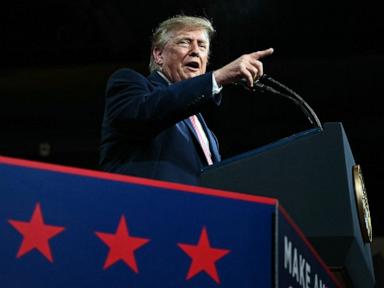
Federal authorities arrested 24-year-old Jaden J. Read in Clearwater, Kansas, in October 2026 after a Crime Stoppers tip flagged online comments threatening to shoot President Donald Trump ahead of his rally in the Wichita area. Prosecutors in the District of Kansas filed a criminal complaint charging Read with making threats against the president, while the president still appeared at a campaign rally in Park City on October 19 supporting Republican Senator Roger Marshall.
Wire summaries and local news briefs treat an arrest like this as a neat story with a beginning, middle, and lockup. One headline, one set of quotes, one press release from the U.S. Attorney.
That is not journalism. That is stenography.
Anyone who has covered campaign security, threat assessment, and federal prosecutions for twenty years knows that an arrest is rarely the end of the story. Often, it is the moment the hardest questions begin. How did a public comment thread on local television coverage turn into a multi-agency federal investigation within days? What did investigators look for beyond the words themselves? And why does a threat claiming someone "already mapped out roofs around" carry a weight in 2026 that it did not carry ten years ago?
How a Public Comment Thread Triggers a Federal Case
Most online vitriol dies in the noise. Thousands of angry posts scroll past local news pages every hour, written by people venting, trolling, or seeking attention without any real intent or capacity to act.
This case moved faster. An October 15 Crime Stoppers tip pointed investigators toward Facebook comments posted on a KAKE News story about Trump's scheduled appearance in the Wichita area. According to the criminal complaint cited in court and prosecutorial reports, Read wrote, "Let's shoot Trump honestly, where's our shooter? I'm tired of living this money life," and followed immediately with, "I just got a 308 and 305 round and I'm killing this pedo."
Investigators also pointed to comments on a KWCH 12 News article about the trip. Those posts included, "Can we shoot him in Kansas please I will myself," followed a minute later by, "IK where your speech will be. Already mapped out roofs around. Finna get kirked since yall couldn't help him."
Three elements in those messages immediately raise alarm bells for threat analysts.
First, specificity of venue and vantage points. Mentioning an upcoming speech in Kansas and claiming to have mapped out rooftops shifts a post from abstract anger to apparent situational awareness. Even if a boast turns out to be exaggerated, security teams cannot treat rooftop claims casually around an outdoor or semi-public event footprint.
Second, reference to ammunition and action. Naming rounds and pairing them with first-person language ("I will myself") crosses a line that investigators watch closely when evaluating whether a speaker is crossing from commentary into operational thinking.
Third, violent shorthand tied to recent history. Authorities noted that "get kirked" appeared to reference the September 2025 assassination of conservative activist Charlie Kirk at Utah Valley University. Political violence creates its own vocabulary. When a real assassination enters everyday internet slang as a verb, threat assessors pay closer attention to how a suspect views themselves and how they talk about consequences.
Why Five Agencies Worked the File
Threat cases involving a sitting president rarely belong to a single badge. In the Kansas investigation, the U.S. Secret Service, the U.S. Marshals Service, the Kansas Bureau of Investigation, the Kansas Highway Patrol, and the Wichita Police Department were all listed among the agencies involved.
On paper, five agencies sounds like bureaucratic overlap. In practice, each unit fills a specific operational gap.
- The U.S. Secret Service leads protective intelligence and presidential threat investigations, evaluating risk to the protectee and coordinating advance security.
- Local and state partners—including the Wichita Police Department, Kansas Highway Patrol, and Kansas Bureau of Investigation—bring immediate geographic knowledge, local records, and tactical reach around Clearwater and the broader Wichita metro area.
- The U.S. Marshals Service supports federal law enforcement operations, custody, and court security once federal charges enter the picture.
Clearwater sits roughly half an hour from Wichita. When a major political figure schedules a campaign stop in a metro region, distance measured in minutes matters. A suspect thirty miles away is not a distant internet account in another time zone; they are potentially inside the same regional radius during the run-up to the event.
A criminal complaint is an accusation, not a verdict. Federal prosecutors must prove elements beyond a reasonable doubt, and defendants remain presumed innocent unless proven guilty in court.
That distinction gets lost in fast-turnaround coverage. Reporters often write as though an arrest settles intent. In federal threat prosecutions, proving that a statement rises to a prosecutable threat rather than dark humor, hyperbolic venting, or bluster is legal work, not automatic arithmetic.
The Roofline Problem After Years of High-Profile Attacks
You cannot analyze a post about mapping out rooftops in 2026 without acknowledging how American protective security has changed. Over the past couple of years, high-profile attacks and attempts—from the 2024 assassination attempt against Trump in Butler, Pennsylvania, to the September 2025 killing of Charlie Kirk in Utah—have shaped both public rhetoric and security posture.
Every major event carries that baggage.
Security planners have to account for line-of-sight geometry, elevated positions, crowd ingress and egress lanes, and advance intel that arrives days before motorcade arrival. A social media user typing "Already mapped out roofs around" might have spent ten minutes looking at a map or a venue layout. Or they might have meant nothing of the sort. Protective professionals still have to verify what is real and what is bluff.
There is a practical trade-off here that rarely gets discussed honestly. Heightened vigilance catches more potential threats early, which is good. It also pulls law enforcement resources into investigating posts that may ultimately prove to be hollow bravado, consuming investigative hours across federal, state, and local teams.
Still, given the stakes of a campaign rally—hundreds or thousands of attendees, local officers, event staff, and a protected principal—err on the side of caution is not a slogan. It is standard operating procedure.
What Standard News Coverage Misses
When a basic news report runs the same three quotes from a Department of Justice release and stops there, readers walk away with a flat picture. A sharper reading looks at four angles that shape how these cases play out in court and in public life.
| Angle | Surface News Version | Deeper Investigative Lens |
|---|---|---|
| Origin of the case | A tip led to Facebook posts. | A public tip on local news coverage bypassed waiting for automated platform flags. |
| Nature of the posts | Quotes about shooting and roofs. | Escalating comments across two local outlets within tight windows showing fixation and venue focus. |
| Law enforcement response | Federal and local agencies investigated. | Multi-tier coordination bridged federal protective mandates with local proximity to Wichita. |
| Legal posture | Charged with making threats. | Early-stage complaint pending detention proceedings; intent and true-threat standards will be tested in court. |
Notice how tip-driven detection works here. An October 15 Crime Stoppers report put the posts in front of investigators days ahead of the October 19 rally in Park City. In an era where people debate algorithms and moderation policies endlessly, an ordinary person reading a comment thread and reporting it to Crime Stoppers remains one of the most direct ways leads reach law enforcement.
Notice also what happens to political rhetoric around cases like this. U.S. Attorney Ryan A. Kriegshauser stated that political violence and threats of political violence will not be tolerated, reminding the public that First Amendment protections have legal boundaries. Prosecutors walk a careful line in these moments: they want to deter copycat posts and project firm enforcement without turning routine political anger into a federal felony.
Why Online Threats Keep Multiplying During Election Cycles
Campaign season concentrates attention. Local television stations publish stories about where a candidate or president is going next, giving comment sections a specific date, city, and political target.
For people dealing with personal grievance, isolation, or volatile anger, those comment threads act like a bulletin board. Someone writes a dark line expecting a reaction, a sense of power, or attention from strangers. Sometimes it stops at the keyboard. Sometimes investigators find enough warning signs to step in before an event takes place.
Hypothetically, consider how a threat analyst looks at two different comment writers: one posts a generic insult with no location, no timeline, and no mention of weapons or access; another names a specific upcoming stop, claims to have checked surrounding rooftops, and mentions ammunition. The second profile forces an immediate, hands-on check, regardless of whether the writer actually possesses a firearm or a plan.
That reality creates tension for everyone watching. Citizens want strong protection for public officials and rallygoers. Civil libertarians and defense attorneys want strict adherence to constitutional standards so speech is judged accurately rather than by panic alone. Both concerns can be true at the same time.
Reading the Next Phase of the Case
An arrest and a criminal complaint put Read into federal custody pending a detention hearing, while the rally itself went ahead in Park City. From here, the real test is evidentiary: what digital records, device checks, or witness statements back up the complaint, and how federal magistrates and judges weigh detention and eventual prosecution.
Pay less attention to sensationalized headlines about dramatic posts, and watch the court docket for what prosecutors actually substantiate—because that is where bravado and provable threat part ways.