:max_bytes(150000):strip_icc()/GettyImages-461105715-5a66aff65ea1de0036bcb641.jpg)
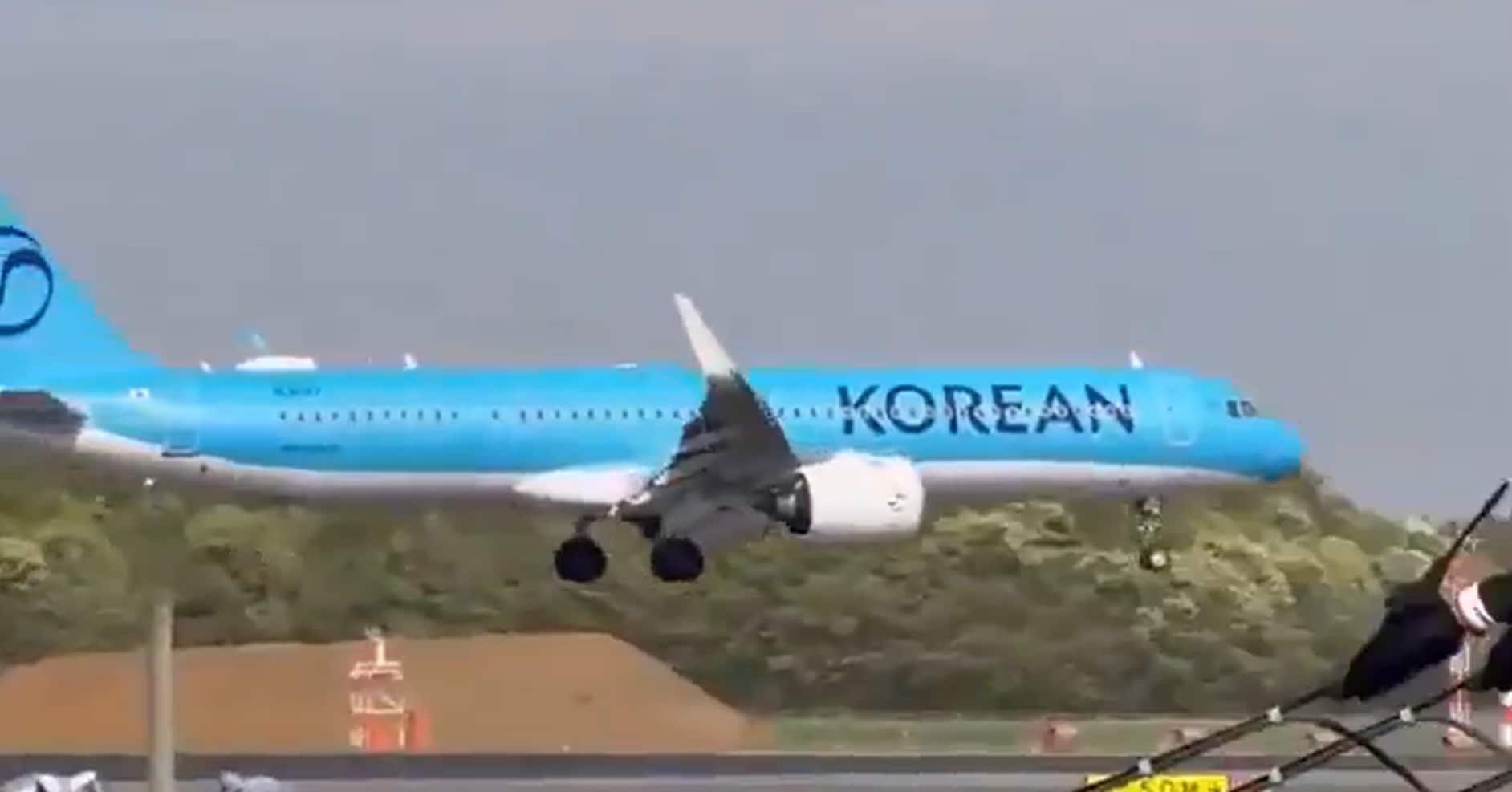
The headlines are predictably frantic. A Turkish Airlines Airbus A330 sits on the tarmac at Tribhuvan International Airport, smoke billowing from the landing gear, passengers evacuated via emergency slides. The media paints a picture of a narrow escape from a fiery catastrophe.
They are wrong.
What the general public—and most lazy aviation "analysts"—fail to grasp is that smoke from a landing gear in a high-altitude, short-runway environment like Kathmandu isn’t a sign of failure. It is often the sound of the system working exactly as designed. We are obsessed with the optics of "smoke," yet we ignore the physics of kinetic energy.
The Myth of the Near Miss
The standard narrative suggests that a plane catching fire on landing is a freak occurrence or a lapse in maintenance. In reality, stopping 200 tons of metal moving at 150 knots is a violent thermal event.
When an aircraft lands at Tribhuvan, it isn't just landing at any airport. It is landing at an elevation of roughly 4,400 feet, surrounded by jagged terrain that demands a steep approach and aggressive braking. The brakes on an A330 are made of carbon-carbon composite discs. These discs are designed to operate at temperatures that would melt your car’s engine block.
The Heat Equation
The kinetic energy ($K$) of a landing aircraft is defined by the formula:
$$K = \frac{1}{2}mv^2$$
Where:
- $m$ is the mass of the aircraft.
- $v$ is the velocity.
At high-altitude airports, the air is thinner. Thinner air means the ground speed ($v$) required to maintain lift is higher than at sea level. Because the velocity is squared in the energy equation, a 10% increase in landing speed results in a 21% increase in the energy the brakes must dissipate as heat.
When you see smoke, you aren't seeing a "fire" in the traditional sense. You are seeing the vaporization of hydraulic fluid or accumulated grease meeting a brake stack that is screaming at $800^\circ\text{C}$. Calling for an emergency evacuation in these scenarios is often more dangerous than the smoke itself.
The Evacuation Trap
Aviation safety experts—the ones who actually get their hands dirty—know a secret: the emergency slide is a meat grinder.
Every time a crew initiates an evacuation for "smoke from the gear," they are choosing a guaranteed injury rate over a theoretical fire risk. Statistics from the NTSB and EASA consistently show that a significant percentage of passengers suffer broken bones, friction burns, or concussions during slide deployments.
In the Kathmandu incident, the "threat" was external to the pressure hull. Modern aircraft floors are titanium and high-grade aluminum alloys designed to withstand massive heat soak. If the fire isn't fed by a fuel line leak—which landing gear "smoke" rarely is—the safest place for a passenger is usually inside the fire-resistant tube, not jumping ten feet down a nylon slide into the path of responding fire trucks.
We have trained flight crews to be hyper-reactive because the legal liability of not evacuating is higher than the physical cost of the injuries caused by evacuating. It’s a cynical trade-off.
Kathmandu: The Scapegoat Airport
Everyone loves to blame the "dangerous" infrastructure of Nepal. Critics point to the single runway and the lack of advanced radar as the culprits.
This is a convenient distraction. The real issue is the business model of global carriers trying to squeeze long-haul wide-body performance out of high-density, high-altitude regional hubs without adjusting their operational margins.
The Brake Cooling Reality
- Turnaround Times: Airlines hate letting planes sit. But at high altitudes, brakes need hours, not minutes, to cool.
- Thermal Plug Melts: Landing gear tires have fuse plugs. If the heat gets too high, the plug melts to deflate the tire safely, preventing an explosion.
- The "Smoke" Illusion: A melted fuse plug releases pressure and can kick up dust and vaporized lubricant. To the untrained eye of a panicked passenger or a journalist with a smartphone, this looks like the plane is about to explode.
I have seen carriers push for 45-minute turnarounds in environments where the physics of heat dissipation says 90 minutes is the bare minimum. When the gear smokes on the next taxi-out or the subsequent landing, they blame "unforeseen technical issues." It isn't technical. It's greed.
Stop Asking if the Plane is Safe
The "People Also Ask" sections of the internet are filled with "Is Turkish Airlines safe?" or "Is Kathmandu airport dangerous?"
These are the wrong questions.
The right question is: "Is the airline's safety culture robust enough to ignore the pressure of the schedule when the brake temperature sensors are in the amber zone?"
Safety isn't the absence of smoke. Safety is the presence of an engineer who is allowed to say "no" to a takeoff because the heat soak hasn't dissipated, regardless of how many connecting passengers are going to miss their flights in Istanbul.
The High-Altitude Tax
Operating into airports like Kathmandu, Quito, or Addis Ababa requires a "thermal tax."
- Reduced Weight: You cannot land at Max Landing Weight (MLW) and expect the brakes to behave like they are in Amsterdam.
- Reverse Thrust Reliance: Pilots should be burying the engines in reverse thrust to save the carbon stacks, but noise abatement or fuel-saving "green" initiatives often discourage this.
- Active Cooling: If the airport doesn't have external brake cooling fans (which most don't), you wait. You sit on the tarmac and you lose money.
The industry refuses to admit that some routes are inherently "harder" on hardware to the point of requiring different maintenance cycles. They treat a cycle in Kathmandu the same as a cycle in Singapore. That is a fundamental lie of the aviation accounting department.
The Contradiction of Modern Avionics
We have more data than ever. The Flight Data Recorder (FDR) knows the exact temperature of every brake shoe. Yet, we still rely on the visual "smoke" test to trigger an emergency.
We are in a transition period where the tech is smart, but the protocols are still stuck in 1975. If the sensors show the fire is contained to the wheel well and the fuse plugs have done their job, the evacuation is often a theatrical performance to satisfy regulators and terrified onlookers.
Imagine a scenario where we trusted the internal telemetry enough to keep the doors shut. We would save millions in hull inspections and thousands in medical bills. But we won't do that, because the "optics" of a smoking plane with people inside is a PR nightmare that no CEO is brave enough to defend.
The next time you see a "scary" video of a plane in Nepal with smoke drifting from the wheels, look at the tires. If they are flat, the system worked. If the passengers are sliding down the chutes, the panic won.
Stop looking for fire where there is only physics. Stop demanding "emergency" actions for routine thermal dissipation. The real danger isn't the heat in the brakes; it's the ignorance in the cockpit and the boardroom about the limits of the machines we fly.
If you want to be safe, stop worrying about the smoke and start worrying about the clock. When the schedule becomes more important than the $T_{max}$ of a carbon disc, that’s when you should start running for the exit.