Everyone in New York real estate is popping champagne over Ken Griffin's latest trade.
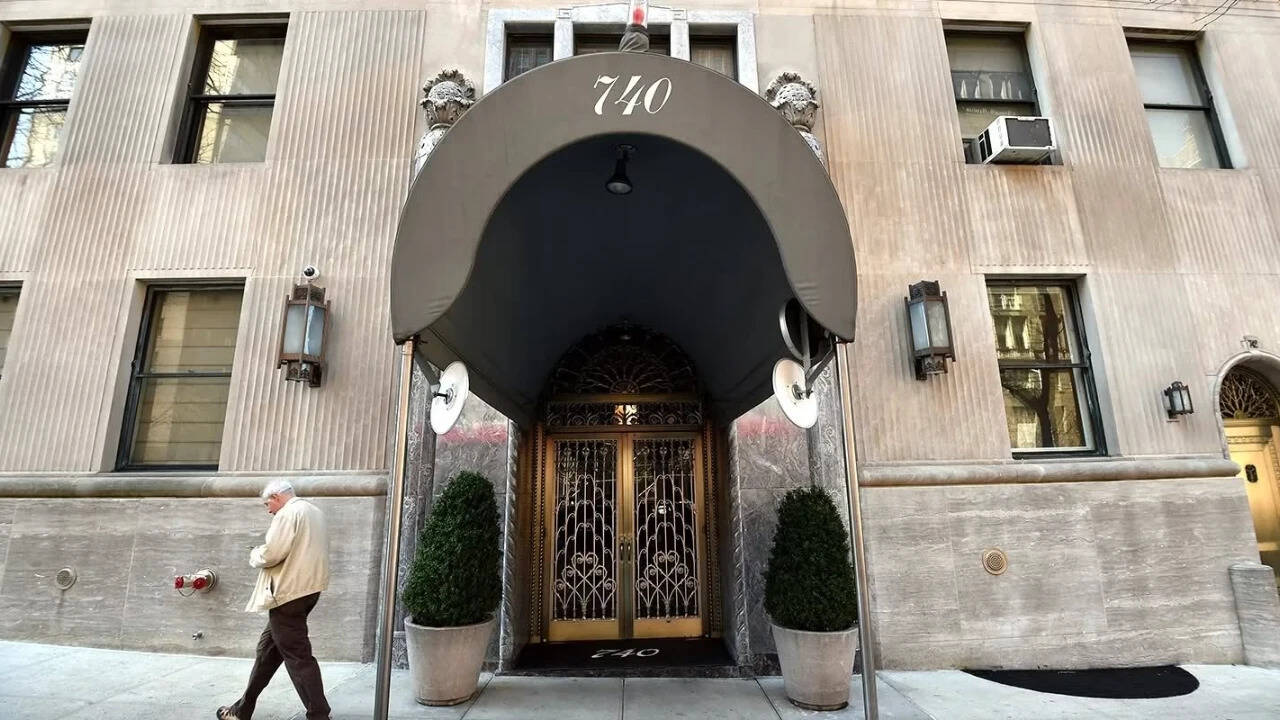
The headlines read like a fairy tale for Manhattan luxury brokers. Citadel founder Ken Griffin buys a duplex at 740 Park Avenue from Julia Koch for $45 million in February 2025. Less than two years later, he sells it off-market to New York Jets owner Woody Johnson for $58 million. A clean $13 million profit. A 29% return in 21 months.
Real estate commentators are treating this like proof that ultra-luxury co-ops are bulletproof. They are writing breathless takes about "building-level scarcity" and how trophy assets defy gravity.
They are completely missing the plot.
If you look at the actual mechanics of New York transfer taxes, co-op flip taxes, and Albany's punitive new pied-à-terre legislation, Ken Griffin did not execute a brilliant real estate flip. He executed a ruthless portfolio prune. He dumped a redundant, illiquid co-op share right as New York turned second-home ownership into an annual recurring penalty—and he barely cleared a fraction of that headline $13 million gain after friction costs.
The $13 Million Mirage
Amateur observers look at a $45 million buy and a $58 million sell and do third-grade subtraction. $58 million minus $45 million equals $13 million. Easy money.
In Manhattan cooperative real estate, gross spread is a vanity metric. Net proceeds are the only thing that matters, and New York City is engineered to confiscate transaction spreads at every turn.
Let's look at the actual math of moving a $58 million co-op at 740 Park Avenue. Unlike a condominium, where you own real property via a deed, buying into a pre-war co-op means buying shares in a private corporation and receiving a proprietary lease. And the board of 740 Park Avenue—historically the most restrictive residential board in the United States—does not let billionaires trade shares for free.
First, examine the statutory taxes on the sale side alone:
- New York State Transfer Tax: For residential sales over $3 million in New York City, the base transfer tax jumps to 0.65% of the entire purchase price. On $58 million, that is $377,000 gone immediately.
- New York City Real Property Transfer Tax (RPTT): For residential transfers above $500,000, the city takes 1.425%. On $58 million, that is another $826,500 vaporized.
- The Co-op Flip Tax: Almost every premier Park Avenue co-op imposes a transfer fee—commonly known as a flip tax—paid by the seller to pad the building's reserve fund. At buildings of 740 Park's caliber, flip taxes typically run 2% to 3% of the gross sale price or a steep percentage of the net profit. Even at a conservative 2% of gross, that is $1.16 million handed straight back to the building's treasury.
- Carrying Costs and Renovation Burn: Carrying an 8,500-square-foot pre-war duplex on Park Avenue is not cheap. Monthly maintenance charges at 740 Park routinely run tens of thousands of dollars per month to fund white-glove staffing and massive underlying building reserves. Over 21 months, maintenance alone eats well past seven figures. Add in legal fees, architectural retainers, and even minor cosmetic work on a Rosario Candela-designed layout, and another $2 million to $3 million disappears.
Before Griffin even looks at federal, state, or local capital gains taxes on the remaining net profit—where combined top marginal rates in New York can exceed 35%—that dazzling "$13 million profit" has already been chewed down to roughly $5 million or $6 million net.
For a guy worth $57.5 billion, $5 million is a rounding error on a Tuesday morning before the market opens. Ken Griffin does not waste bandwidth chasing a $5 million net gain on a co-op. Something else forced his hand.
The Real Catalyst Was Signed in Albany
To understand why Griffin dumped the Koch duplex so fast, stop reading luxury real estate blogs and start reading New York State budget bills.
In April 2026, New York City Mayor Zohran Mamdani stood across the street from 220 Central Park South—where Griffin owns a $238 million, 24,000-square-foot penthouse—and filmed a campaign-style video promoting a punitive pied-à-terre tax on non-primary residences valued over $5 million. By May 28, Governor Kathy Hochul had signed that exact tax into law as part of the state budget.
Griffin, who relocated Citadel's headquarters to Miami in 2022 and claims Florida residency, suddenly found himself holding three ultra-luxury Manhattan residences, all classified as non-primary second homes under the new statute:
- The $238 million penthouse at 220 Central Park South.
- The $45 million duplex he bought from Julia Koch at 740 Park Avenue in early 2025.
- An adjacent duplex at 740 Park Avenue that he quietly acquired off-market for $38 million earlier in 2026.
Do you see the pattern?
Griffin originally bought the Koch unit with the classic billionaire playbook in mind: buy neighboring units in a trophy building and combine them into a mega-residence. It is the exact strategy he used when assembling his record-shattering $238 million spread at 220 Central Park South.
When New York weaponized property assessments against out-of-state owners, holding an uncombined, redundant $45 million co-op became dead weight. Combining two 8,500-square-foot apartments at 740 Park requires years of board approvals, strict summer-only construction windows, and tens of millions in hard costs—all to create a massive asset that New York politicians will tax every single year simply because Griffin sleeps in Miami.
Selling the Koch duplex to Woody Johnson was not a victory lap. It was a strategic retreat from a failed combination play. Griffin kept the smaller $38 million unit next door as a manageable Upper East Side foothold, kept the 220 Central Park South trophy, and handed the tax liability on the larger duplex to the owner of the New York Jets.
Why "Building Scarcity" Is a Trap for Anyone Without $10 Billion
The most dangerous piece of advice circulating in the wake of this deal is the idea that everyday buyers should copy Griffin's logic.
One brokerage piece covering the sale explicitly urged regular buyers to ignore neighborhood averages and focus solely on "how many apartments like yours exist in the building".
That advice will get a normal buyer financialized into oblivion.
Here is the truth that luxury brokers conveniently leave out: extreme scarcity cuts both ways.
When you buy an ultra-rare asset in a restrictive co-op, you do not have a liquid market. You have an auction of one. Woody Johnson—an heir to the Johnson & Johnson fortune worth $13.5 billion—wanted into 740 Park Avenue. He had the cash, the pedigree, and the willingness to survive the co-op board's notoriously invasive financial vetting, which demands full disclosure of every asset, liability, and personal reference.
If Woody Johnson had decided to buy in Palm Beach or Greenwich instead, who was next in line? Nobody.
I have watched high-net-worth buyers sit on "irreplaceable" pre-war co-ops on Fifth and Park Avenues for four or five years without a single qualified bid. Why? Because the pool of buyers who simultaneously possess $50 million in liquid cash, want an unrenovated pre-war layout, do not need financing (740 Park prohibits mortgages), and can pass a board interview that routinely rejects billionaire founders and Hollywood A-listers is microscopic.
In 2014, David Koch himself had to pay $40 million for a duplex in this very building, and numerous high-profile buyers over the decades—from hedge fund managers to media moguls—have been flatly rejected by the board. When a board can kill a deal without giving a reason, your asset's liquidity is zero until the exact right buyer materializes.
Griffin got out because Woody Johnson happened to be standing there with $58 million. Mistaking a lucky bilateral match between two multi-billionaires for a reliable market principle is how regular investors end up trapped in illiquid properties.
The Real Estate vs. Commercial Play: Where Griffin Actually Puts His Conviction
If you want to know what Ken Griffin actually believes about New York City's future, stop looking at his residential co-ops and look six blocks south to 350 Park Avenue.
In May 2026, Griffin told an audience at the Milken Institute Global Conference in Los Angeles that Mamdani's tax video was "creepy and weird" and declared that New York "doesn't welcome success". Five months later, in October 2026, Citadel, Vornado Realty Trust, and Rudin Management closed a $3.3 billion construction loan to build a 1.9 million-square-foot skyscraper at 350 Park Avenue. Citadel signed on as the anchor tenant for 1.05 million square feet.
Read those two facts side by side.
Griffin is happily shedding personal residential exposure in Manhattan while committing billions of corporate capital to build a fortress office tower down the street. Why the contradiction?
- Residential Co-ops Are Pure Consumption: A co-op at 740 Park generates zero cash flow, offers zero depreciation tax shields, faces punitive local pied-à-terre taxes, and locks up capital in an entity controlled by a volunteer board of neighbors.
- Commercial Trophy Towers Are Productive Assets: A 1.05 million-square-foot anchor lease in a brand-new Park Avenue tower houses the quantitative traders and engineers who generate Citadel's double-digit returns. Furthermore, commercial real estate development carries massive tax depreciation benefits, institutional financing leverage, and direct economic utility.
Billionaires do not confuse their personal residences with their investment portfolios. Media outlets love to conflate the two because residential price tags make for sexy headlines. Griffin understands that personal real estate in a high-tax jurisdiction is a liability to be minimized, whereas premier commercial square footage is an engine for talent acquisition.
What Everyone Gets Wrong About Billionaire Real Estate Trades
When ultra-wealthy buyers trade properties off-market, the public asks all the wrong questions. Here is the reality behind the assumptions driving the coverage of this deal:
Did Ken Griffin actually make $13 million on 740 Park Avenue?
No. While the gross spread between his $45 million purchase in February 2025 and his $58 million sale in November 2026 is $13 million, New York's brutal transaction friction destroys a massive chunk of that gain. Between New York State transfer taxes (0.65%), NYC real property transfer taxes (1.425%), the building's internal flip tax (typically 2% to 3%), 21 months of high co-op maintenance, legal fees, and capital gains taxes, Griffin's actual net walk-away profit is closer to half the headline figure.
Why did Woody Johnson pay $58 million when Griffin paid $45 million less than two years ago?
Because off-market co-op pricing at the top of Manhattan has nothing to do with market appreciation and everything to do with access. 740 Park Avenue rarely trades. When a unit becomes available without a public listing, the seller holds all the leverage. Johnson wasn't paying for 29% market growth; he was paying a $13 million gatekeeper fee to bypass a public bidding war and secure immediate entry into the building.
Is Manhattan luxury real estate booming again?
Hardly. One off-market swap between a $57.5 billion hedge fund manager and a $13.5 billion NFL owner is not a market trend. High-end Manhattan condos and co-ops face severe headwinds from elevated carrying costs, rising insurance premiums, Local Law 97 carbon compliance fines for older buildings, and Albany's new pied-à-terre taxes. Volume at the ultra-high end remains thin, driven by isolated trophy trades rather than broad-based demand.
The Contrarian Playbook for High-End Real Estate
You don't need $58 million to apply the real lesson of Griffin's exit. If you are allocating capital into high-end residential property today, ignore the brokerage hype and follow three rules:
- Calculate Friction Before You Buy: Never evaluate a property on gross appreciation potential. In high-tax cities like New York, Los Angeles (with its Measure ULA mansion tax), or London (with punitive stamp duties), round-trip transaction costs easily consume 8% to 12% of a property's value. If you aren't holding for at least seven to ten years, you are working for the tax collector, not yourself.
- Avoid Illiquid Governance Structures: Pre-war co-ops are relics of a bygone era. Handing a board of strangers veto power over who you can sell to, whether you can rent your unit, and how you renovate your kitchen destroys your exit optionality. Always favor fee-simple condo ownership or single-family structures where your property rights are absolute.
- Never Confuse Consumption With Investing: Buy a home because you want to live in it and can comfortably burn the carrying costs. The moment a second or third residence becomes a political target or a regulatory headache, liquidate it immediately—even if you leave theoretical upside on the table.
To be clear, this ruthless, liquidity-first approach has a major downside: it guarantees you will miss out on rare, generational trophy assets. If you refuse to deal with restrictive co-op boards or steep transfer taxes, you will never own a Rosario Candela duplex on Park Avenue or a historic townhouse in Belgravia. You will end up in newer, sterile glass condos that lack architectural soul and trade like commodities.
That is a trade-off Ken Griffin happily accepted. He walked away from a historic Park Avenue combination, let Woody Johnson absorb the co-op headaches and the pied-à-terre tax bill, and kept his capital focused on the $3.3 billion tower down the street.
Stop celebrating the $58 million price tag and start looking at who actually got stuck holding the bag.