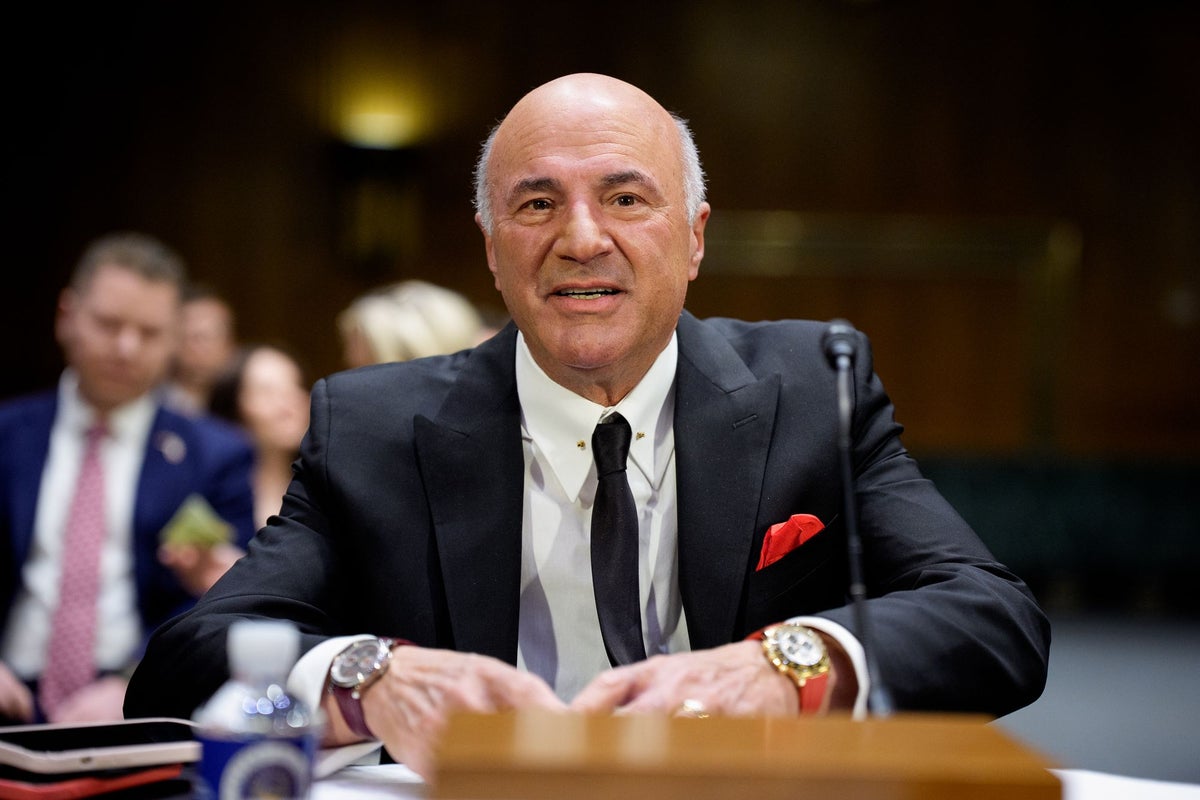
Billionaire investor Kevin O'Leary thought he found the perfect scapegoat for his stalled tech ambitions. When local activists stood in the way of his massive 40,000-acre Stratos data center project in Box Elder County, Utah, the Shark Tank star didn't blame the heavy water usage or the massive strain on the local electrical grid. Instead, he went on television and blamed China.
It backfired spectacularly. You might also find this connected story insightful: Inside the Sovereign Wealth Cash Grab Threatening to Starve Public Markets.
The fallout culminated in a rare, multi-day on-air apology tour from Fox News and Fox Business hosts. It turns out that when you baselessly accuse regular American citizens and local non-profits of acting as foreign espionage proxies, corporate lawyers get nervous.
The Wild TV Allegations
Back in May, O'Leary walked onto the set of Mornings with Maria on Fox Business sporting a custom "Utah National Security" hat. He claimed his staff conducted a deep dig into IP addresses reacting to his data center project. He told anchor Maria Bartiromo that the local backlash was driven by "proxies for the Chinese government" trying to sabotage American computing capacity. As reported in recent articles by CNBC, the results are significant.
O'Leary named specific local groups and individuals, including:
- The Alliance for a Better Utah
- Elevate Strategies
- Activists Josh Kanter, Taylor Knuth, and Gabrielle Finlayson
He offered no actual evidence. He simply asserted that these folks were part of a foreign dark-money network designed to make the US lose the global tech race.
The problem? The opposition wasn't coming from Beijing. It was coming from local residents worried about their power bills and their water supply. The targeted activists fought back with public statements and videos that made the billionaire look completely detached from reality.
Corporate Lawyers Force an Uncomfortable About-Face
By late June, the legal reality caught up with the broadcast rhetoric. O'Leary quietly posted a retraction on social media, admitting he had absolutely no evidence to back up his claims.
That left Fox News Media holding the bag. For a network that famously resisted apologizing even after paying a historic 787 million dollar defamation settlement to Dominion Voting Systems, the corporate legal team didn't take any chances here.
Maria Bartiromo had to read a blunt, scripted retraction on air. She stated plainly that Mr. O'Leary corrected the record and that Fox News Media was aware of no evidence linking the Utah groups to Chinese interests. The network formally apologized for the error. The same awkward retraction was repeated across multiple weekend programs.
Why Data Centers are Sparking Local Revolts
This entire mess highlights a much bigger issue that tech investors are struggling to navigate. Building massive server farms requires an astronomical amount of resources.
The proposed Stratos project in Utah isn't a typical warehouse. It is an ambitious, sprawling campus that threatens to squeeze local infrastructure. Across the country, ordinary people are pushing back against these facilities for very practical reasons:
- Power Grid Strain: Server hubs consume as much electricity as small cities, threatening to drive up utility rates for residential neighbors.
- Water Consumption: Cooling thousands of high-powered computer chips requires millions of gallons of water daily, a massive red flag in arid states like Utah.
- Tax Breaks: Communities are growing tired of local politicians giving away massive tax subsidies to billionaire-backed operations that create very few permanent local jobs.
O'Leary tried to frame a classic local zoning and environmental dispute as an international national security crisis. Even right-wing media figures fractured over the stunt. Podcaster Candace Owens openly mocked O'Leary, pointing out that it is entirely normal for human beings to object to a massive industrial project that directly impacts their daily lives.
How to Handle Community Backlash the Right Way
If you're an investor or developer looking to build large-scale commercial projects, learning from O'Leary's mistakes can save you millions in legal fees and public relations disasters.
First, stop treating local opposition as a conspiracy. When residents show up to city council meetings to complain about a project, they aren't being manipulated by foreign adversaries. They want to know if their wells are going to dry up or if their electricity is going to turn off.
Second, engage the community early with hard data instead of hiring top-tier lobbyists to ram things through local boards. If your facility is going to put a burden on local resources, you need to bring concrete solutions to the table, like funding infrastructure upgrades or using closed-loop water recycling systems.
Blaming a global shadow plot might get you a viral segment on cable news, but it won't get your building permits approved. It just ends with your corporate partners apologizing on television while your project sits dead in the water.
Utah data center investor Kevin O'Leary accuses opposition groups of being funded by China
This local news broadcast details the specific allegations Kevin O'Leary made against the Utah groups and outlines the exact scale of the disputed Stratos data center project.