The financial press is currently obsessed with a ghost story. They want you to believe that a minor procedural shift from the Department of Justice—dropping a probe into the Federal Reserve—is the master key unlocking Kevin Warsh’s path to the Fed chair. They claim the slight dip in Treasury yields is a "sigh of relief" from a market that views Warsh as a stabilizing force.
They are wrong. They are misreading the tape, misunderstanding the mechanics of the bond market, and falling for a political narrative that ignores the cold reality of fiscal math. For another perspective, check out: this related article.
Markets don't move because of DOJ memos. They move because of liquidity and math. The idea that bond traders are suddenly pricing in a "Warsh Premium" because of a cleared legal hurdle is a lazy consensus built on the hope that one man can fix a structural deficit crisis.
The False Narrative of the "Clean Slate"
Mainstream analysts suggest that removing the DOJ probe clears the political brush for a smooth Senate confirmation. This assumes the Senate is a rational economic body. It isn't. The Senate is a theater of optics. Similar coverage on the subject has been provided by Business Insider.
The DOJ dropping a probe doesn't make Warsh more or less "hawkish." It doesn't change the fact that the Federal Reserve is currently trapped in a cycle of managing the Treasury’s massive issuance. Whether Warsh or Jerome Powell sits in that chair, the math remains the same: $34 trillion in debt is seeking a home.
If you think yields ticked lower because the market is "happy" about Warsh, you’re missing the actual flow. Yields didn't drop because of political optimism. They dropped because of a flight to safety. Smart money isn't buying the "Warsh Pivot"; they are hedging against the volatility that his nomination will actually create.
Why Kevin Warsh is a Volatility Engine, Not a Stabilizer
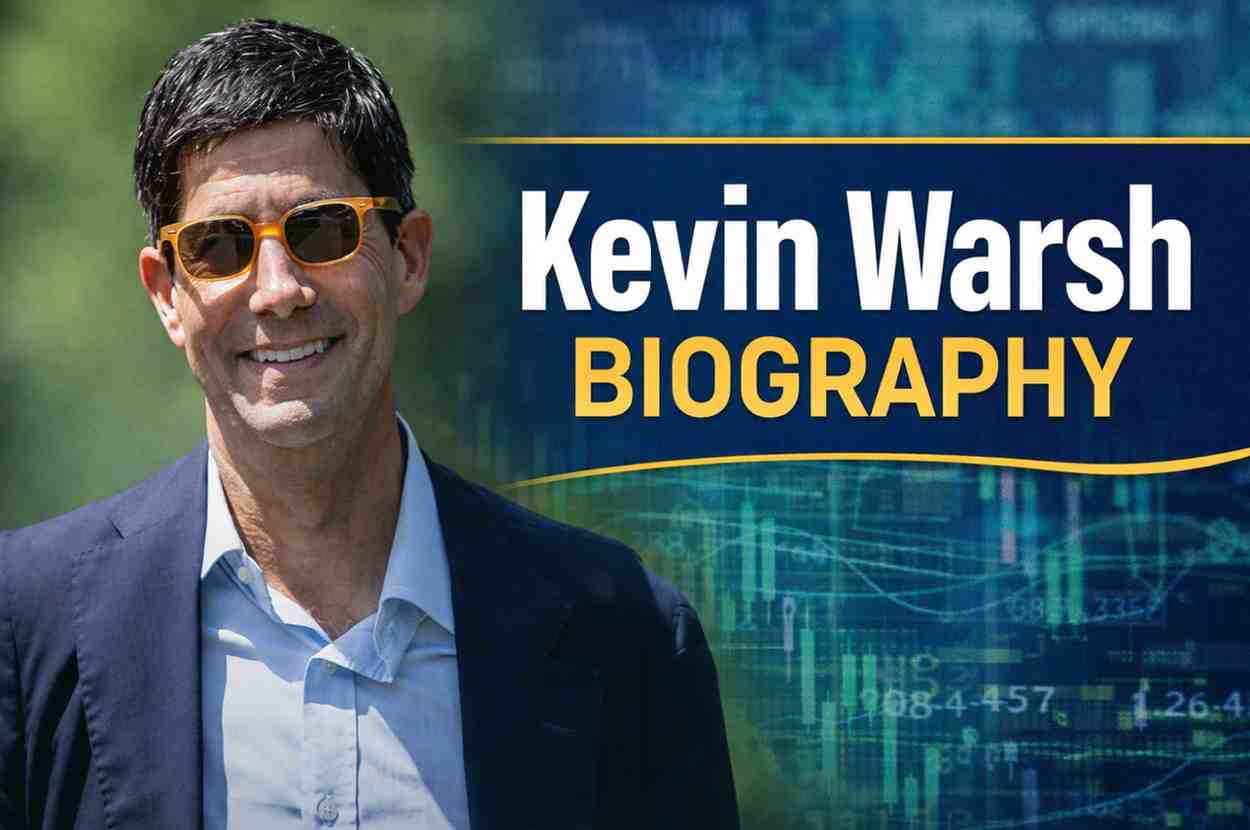
Kevin Warsh is often branded as the "market's candidate." I’ve spent two decades watching how these nominations play out, and "market-friendly" is usually code for "predictable."
Warsh is anything but predictable.
He is a critic of the Fed’s balance sheet expansion. He has historically been skeptical of the very quantitative easing (QE) that has kept the Treasury market functional for the last decade. If the market truly believed Warsh was a lock for the position, yields should be rising, not falling. Why? Because a Warsh Fed implies a smaller balance sheet, less intervention, and a higher bar for "printing" money.
The current dip in yields is a classic "buy the rumor, sell the news" trap. Traders are front-running the headlines, but the underlying fundamentals suggest a massive spike in term premium is coming.
Consider the Taylor Rule, often cited by hawks of the Warsh variety:
$$i_t = r_t^* + \pi_t + 0.5(\pi_t - \pi_t^*) + 0.5(y_t - \bar{y}_t)$$
Where:
- $i_t$ is the nominal policy rate.
- $r_t^*$ is the neutral real interest rate.
- $\pi_t$ is the inflation rate.
- $y_t - \bar{y}_t$ is the output gap.
If Warsh follows this logic, he won't be the savior of low yields. He will be the architect of a structural reset that forces the market to price risk correctly for the first time since 2008. The "Warsh Rally" is a delusion.
The DOJ Probe was a Red Herring
The DOJ investigation into the Fed was never going to land a blow. It was political theater designed to create leverage. The fact that it was dropped isn't a sign of Warsh's strength; it's a sign that the administration has already moved on to the next phase of the capture of the central bank.
The real story isn't the DOJ. It’s the Treasury’s borrowing schedule. We are seeing a massive "front-loading" of bills. The Treasury is trying to suck the remaining liquidity out of the Reverse Repo Facility (RRP) to keep long-term yields from exploding before the election cycle fully matures.
- The Myth: DOJ drops probe -> Senate confirms Warsh -> Markets stabilize.
- The Reality: Treasury manipulates issuance -> RRP drains -> Yields temporarily dip -> Inflation re-accelerates -> Rates stay higher for longer.
I’ve seen this play before. In 2018, the consensus was that "normalization" was a breeze. Then the repo market broke in 2019. We are heading for a similar fracture, and blaming or praising a potential Fed Chair change is just a way to avoid looking at the $1.5 trillion annual deficits.
Stop Asking if Warsh is "Good" for the Market
You are asking the wrong question. It doesn't matter if Warsh is a hawk or a dove. It matters if the market can withstand the removal of the "Fed Put."
For years, the Fed has acted as the insurer of last resort for the S&P 500. Warsh, in his writings and public speeches, has signaled he wants to end that era. He wants a "normalized" market where failure is possible.
If the Senate confirms him, the immediate reaction will be a short-term pump followed by a brutal repricing of risk. You cannot have a "market-friendly" Fed Chair who simultaneously wants to stop supporting the market. It is a logical contradiction that the financial media refuses to acknowledge.
The Institutional Bias Toward Optimism
Why does the media keep telling you this news is positive? Because they rely on access. They need the Treasury officials and Senate staffers to keep taking their calls. If they reported the truth—that the Fed is losing control of the long end of the curve regardless of who is in charge—they’d be shut out.
Trust the math, not the headlines. The 10-year Treasury yield is currently sitting in a precarious range. Any dip below 4% is a gift for those looking to exit, not an entry point for those expecting a Warsh-led golden age.
We are entering a period where fiscal policy is the only driver that matters. The Fed is just the cleaning crew. Changing the head of the cleaning crew doesn't matter if the house is already on fire.
The Tactical Play for the Realist
If you’re managing money based on the DOJ’s legal maneuvers, you’re gambling, not investing.
The play isn't to buy the dip in Treasuries. The play is to recognize that the volatility being suppressed right now is coiled like a spring. When the Senate hearings begin, and Warsh actually has to answer questions about the deficit and the balance sheet, the "Goldilocks" narrative will evaporate.
- Ignore the DOJ headline. It’s a non-event disguised as a catalyst.
- Watch the Term Premium. It’s the only metric that tells you the truth about how much investors demand to hold long-term debt.
- Prepare for a "Hawkish Surprise." If Warsh is the man they say he is, he will let the market hurt.
The path to the Fed Chair isn't being paved with gold; it’s being lined with the kind of fiscal instability that makes a "stable" bond market impossible.
The market isn't ticking lower because it’s happy. It’s ticking lower because it’s holding its breath before the plunge.
Sell the consensus. Buy the chaos.