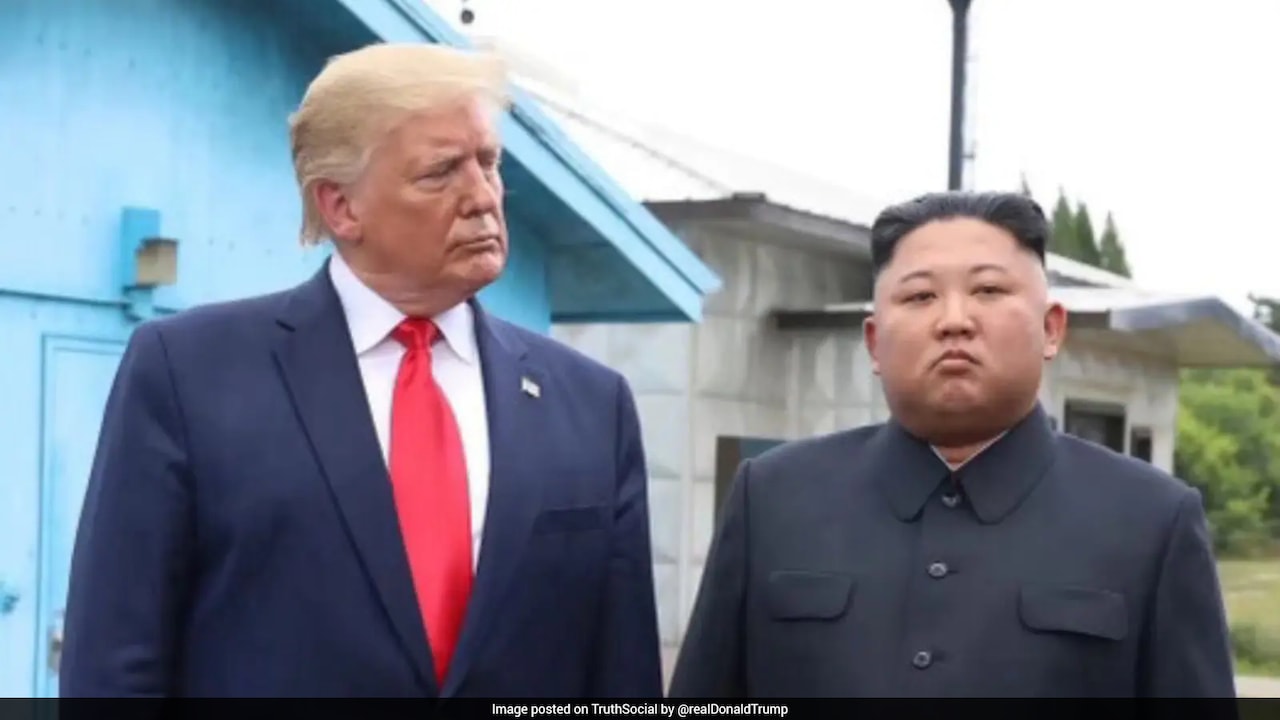
According to reports from outlets like Axios and Reuters, Donald Trump tried to reach out to Kim Jong Un, and the North Korean leader simply left him on read. No dramatic summit. No glowing letters. Just radio silence from Pyongyang.
If you've been paying attention to East Asian geopolitics over the last few years, this shouldn't surprise you at all. Back in 2018 and 2019, the two leaders traded "beautiful letters" and staged historic photo ops in Singapore, Hanoi, and the Korean Demilitarized Zone. Those days are over. Kim Jong Un doesn't need Washington's validation anymore, and understanding why requires looking at how dramatically the global chessboard has shifted since their last handshake.
The 2019 Hanoi Collapse Changed Everything
To understand why Pyongyang isn't picking up the phone, you have to go back to February 2019 in Hanoi, Vietnam. That was the turning point.
Trump and Kim met for their second summit with high expectations. Kim offered to dismantle the Yongbyon nuclear facility, one of North Korea's primary nuclear complexes, in exchange for the lifting of major U.S.-led economic sanctions. Trump walked away. His administration demanded complete, verifiable, and irreversible denuclearization before offering significant sanctions relief.
For Kim, returning home empty-handed on a slow train ride through China was a massive public humiliation. In an authoritarian system built on the myth of infallible leadership, losing face like that leaves a scar. North Korean state media had hyped the trip as a triumph before the sudden collapse. Afterward, Pyongyang's diplomatic apparatus underwent a purge, and the regime's entire calculus toward the United States hardened.
Honest assessment? Kim realized that personal chemistry with an American president doesn't automatically translate into sanctions relief or security guarantees. Why take that gamble twice when the payoff wasn't there the first time?
Why Kim Jong Un Doesn't Need Trump Anymore
In 2018, North Korea was isolated. Tough United Nations Security Council resolutions—backed even by China and Russia—had choked off coal exports, textile sales, and overseas labor revenue. Kim needed a pressure valve, and engaging Trump bought him time while easing immediate fears of U.S. military strikes.
The world looks completely different now.
Russia Became Pyongyang's Lifeline
When Vladimir Putin launched his full-scale invasion of Ukraine, Moscow suddenly needed artillery shells, ballistic missiles, and manpower. North Korea had massive stockpiles of Soviet-compatible munitions sitting in warehouses.
According to intelligence assessments from South Korea, the United States, and independent research groups like the Center for Strategic and International Studies (CSIS), North Korea has shipped millions of artillery rounds and dozens of ballistic missiles to Russia. In return, Pyongyang has reportedly received:
- Refined petroleum and food shipments that bypass international sanctions
- Hard currency that keeps the regime's elite loyal
- Suspected technical assistance for its military reconnaissance satellite and missile programs
- Diplomatic cover at the United Nations, where Russia used its veto power in 2024 to dismantle the UN panel of experts monitoring North Korean sanctions violations
Think about that for a second. Why would Kim beg Washington to lift sanctions when Moscow is actively helping him break them?
China Still Provides the Economic Floor
While Russia provides military and diplomatic backing, China remains North Korea's economic lifeline. Over 90 percent of North Korea's official foreign trade flows through China, according to data from the Korea Trade-Investment Promotion Agency (KOTRA). Beijing wants stability on its border above all else. As long as Xi Jinping keeps trade flowing across the Yalu River, Kim's regime won't collapse from economic pressure.
North Korea's Nuclear Reality Has Shifted
Another huge reason Kim ignored the outreach comes down to cold, hard capability. In 2018, North Korea had tested intercontinental ballistic missiles (ICBMs), sure, but its arsenal was still maturing.
Since then, Pyongyang has conducted dozens of missile tests, unveiled solid-fuel ICBMs like the Hwasong-18 that can be launched with almost no warning, and rewritten its constitution to enshrine its status as a permanent nuclear-armed state. Kim has publicly stated that denuclearization is completely off the table.
From Pyongyang's perspective, talking to Trump only makes sense if Washington is willing to accept North Korea as a recognized nuclear power and negotiate arms control—essentially trading limits on long-range missiles for sanctions relief and reduced U.S. military presence in South Korea. Anything less is a non-starter.
What Most Analysts Miss About Trump's Approach
Trump has frequently bragged on the campaign trail and in interviews about how well he got along with Kim Jong Un, claiming that North Korea wouldn't be acting out if he were running the show. His instincts lean heavily toward personal, leader-to-leader dealmaking rather than traditional diplomatic channels.
That style worked once because both men wanted a spectacle. Trump wanted a historic foreign policy breakthrough that his predecessors couldn't achieve. Kim wanted legitimacy on the world stage and relief from crippling sanctions.
Today, the incentives don't align. Trump's team reportedly tried to re-establish contact to explore renewed diplomacy or take the temperature in Pyongyang, according to the Axios report. Kim's silence sends a clear message: flattery isn't currency anymore. If Washington wants a conversation, it has to bring concrete concessions to the table before a single camera flashes.
The Risks of Diplomatic Silence
Ignoring outreach doesn't mean North Korea is sitting quietly. Far from it. Pyongyang has formally abandoned its decades-old policy of peaceful reunification with South Korea, labeling Seoul its "primary foe and invariable principal enemy." Kim ordered the demolition of the Arch of Reunification in Pyongyang and severed cross-border roads and railways.
When there are no backchannels between Washington and Pyongyang, the margin for error shrinks dangerously. A minor skirmish along the Northern Limit Line in the Yellow Sea or a misread military exercise could spiral quickly without someone on the other end of the line to de-escalate.
How to Watch What Happens Next
If you're tracking U.S.-North Korea relations, ignore the rumors about secret letters or sudden summit talk. Watch the tangible indicators that actually show where Pyongyang is heading:
- Monitor Russian-North Korean summits and arms transfers. Any slowdown in Moscow's demand for North Korean munitions—such as a ceasefire in Ukraine—could suddenly make Kim much more interested in talking to Washington again.
- Watch joint U.S.-South Korea military drills. Pyongyang uses major exercises like Freedom Shield as pretexts for missile launches and aggressive rhetoric; how Washington calibrates these drills will signal whether it's trying to coax Kim back to the table.
- Pay attention to North Korean state media (KCNA) phrasing. When Pyongyang wants to signal openness to talks, it carefully dials back personal attacks on the U.S. president while criticizing lower-level officials instead.
- Track Chinese diplomatic visits to Pyongyang. High-level exchanges between Beijing and North Korea often precede major shifts in Kim's foreign policy posture.
Until Kim Jong Un feels squeezed enough that Washington offers something Moscow and Beijing can't, expect the phone in Pyongyang to keep ringing unanswered.