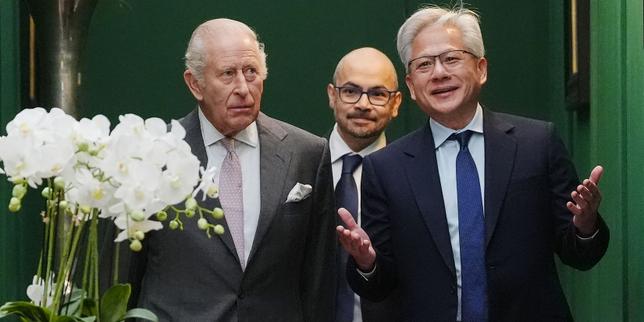
When a reigning British monarch begins stepping outside traditional constitutional boundaries to signal alarm over technological disruption, Downing Street pays attention. King Charles III, long known for his measured environmental advocacy, has quietly positioned himself as a central figure in the escalating debate over artificial intelligence safety. Behind the pomp of state openings and royal addresses lies a calculated institutional effort: the British head of state acting as a sounding board for global anxieties surrounding rapid automation, systemic labor displacement, and the concentration of computational power in private hands.
The core premise centers on an uncomfortable reality. Westminster politicians are perpetually trapped in short electoral cycles, rarely looking past the next five years, while artificial intelligence laboratories operate on timelines measured in months. Charles III, possessing a lifetime tenure and access to international intelligence briefings, closed that temporal gap. By elevating concerns regarding runaway artificial intelligence development, the Crown is filling a governance vacuum left by regulators struggling to keep pace with algorithmic evolution. Also making headlines in related news: China’s Viral AI Phenom Hides a Brutal Manufacturing Trap.
The Crown As A Diplomatic Shield
Governments across the democratic world face a difficult balancing act. Stifle domestic artificial intelligence innovation through heavy-handed regulation, and national competitiveness vanishes to jurisdictions with laxer guardrails. Give developers a blank check, and society risks severe economic dislocation coupled with automated disinformation campaigns that erode democratic institutions.
Politicians find it difficult to voice these fears without sounding either anti-progress or alarmist. The monarchy absorbs this friction. When the sovereign addresses technological risk, it frames the debate not as partisan policy preference, but as a generational responsibility. Additional insights on this are detailed by MIT Technology Review.
Consider the international diplomatic circuit. During visits with foreign heads of state and tech executives alike, the King has consistently pressed the necessity of ethical frameworks. These are not merely polite conversations over tea. They represent a coordinated attempt to establish international norms before proprietary models dictate the rules of engagement. When sovereign wealth funds from the Gulf and venture capital from Silicon Valley negotiate multi-billion-dollar infrastructure deals in London, the underlying subtext involves who controls the safety switch.
The Labor Market Shock
The immediate economic fallout of large language models and autonomous agents rarely receives honest assessment from corporate boosters. While executives promise efficiency gains and productivity surges, the downstream consequence involves the erosion of white-collar professional tracks. Law firms, accounting practices, and administrative departments are quietly downsizing entry-level recruitment.
This creates a structural crisis for the British economy. For decades, the UK service sector relied on a steady influx of university graduates entering professional services. If machines handle junior legal discovery, preliminary tax coding, and software debugging, the traditional apprenticeship model of professional development collapses.
[Traditional Pipeline] -> University Graduates -> Junior Professional Roles -> Senior Leadership
[Automated Pipeline]   -> Foundation Models    -> Direct Senior Oversight (Job Losses at Entry Level)
The King's intervention highlights this silent restructuring. Without a deliberate strategy to retrain workforces displaced by algorithmic efficiency, economic polarization will deepen. The disparity between capital owners who hold equity in compute infrastructure and labor providers whose skills are depreciating daily threatens social cohesion.
The Misinformation Crisis And Electoral Integrity
Beyond economics lies the integrity of the public sphere. Generative models capable of producing hyper-realistic synthetic media at scale have democratized deception. During electoral campaigns, micro-targeted synthetic content can shift public perception faster than traditional fact-checking mechanisms can respond.
The British electoral apparatus relies heavily on institutional trust. When voters can no longer distinguish between authentic documentation and algorithmic fabrication, public discourse fractures. Trust in journalism, the judiciary, and parliament decays.
Intelligence agencies inside the UK security perimeter have raised internal red flags regarding foreign actors weaponizing artificial intelligence to sow discord. The royal engagement with these themes serves as an early warning system. By drawing public attention to the vulnerability of democratic information loops, the institution encourages a defensive posture across both public and private sectors.
The Limits Of Royal Influence
Skepticism remains entirely justified. Monarchical interventions risk performing as aesthetic gestures devoid of legislative teeth. Expressing deep concern over algorithmic bias or existential risk does not write a single line of defensive code, nor does it fund regional computational clusters necessary for sovereign independence.
Furthermore, British reliance on foreign-owned cloud infrastructure creates a geopolitical vulnerability. The UK lacks domestic hyperscalers capable of training foundational models from scratch. British artificial intelligence startups depend heavily on hardware architectures owned by American technology conglomerates. When the state expresses anxiety over algorithmic acceleration while simultaneously lacking the silicon manufacturing capacity to dictate terms, the leverage remains asymmetrical.
The systemic risk is real, structural, and accelerating. Whether institutional posturing from traditional seats of power can tame a technological revolution driven by relentless commercial imperatives remains the defining question of this decade. The machinery of state moves deliberately, but the algorithms are already rewriting the rules of the game.