Ground doesn't just shake in Kumamoto; it shatters lives with brutal familiarity. When a powerful 7.1-magnitude earthquake struck southwestern Japan, it didn't just rattle nerves—it triggered a secondary catastrophe at a local shopping center that turned an already severe natural disaster into a desperate race against the clock.
The death toll has climbed to 28 people, and emergency responders are still combing through twisted steel and pulverized concrete. If you're following the crisis, you already know the immediate numbers. But the real story is about why this disaster hit so hard, the compounding dangers of secondary blasts, and what it takes to survive when infrastructure fails twice in a decade.
The Nightmare Inside the Mall
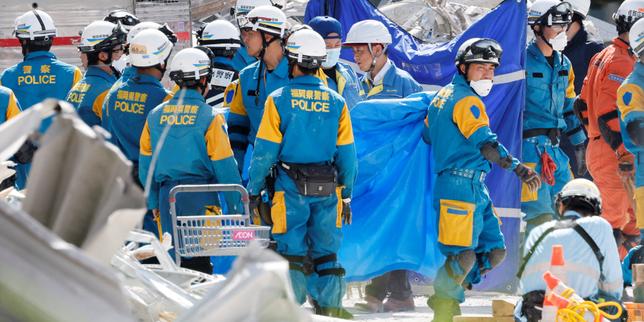
The most intense focus of the rescue operations centers on the Aeon shopping complex in the town of Kashima. Shoppers and staff managed initial evacuations smoothly as the main tremor hit. Then, a massive explosion tore through the structure.
Gas leaks triggered a secondary blast that brought down sections of the second floor. Steel beams were exposed like broken ribs, and heavy smoke billowed across the parking lots.
Rescuers haven't had an easy time. Firefighters and Self-Defense Forces personnel faced burning debris, unstable structural components, and the looming threat of frequent aftershocks. Working in these conditions requires precise heavy-machinery operation balanced with manual tunneling through rubble. At least five lives were lost right there at the mall, alongside other fatalities recorded at industrial sites like the Nippon Paper Industries mill in Yatsushiro, where a collapsed chimney added to the tragedy.
Compounding Crises and Scorching Heat
Earthquakes rarely act alone. They bring down water mains, snap power grids, and cut off entire communities.
Over 23,000 households found themselves without electricity, while nearly 75,000 homes lost access to running water. In a cruel twist of meteorological fate, temperatures in the region have soared past 35 degrees Celsius.
Thousands of evacuees are crowded into school gymnasiums and community centers. Sleeping on thin mats on hard floors is tough enough. Doing it without air conditioning while summer heat threatens heatstroke creates a public health emergency running parallel to the search-and-rescue mission. Water trucks are parked outside shelters, drawing long lines of residents waiting for basic hydration.
The Shadow of 2016
This region bears emotional and physical scars that run deep. A decade ago, a series of devastating quakes struck Kumamoto, flattening thousands of buildings and taking 275 lives.
Many structures affected this week had only recently undergone extensive retrofitting and reconstruction. Seeing a newly rebuilt commercial hub suffer catastrophic damage leaves communities wondering how to build truly resilient spaces. Japan's strict building codes remain among the toughest globally, yet unpredictable secondary hazards—like gas-line ruptures and industrial collapses—continue to bypass even advanced safety nets.
Heavy manufacturing plants operated by global giants like TSMC, Sony, and Fujifilm also ordered immediate evacuations of their local facilities. While these tech hubs avoided structural collapses, the sudden halt in operations ripples outward through global supply chains.
What Comes Next for the Region
Emergency crews are working through the critical 72-hour window, past which survival rates for trapped individuals drop sharply. Prime Minister Sanae Takaichi has pledged that emergency teams will utilize every available resource, pushing through day and night despite fatigue and dangerous aftershocks.
If you are tracking relief efforts or looking to understand how disaster management operates under intense pressure, keep an eye on official updates from the Kumamoto Prefectural Government and the Fire and Disaster Management Agency. Authorities are urging anyone in the affected zones to prioritize hydration, stay clear of compromised structures, and heed all evacuation orders immediately.