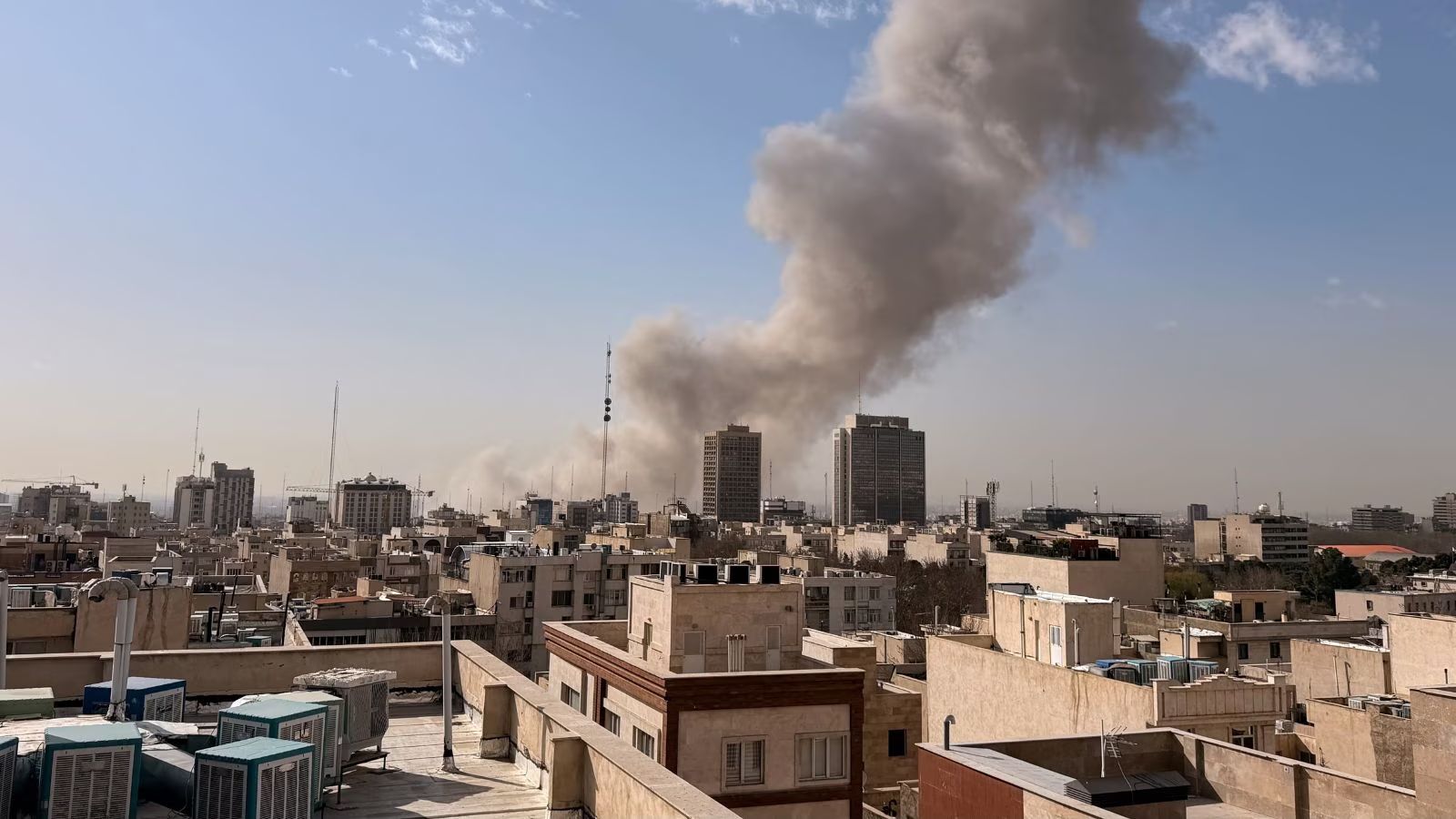
The tragic death of an Indian traveler caught in a drone strike at Kuwait Airport while heading home for a family wedding is being framed by mainstream media as a freak, isolated horror story. The headlines lean heavily on the heartbreaking irony of an innocent bystander caught in the crosshairs of regional warfare. They treat it as a black swan event—a sudden, unpredictable tragedy that demands emotional hand-wringing but offers zero systemic lessons.
They are entirely wrong. In related updates, take a look at: The Water That Remembers Where It Belongs.
This is not a freak accident. It is a predictable consequence of a fundamental shift in asymmetric warfare that the aviation and travel security industries are actively ignoring. Mainstream coverage focuses entirely on the human interest angle because addressing the structural failure of airspace management in high-risk corridors requires admitting a terrifying truth: the legacy frameworks we use to calculate travel safety are completely broken.
If you are evaluating travel risks based on destination safety ratings or traditional nation-state conflict boundaries, you are operating on a dangerously outdated playbook. Al Jazeera has provided coverage on this fascinating subject in great detail.
The Illusion of Sanctuary Airports
For decades, international hubs like Kuwait International Airport were treated as neutral sanctuaries. Even during periods of intense regional friction, the unwritten rule of engagement was clear: commercial aviation infrastructure remains off-limits. The logistics of global capitalism depended on this assumption.
That consensus is dead.
The proliferation of low-cost, long-range loitering munitions has democratized precision strikes. Non-state actors and state proxies no longer respect the imaginary boundaries of commercial transport hubs. When a drone strike originates from hundreds of miles away, the target is rarely a single individual; the target is the economic friction caused by the attack itself.
Mainstream analysis treats this event as a failure of regional deterrence. In reality, it is a failure of airspace denial capabilities. The media asks, "Why would they strike a civilian hub?" The harsher, more accurate question we should be asking is, "Why are we still routing millions of commercial passengers through active kinetic corridors without military-grade point defense systems protecting the tarmac?"
Traditional risk assessments rely on historical data. They look at whether a country is officially at war. But modern conflict does not wait for a formal declaration. It spills over borders in minutes via autonomous hardware. If an airport shares a zip code with critical energy infrastructure or strategic military logistics hubs, it is a de facto military target. Treating it as a safe civilian transit point is a delusion.
The Broken Logic of Aviation Risk Assessments
When you book a flight, the airline relies on risk intelligence firms to determine safe flight paths. These firms use a standard matrix: political stability, historical terrorism metrics, and state-level military posturing.
This matrix is completely blind to modern reality.
Consider how the industry handled airspace during previous regional escalations. Changes happen at a glacial pace. Regulatory bodies debate for days before re-routing traffic or issuing NOTAMs (Notices to Airmissions). Meanwhile, the loop for launching a swarm of low-altitude drones is measured in minutes. The bureaucratic speed of the aviation industry cannot compete with the operational speed of autonomous weaponry.
Legacy Risk Model:
State Stability -> Formal War Declarations -> Slow Airspace Adjustments

Modern Reality:
Proxy Proliferation -> Instant Asymmetric Strikes -> Commercial Hub Vulnerability
</h1>
I have spent years analyzing operational security in volatile regions, and the most glaring vulnerability is always the same: institutional inertia. Insurance companies dictate risk boundaries based on actuarial tables that do not account for the rapid evolution of drone technology. They assume that if an airport has advanced radar, it is secure.
But standard civilian aviation radar is designed to track massive commercial airliners flying at high altitudes, not small, low-radar-cross-section composites hugging the terrain. The systems meant to keep us safe are literally looking the wrong way.
Stop Asking If It Is Safe (Ask Who Controls the Sky)
The standard "People Also Ask" queries following an event like this are entirely predictable:
- Is it safe to transit through the Middle East right now?
- How do airlines protect passengers from drone strikes?
These questions miss the point because they assume safety is a binary switch that airlines control. It is not. Airlines do not have electronic warfare capabilities bolted onto the bellies of Boeing 777s. They cannot deploy active jamming or directed-energy weapons to intercept an incoming strike while taxiing on a runway.
The correct question is: Which commercial routes are currently operating beneath uncoordinated, contested airspaces where local governments lack integrated air defense systems?
If a state relies on legacy surface-to-air missile systems designed for Cold War fighter jets, they cannot protect a civilian airport from a swarm of cheap loitering munitions. When you transit through these zones, you are gambling on the restraint of the attackers, not the defensive capabilities of the host nation.
The Harsh Reality of De-risking Travel
The uncomfortable truth that nobody in the travel or aviation industry wants to admit is that avoiding this risk requires an aggressive, inconvenient overhaul of how we move across the globe.
If you want absolute safety, you must accept significant economic and logistical friction.
| Legacy Travel Mindset | The Contrarian Reality |
|---|---|
| Relying on airline routing to avoid conflict zones automatically. | Airlines prioritize fuel efficiency and optimal routing over proactive risk avoidance until forced by regulators. |
| Trusting that a neutral passport protects you in a foreign hub. | Shrapnel and autonomous targeting algorithms do not check nationalities or visa status. |
| Assuming major international hubs have flawless anti-drone shields. | Most civilian airports lack active electronic jamming due to interference with civilian communication networks. |
Implementing true security means civilian airports must adopt military-grade electronic warfare suites. However, the downside is severe. Turning on high-powered anti-drone jamming arrays at a commercial airport disrupts civilian GPS, grounds local communications, and causes massive logistical chaos. The industry chooses the risk of an occasional catastrophic strike over the guaranteed daily financial loss of operating under military conditions. They have priced the human cost into the cost of doing business.
Dismantling the Isolated Incident Narrative
To view the tragedy at Kuwait Airport as an anomaly is to misunderstand the trajectory of global conflict. This is the new baseline. The globalization of supply chains meant that a factory worker in Asia, a tech executive in Europe, and a traveler going to a wedding in India all share the exact same physical choke points.
When those choke points are weaponized by regional actors seeking leverage, civilian casualties are not collateral damage—they are the leverage. The disruption of global transit creates immediate international pressure, which is exactly what the perpetrators want.
Stop looking at the specific motive behind this single strike. The motive is irrelevant to the passenger. The vulnerability of the infrastructure is what matters. Until the travel industry stops treating airspace security as a passive bureaucratic exercise and starts treating it as an active kinetic defense problem, civilian travelers will remain the softest targets on earth.
The next time you book a long-haul flight through a region experiencing geopolitical tremors, ignore the reassuring statements from the airlines. Look at the defensive capabilities of the transit hubs. If the host country cannot defend its own military bases from drone incursions, it certainly cannot protect your connecting flight on the tarmac. Plan your routes accordingly, or accept that you are entering an unshielded arena.