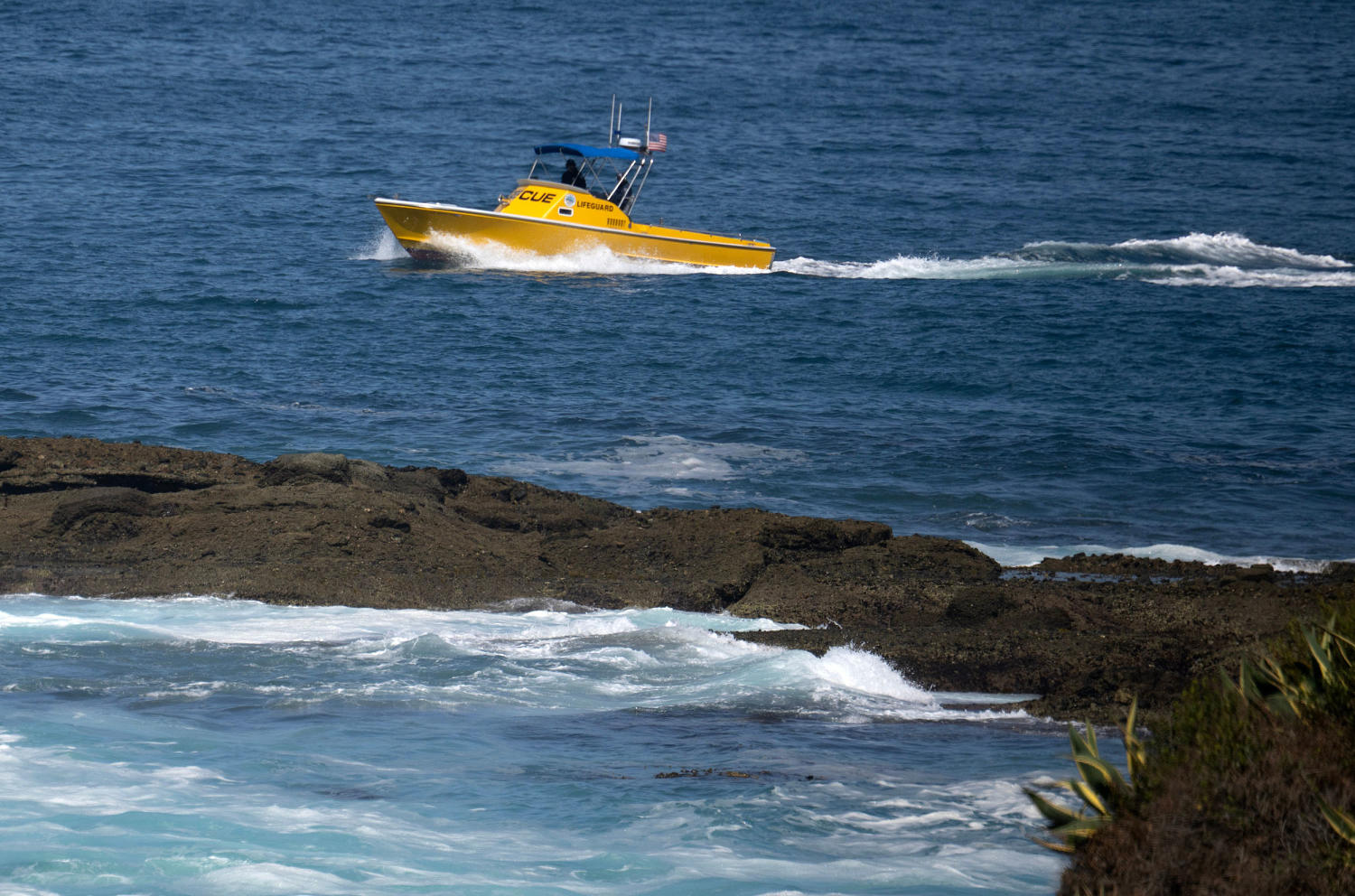
The headlines following the recovery of a five-year-old girl’s body off the coast of Laguna Beach all follow a scripted, predictable cadence. They focus on the heartbreak, the grueling search-and-rescue timeline, and the inevitable, vague warnings about ocean safety. The media treats these events as freak anomalies or sudden failures of vigilance.
They are wrong.
When a rogue wave or a sudden surge sweeps a child off a rocky ledge or a sandy shoreline, the public outcry demands answers, signs, lifeguards, and barriers. We want someone or something to blame because admitting the alternative is too terrifying. The uncomfortable truth that beachgoers, city councils, and coastal reporters refuse to acknowledge is simple: our collective understanding of beach safety is built on a foundation of dangerous, romanticized ignorance. We treat the Pacific Ocean like a high-end theme park with a few inherent risks, rather than what it actually is—a chaotic, indifferent hydraulic system that humans are fundamentally unequipped to read.
The Illusion of the Safe Shoreline
Standard news coverage of coastal drownings leans heavily on the "sudden tragedy" narrative. This framing implies that the environment was safe until a single, malicious wave broke the rules.
I have spent two decades analyzing coastal dynamics and working alongside marine safety personnel. The concept of a entirely "safe" rocky coast or high-energy surf zone during specific tidal shifts is a myth sold to tourists to maintain local hospitality revenue.
When you look at the geography of Laguna Beach—specifically areas like Thousand Steps or Aliso—you are looking at steep beach profiles and complex rocky shelves. These formations create a phenomena known as shorebreak and sudden surging seas.
- The Velocity Misconception: Most people assume they can outrun an incoming surge. They calculate the speed of the water based on the lazy rolling waves they see fifty yards out. They do not account for the hydrostatic volume behind a surging wave. A wave just knee-deep carries enough mass to sweep a full-grown adult off their feet, let alone a young child.
- The Tidal Trap: The transition from low to high tide changes the baseline geometry of the beach. Ledges that felt dry and secure twenty minutes prior suddenly become the impact zone for deep-water swells that haven't lost their energy to a sloping sandy bottom.
The lazy consensus screams for more warning signs. But signs do absolutely nothing to alter human psychology or hydrodynamic physics.
Why "Awareness" Campaigns are Failing
Every time a coastal tragedy occurs, public agencies double down on public awareness campaigns. They post infographics on social media. They install bright yellow placards.
It is a waste of resources that provides nothing but bureaucratic cover.
Standard Safety Model:  Awareness -> Signage -> Behavioral Change (Fails)
Real-World Dynamic:     Proximity -> Complacency -> Environmental Incident
The human brain is hardwired to rely on visual consensus. If twenty other people are standing on a rocky shelf taking photos, your brain registers the environment as safe, completely ignoring the fact that the tide is rising and the swell period is lengthening.
The Data on Swell Periods
We talk about wave height constantly, but wave height is the wrong metric to obsess over. The real danger lies in the swell period—the time it takes for successive wave crests to pass a fixed point.
A four-foot wave with a short period of 7 seconds is choppy but manageable. That same four-foot wave with a long period of 17 seconds is an entirely different monster. Long-period swells originate thousands of miles away. They move faster, run deeper, and stack up massive amounts of water when they finally hit shallow coastal shelves. To an untrained eye on the sand, the ocean looks calm for ten minutes. Then, a set of long-period waves arrives, surging dozens of feet higher up the beach than any previous wave.
The media calls these "rogue waves." Oceanographers call them a predictable mathematical certainty of long-period swells.
The Hard Truth About Lifeguard Reliance
We have fostered a culture of outsourced personal safety. Parents sit on the sand with their backs to the water, assuming that because a lifeguard tower is within eyesight, an invisible safety net covers their children.
Let's look at the brutal logistics of a standard coastal rescue operation:
| Factor | Timeline / Reality |
|---|---|
| Submersion Window | Brain damage begins within 4 to 6 minutes of oxygen deprivation. |
| Visual Tracking | White water, foam, and rip currents make spotting a small body in churning surf nearly impossible from a distance. |
| Response Time | Even the most elite lifeguards require 30 to 90 seconds to transit the sand, enter the surf, and reach a victim's last known location. |
Lifeguards are not preventative shields; they are emergency responders. If you are relying on a lifeguard to keep your child from being swept off a rock, you have already failed the risk assessment equation.
Stop Looking at the Water, Look at the Wet Rocks
If you want an actionable, unconventional rule for coastal survival that bypasses the useless platitudes of standard safety brochures, it is this: If the rock is wet, or if it has dark algae on it, it is already part of the ocean.
It does not matter if the water is currently thirty feet away. It does not matter if it hasn't been touched by a wave since you sat down. The presence of moisture or marine growth means that water reaches that exact spot with enough frequency to sustain life or prevent drying.
"The ocean does not negotiate, and it does not give warnings. If you stand on wet rock, you are standing in the water. Act accordingly."
We need to stop treating these events as unpredictable lightning strikes. They are the logical conclusion of putting fragile human bodies into high-energy geological transition zones without understanding the physics of the environment.
The tragic loss in Laguna Beach shouldn't prompt a conversation about better signs or more rescue jet skis. It needs to dismantle the comforting lie that the coast is a safe playground. It is a wilderness, and the border between the land and the sea is a fluid, violent variable that changes by the minute. If you cannot read the swell period, if you do not understand the tide chart, and if you treat the shoreline with casual familiarity, you are gambling with gravity and fluid dynamics. And the house always wins.


