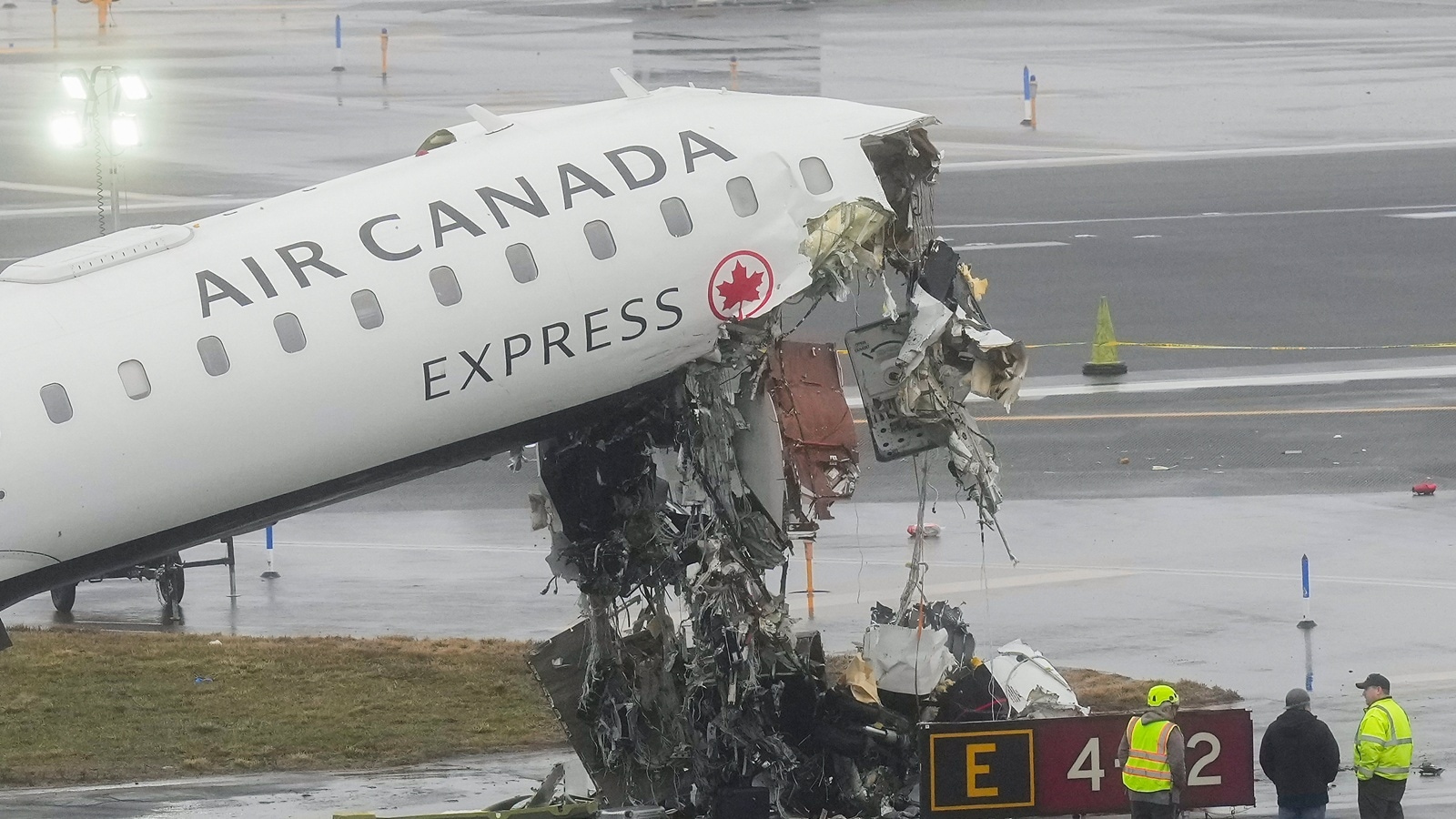
The resignation of Air Canada’s Chief Executive Officer following a monolingual emergency communication failure represents more than a public relations crisis; it is a catastrophic failure in Operational Redundancy and Stakeholder Alignment. In a strictly regulated, dual-language framework like Canada’s Official Languages Act, linguistic competence is not a "soft skill" but a core compliance requirement. When the primary executive failed to communicate a life-safety incident in both official languages, the breach occurred at the intersection of regulatory risk and brand equity. This breakdown demonstrates that for a crown-heritage entity, the "Social" in ESG (Environmental, Social, and Governance) carries a quantifiable financial and leadership penalty.
The Triad of Institutional Risk: Regulatory, Cultural, and Operational
Air Canada operates under a unique set of constraints that distinguish it from global peers like Delta or Lufthansa. The departure of an executive over a language row indicates a failure to manage three distinct risk vectors:
- Statutory Non-Compliance: Unlike private-sector competitors, Air Canada is bound by the Official Languages Act. This creates a legal floor for executive performance. A failure to deliver an emergency message in French during a crash-related event is a direct violation of the duty to serve the public in their language of choice.
- Market Share Erosion (Quebec Hub): Montreal-Trudeau International Airport (YUL) serves as a critical global hub. Alienating the Francophone demographic—a core segment of the carrier's high-yield passenger base—threatens the long-term viability of the hub-and-spoke model.
- Governance Asymmetry: The board of directors’ failure to vet or coach the CEO on the necessity of bilingualism created a strategic blind spot. The cost of replacing a CEO prematurely—including severance, search fees, and stock volatility—far outweighs the cost of a comprehensive linguistic integration program.
The Mechanism of the "English-Only" Crisis
The crisis was catalyzed by a specific failure in Crisis Communication Protocols. When an aviation incident occurs, the CEO acts as the Chief Safety Officer in the eyes of the public. By issuing a message regarding a "crash" or emergency purely in English, the organization signaled a hierarchy of safety where one linguistic group was prioritized over another.
In high-stakes environments, information density must be matched by information accessibility. The "Information Bottleneck" created by the monolingual message meant that a significant portion of the domestic population received critical safety reassurance through the filter of translation or media interpretation, rather than directly from the source. This delay in "Primary Source Validation" is what transformed a technical incident into a leadership vacuum.
The Cost Function of Executive Turnover
Replacing a CEO under duress involves a complex calculation of "Friction Costs." These are not merely the numbers on a balance sheet but the structural delays in decision-making that occur during a transition.
- Strategy Stagnation: Major capital expenditures, such as fleet renewal or international route expansion, typically freeze during a leadership transition.
- Talent Attrition: High-performing executives often depart alongside a disgraced CEO, leading to a "Brain Drain" that weakens middle management.
- Regulatory Scrutiny Premium: Following a high-profile resignation tied to a specific violation (language laws), the carrier will likely face increased audits from the Office of the Commissioner of Official Languages, increasing the administrative burden on legal and HR departments.
Quantifying the "Bilingualism Dividend"
For a Canadian multinational, bilingualism is a form of Linguistic Capital. In the aviation sector, where margins are notoriously thin (often between 1% and 3%), the ability to maintain frictionless operations across different cultural jurisdictions is a competitive advantage.
The resignation proves that the lack of this capital acts as a "Linguistic Tax." The tax is paid in the form of fines, lost subsidies, or, in this extreme case, the total loss of leadership. If we define the value of the CEO as $V$ and the linguistic requirement as $L$, the executive's total utility $U$ is expressed as:
$$U = V \cdot L$$
Where $L$ is a binary variable (0 or 1) in the context of Canadian federal law. If $L = 0$, the total utility of the executive to the organization becomes zero, regardless of their financial or operational acumen. This explains why the board had no choice but to accept the resignation; the executive had become a non-performing asset in the regulatory sense.
The Social License to Operate
Every airline requires more than just an Air Operator's Certificate; they require a "Social License to Operate." This is an unwritten contract with the public that ensures the airline reflects the values of the nation it represents. Air Canada’s history as a former Crown Corporation makes this license particularly fragile.
The "English-only" message was interpreted as a revocation of this contract. In the Quebec market, where Air Canada faces stiff competition from Air Transat and others who prioritize French, this was a gift of market share to rivals. The strategic error was treating language as a "communication preference" rather than a "core infrastructure component."
Structural Correctives for Global Organizations
To prevent a recurrence of this leadership failure, the strategy must shift from reactive PR to structural integration. This involves:
- Mandatory Linguistic Audits: Executive candidates should be evaluated on their ability to handle crisis communication in all legally required languages as part of the "Technical Skills" assessment, not as an "Additional Asset."
- Decentralized Crisis Spokespeople: Removing the CEO as the only voice of the company during emergencies. Developing a "Dual-Lead" system ensures that safety information is disseminated simultaneously and with equal authority in both languages.
- Governance Reform: Boards must include members with specific expertise in "Cultural and Regulatory Risk" to act as a check on executive blind spots regarding domestic policy.
The current vacancy provides the board with an opportunity to reset the "Organizational DNA." The new CEO must not only be a financier or an operations specialist but a "Cultural Arbitrageur" capable of navigating the complex socio-political landscape of a bilingual state. Failure to secure this profile will result in a continued cycle of executive volatility and eroded public trust.
The immediate strategic priority is to appoint an interim leader who possesses "Native-Level Fluency" and "Operational Gravitas" to stabilize the Quebec corridor and signal to the federal government that the carrier has internalized the gravity of the compliance breach. This is not a matter of political correctness; it is a matter of securing the airline's preferential status in Canadian aviation policy and maintaining its dominance in the Montreal hub.