Australia has summoned the Laotian ambassador to Canberra, expressing bitter disappointment and deep frustration over the refusal of local authorities to pursue serious criminal penalties for a mass methanol poisoning event. The diplomatic showdown follows revelation that those responsible for the November 2024 tragedy in Vang Vieng—which killed six foreign tourists, including Melbourne teenagers Bianca Jones and Holly Bowles—face minor charges carrying a maximum of just one year in prison.
The families of the victims are furious. The Australian government is scrambling for leverage, but the stark reality is that international law offers few tools to force a sovereign, authoritarian state to change its judicial calculus.
The Cost of Two Lives in Canberra
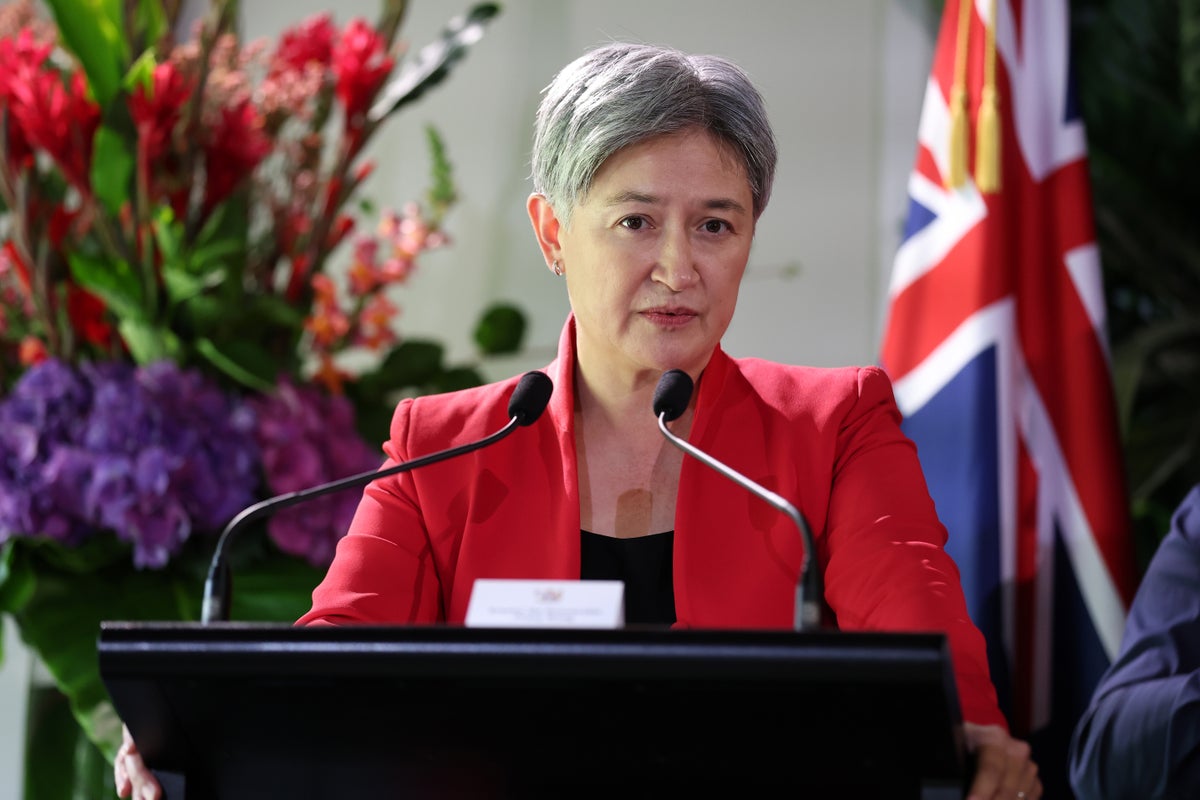
The formal diplomatic rebuke took place in Canberra, where Foreign Minister Penny Wong made it clear that the proposed legal response from Vientiane does not match the gravity of the crime.
According to legal briefs obtained by Australian broadcasters, Lao authorities intend to move forward with low-level infractions. The offenses include operating a business without a proper license and regulatory non-compliance. Collectively, these charges carry a top sentence of twelve months behind bars and a financial penalty capped at roughly 1,600 Australian dollars.
For the families of Bianca Jones and Holly Bowles, the news is a second wave of trauma. The two 19-year-olds were on a dream backpacking trip through Southeast Asia when they ingested tainted alcohol at the Nana Backpacker Hostel in the tourist enclave of Vang Vieng. They quickly fell violently ill, alongside dozens of other young travelers. Four other Western citizens—two Danish women, an American man, and a British lawyer—also died from the exact same batch of contaminated drinks.
The anger coming from the victims' parents highlights a massive gap between the expectations of Western justice and the realities of the Laotian legal framework. To a grieving family, it looks like a cover-up. To seasoned diplomats, it looks like standard operating procedure for a country that fiercely shields its local commerce and political elite from outside scrutiny.
Inside the Vang Vieng Supply Chain
To understand why the charges are so weak, one must look at how the illicit alcohol industry operates across Southeast Asia. Methanol is not an accidental byproduct of a poorly monitored fermentation process. That is a common misconception.
Natural fermentation yields ethanol, the alcohol found in standard beer, wine, and spirits. Methanol, conversely, is an industrial chemical used primarily as a solvent, pesticide, or alternative fuel source. It is cheap to manufacture and completely indistinguishable from ethanol to the untrained human eye, nose, or tongue.
Unscrupulous distillers and bar owners frequently buy bulk industrial methanol and blend it into house spirits to stretch their profit margins. A bottle of legitimate, taxed vodka might cost a local business ten dollars; a bootleg bottle cut with industrial wood alcohol costs pennies to produce. In low-margin backpacker hubs where bars attract patrons with promises of free pour hours and cut-rate cocktails, the temptation to cut corners is immense.
Initial investigations by Laotian police pointed directly to an illegal bottling plant operating just outside the capital city of Vientiane. Raids conducted late in 2024 uncovered large stockpiles of unregulated liquor, leading to the temporary closure of specific regional brands.
Yet, as the months dragged on, the initial transparency faded. The Laotian government never formally published a comprehensive forensic audit linking the factory to the specific bottles served at the hostel. By shifting the legal focus away from mass manslaughter and toward simple business licensing violations, the state effectively protects the broader supply chain from a deeper, international investigation.
The Iron Curtain of Vientiane
Laos is a one-party communist state where information flows only with the explicit approval of the ruling politburo. The domestic press is entirely state-controlled, and foreign journalists face severe restrictions when attempting to report outside the heavily managed capital.
This closed political architecture creates an environment where accountability is an abstract concept. When the mass poisoning occurred, local medical facilities in Vang Vieng were completely unequipped to handle the crisis. Methanol poisoning requires rapid intervention, including hemodialysis and the administration of specific antidotes like fomepizole or pure ethanol to halt the metabolic production of toxic formic acid in the liver.
Instead of receiving immediate, transparent medical care, several victims were left in their hostel rooms for hours before being transferred across the border to better-equipped facilities in Thailand. The delay proved fatal.
The refusal to pursue severe criminal charges reflects a deep-seated resistance to external interference. If Lao prosecutors were to file charges of corporate manslaughter or mass poisoning, it would force an open court process. Evidence would be entered into the public record. International observers, including Australian Federal Police agents who have been assisting in the background, would demand access to internal police files.
For a government that relies on absolute control, allowing foreign investigators to dissect the inner workings of its domestic commerce and regulatory failures is a non-starter. The nominal fine is a political firewall. It is designed to close the file, penalize a few low-level operators, and insulate the wider regime from systemic blame.
The Limits of Diplomatic Leverage
Canberra is pulling every available diplomatic lever, but the options are running out. Australia recently dispatched a highly experienced special envoy, Pablo Kang, directly to Vientiane to lobby the top echelons of the Lao government. Foreign Minister Penny Wong has also confirmed she will confront her Laotian counterpart face-to-face at the upcoming Association of Southeast Asian Nations meeting in Manila.
However, the geopolitical reality of the region works against Western influence. Laos is heavily reliant on economic backing and infrastructure investment from neighboring superpowers, particularly China. Australia provides significant development aid, but it does not possess the economic muscle required to dictate the judicial outcomes of an independent nation.
If Australia pushes too hard, it risks cutting off the very diplomatic channels needed to keep the conversation alive. The Albanese government faces a delicate balancing act: it must satisfy a rightfully furious domestic constituency while acknowledging that a foreign nation cannot be forced to alter its criminal code by external decree.
The tragic truth of the Vang Vieng poisonings is that the market for cheap tourism remains structurally dangerous. Backpackers will continue to flock to cheap destinations, bars will continue to seek out cheap liquor to fuel low-cost party packages, and weak local enforcement will continue to look the other way until the next crisis hits.
Australia’s diplomatic fury may dominate headlines in Canberra, but on the ground in Southeast Asia, the calculations remain unchanged. The ledger has been balanced in Vientiane, and it values the lives of two young Australians at less than the cost of a mid-tier used car.


