The rain over Buchloe smells different than the rain over Munich. In Munich, sixty miles to the east, the air tastes of industrial ambition, glass high-rises, and the clinical perfection of BMW’s research hubs. But here in Buchloe, at the traditional home of Alpina, the air carries the scent of wet asphalt, damp forests, and hot engine oil.
For fifty-nine years, this small-scale enclave operated on a philosophy that felt almost rebellious in the modern automotive landscape. They took BMW's sharpest, most aggressive machines and softened the edges without losing the speed. They created cars for people who wanted to travel across continents at two hundred miles per hour but preferred their suspension to feel like a heavy velvet blanket rather than a track-ready scalpel. It was a sanctuary for the connoisseur.
Then, the corporate gears turned. BMW fully acquired the Alpina brand, signaling an end to the era of independent tuning in Buchloe by the close of 2025.
Purists panicked. They assumed the acquisition meant the death of a specific kind of automotive magic. They feared the subtle, pinstriped elegance of Alpina would be swallowed whole by corporate standardization, replaced by loud badges and synthetic exhaust notes.
They were wrong. What is happening instead is a quiet, deliberate redefinition of ultra-luxury.
The Weight of the Heritage
Walk into a traditional Alpina workshop and the first thing you notice is the silence. Mechanics work with a deliberate, unhurried cadence. You see hides of Lavalina leather—a material so supple it feels alive—waiting to be stitched by hand onto steering wheels.
Now, imagine a buyer. Let’s call him Marcus.
Marcus is fifty-four. His eyes ache from a lifetime of looking at spreadsheets, Zoom calls, and market fluctuations. He doesn't want an aggressive sports sedan that vibrates through his spine every time he hits a pothole. He wants a sanctuary. For the last decade, his refuge was an Alpina B7. It was a car that whispered its capability rather than shouting it.
When BMW announced the sunsetting of the traditional Buchloe production lines, Marcus, like hundreds of others, felt a genuine pang of grief. It felt like the world was losing its nuance. The modern automotive industry seemed obsessed with two extremes: sterile, appliance-like electric vehicles or harsh, track-focused supercars.
The middle ground—the effortless, long-distance cruiser—was dying.
But the designers in Munich weren't blind to this grief. They understood that you don't buy an Alpina because you need a car; you buy it because you want a specific emotional state. You want to feel untouchable, yet entirely relaxed.
The Blueprint of the Metamorphosis
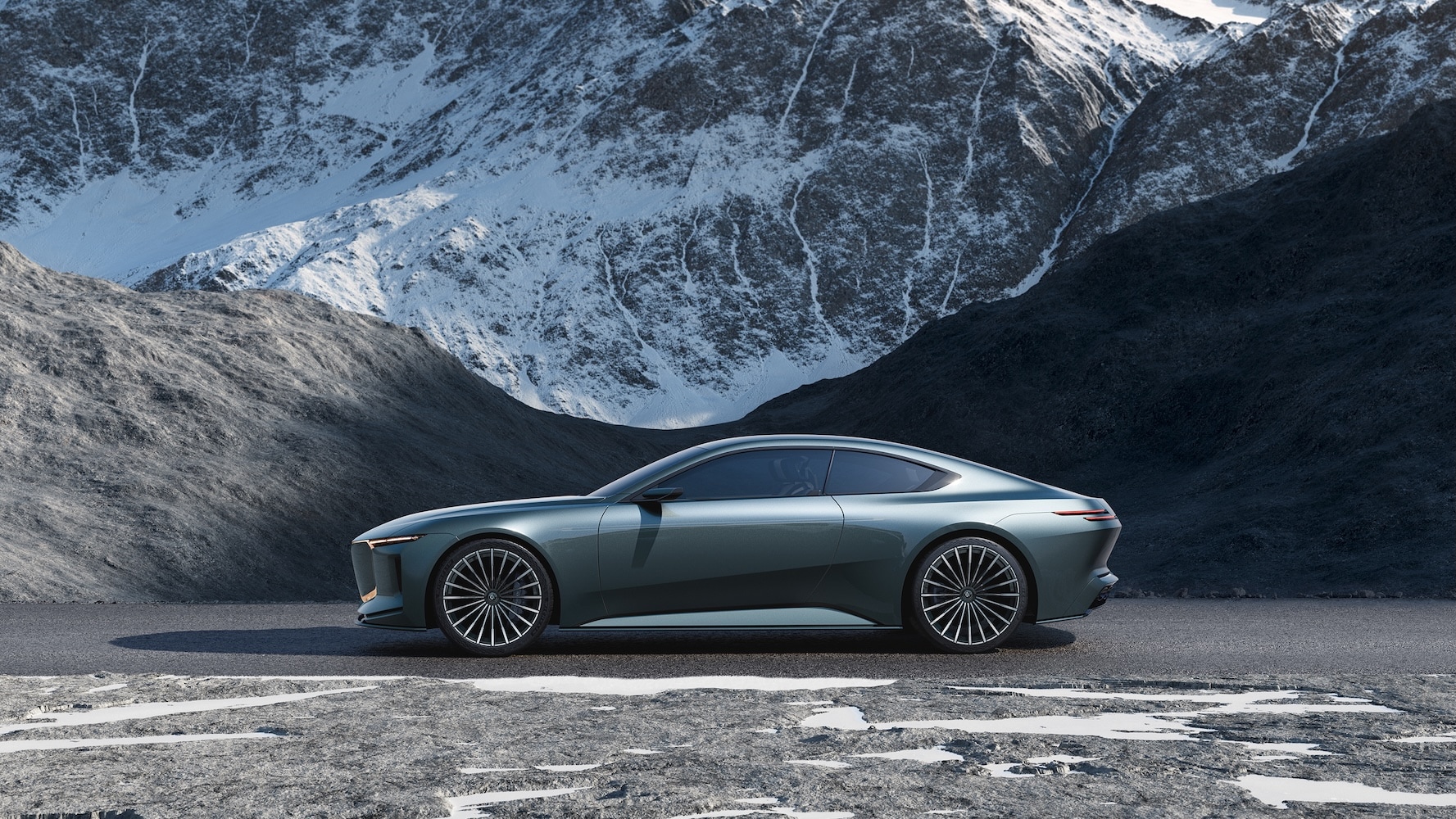
The response to this cultural anxiety arrived without a roaring exhaust note or a flashy social media campaign. It emerged quietly as the BMW Vision Alpina concept.
This isn't merely a design exercise or a collection of fiberglass panels under studio lights. It is a declaration of intent. It is the bridge between the analog mastery of the past and the digital reality of the future.
When you look at the concept, the historical cues are there, but they have been distilled. The iconic multi-spoke wheels remain, their twenty thin spokes stretching to the very edge of the rim, creating an illusion of effortless motion even when standing still. The classic pinstriping—the Decoset—is no longer just a sticker applied to the flank of the car. It is integrated into the metal, catching the light only at specific angles.
But the real revelation lies in what comes next. BMW confirmed that this design philosophy will materialize on the road in 2027, taking the form of a new flagship model based on the current 7 Series platform.
To understand why this matters, we have to look at the current 7 Series. It is a technological tour de force, but its design is polarizing. It demands attention with massive kidney grilles and geometric, blocky proportions. It is a car built for an era of bold statements.
The upcoming 2027 Alpina model aims to cure that aggression.
The Subtraction of Noise
Consider the engineering challenge. It is incredibly easy to make a car louder, stiffer, and faster. You increase the boost, tighten the dampers, and open the exhaust valves. Any tuning shop can do it.
It is infinitely harder to make a car feel more substantial while making it disappear beneath you.
The 2027 model will utilize BMW’s most advanced mild-hybrid and twin-turbocharged powertrains, but the calibration will be entirely distinct from anything carrying an M badge. Where an M car delivers its power with a violent, intoxicating kick, the Alpina version is being engineered to deliver torque like a rising tide. You press the accelerator, and instead of a gear change and a spike in revs, you experience a seamless, relentless surge of forward momentum.
It is the automotive equivalent of a private jet taking off.
The interior changes are even more telling. The current BMW 7 Series features a massive, pillar-to-pillar digital display that can sometimes feel like sitting in the front row of a movie theater. For the Alpina variant, the digital interface is being dialed back. The graphics are being redesigned with the traditional Alpina blue and green hues, utilizing typography that mimics classic analog gauges.
The goal is a reduction of cognitive load. The car wants to give your brain a break.
The Invisible Stakes
Why does BMW care enough to preserve this tiny sliver of automotive culture? The answer lies in the changing nature of wealth and luxury.
We live in an age of hyper-visibility. Everything is tracked, logged, and broadcast. True luxury, therefore, has shifted from being seen to being hidden.
The people who buy these cars don't want to turn heads at a stoplight. They want to pass through the world unnoticed by the crowd, yet instantly recognized by the few who know the secret handshake. By elevating Alpina to a tier above the standard luxury lineup, BMW is creating a direct competitor to the likes of Bentley and Mercedes-Maybach, but with a distinctly driver-focused soul.
It is a high-stakes gamble. If they make the car too much like a standard BMW, they alienate the loyalists who kept Alpina alive for six decades. If they make it too detached, they lose the dynamic brilliance that makes a BMW worth driving in the first place.
The Transition of Power
Back in Buchloe, the transition is tangible. The workshops are changing, adapting to their new role as a center for heritage restoration, engineering consultancy, and specialized component manufacturing. The artisans who spent decades adjusting suspension bushings by ear are working alongside software engineers from Munich.
It is easy to look at this transition with cynicism. It is easy to say that corporate consolidation eventually dilutes every pure thing it touches.
But standing in front of the Vision Alpina, that cynicism feels cheap. The concept doesn't look like a corporate compromise. It looks like a rescue mission. It looks like an empire using its vast resources to save a rare, beautiful species from extinction.
Marcus, our hypothetical buyer, will likely place his deposit for the 2027 model later this year. He will do so not because he needs a new mode of transportation, but because he wants to believe that somewhere in the vast, automated, electrified future, there is still a place for a car that feels like it was built by human beings who love the open road.
The rain continues to fall over the asphalt outside the workshop, wiping away the old tracks to make room for the new.


/arc-anglerfish-arc2-prod-mco.s3.amazonaws.com/public/BHPBP5TJJFF5XBWKSOQWZ6G55A.JPG)