The playground at St. Margaret’s is too quiet for a Tuesday morning. It is a silence that carries a specific weight, the kind that settles over a room when someone is about to deliver news they’ve been rehearsing in the mirror for weeks. There is no screaming over a lost ball. No frantic scraping of sneakers against asphalt. Instead, there is only the rhythmic, lonely thwack of a single tetherball hitting a pole.
This is what a demographic drought sounds like.
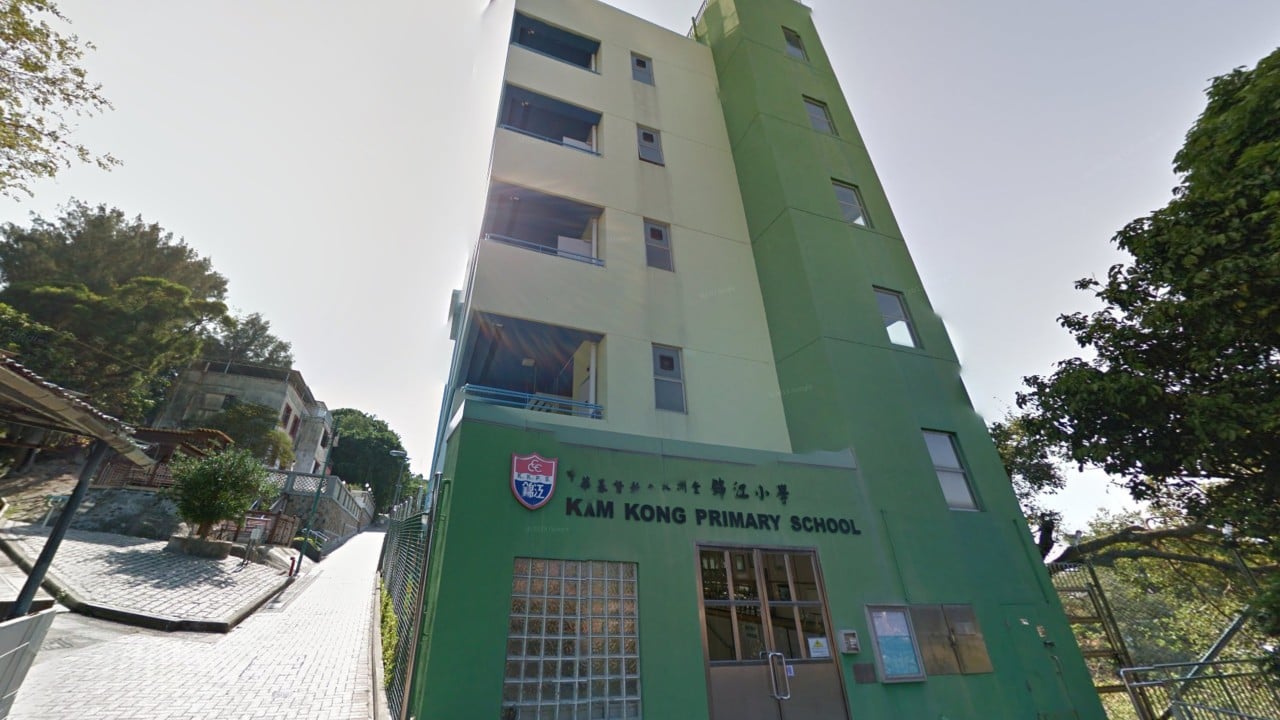
In the heart of Hong Kong, a city that once hummed with the frantic energy of a million schoolbags, a survival threshold has been missed. The Education Bureau recently confirmed a reality that many saw coming but few wanted to voice: a prominent primary school will cease operations by 2029. The reason isn't a lack of funding or a dip in academic standards. It is a lack of children. Specifically, the school failed to secure the minimum sixteen students required to form a single Primary One class.
Sixteen. In a city of millions, a pillar of the community crumbled because it couldn't find sixteen six-year-olds to fill its wooden chairs.
The Math of Empty Desks
To understand how a school dies, you have to look at the numbers, but the numbers are cold. They don't capture the smell of floor wax or the crinkle of new textbooks. Between 2023 and 2029, the population of school-aged children in Hong Kong is projected to drop with the velocity of a stone. The Primary One student population is expected to plummet from roughly 49,600 down to a staggering 31,500.
Imagine a row of five chairs. Now, kick two of them away. That is the visual representation of the city’s future.
When a school falls below the "sixteen-student" line, the government’s machinery begins to turn. It is a logical, clinical process. If there aren't enough students, the school is deemed "unsustainable." It is given options: merge with another school, go private, or begin the long, five-year "vocation" toward permanent closure. St. Margaret’s, burdened by the reality of its geography and the shifting tides of the city's population, has chosen the latter. They will see their current brood through to graduation, and then they will lock the gates for the last time.
The tragedy of the "enrolment shortfall" is that it is often treated as a bureaucratic error. It is framed as a failure of marketing or a lapse in parental interest. But you cannot market to ghosts. You cannot recruit children who were never born.
The Invisible Ghost of Migration
Consider a hypothetical mother named Mei-ling. Ten years ago, Mei-ling would have fought tooth and nail to get her son into a school like this. She would have spent her weekends at "interview prep" sessions and her nights worrying about catchment areas. But today, Mei-ling lives in Manchester. Or perhaps Vancouver.
The city has seen a massive exodus of young families over the last three years. When a family leaves, they don't just take their tax dollars; they take the future. They take the Primary One enrolment statistics with them in their carry-on luggage. The families who remain are having fewer children, or delaying parenthood indefinitely, squeezed by the dual pressures of some of the world's highest real estate prices and an increasingly uncertain social atmosphere.
The result is a city that is rapidly aging in place. The neon lights still flicker, and the MTR still runs with terrifying efficiency, but the "human infrastructure"—the schools, the nurseries, the playgrounds—is beginning to atrophy.
The Long Goodbye
Walking through a school that knows it is dying is a haunting experience. For the teachers at St. Margaret’s, the next five years will be a masterclass in bittersweet dedication. They are no longer just educators; they are the keepers of a lighthouse on a receding coastline. Every lesson taught is a step closer to the end. Every graduation ceremony is a funeral for the institution itself.
Think about the "invisible stakes" here. It isn't just about jobs, though the loss of faculty positions is a real and present fear for the staff. It is about the loss of institutional memory. Schools are the repositories of a neighborhood's history. They are where the local shopkeepers went to learn their sums and where the grandparents of the current students once played tag. When a school closes, the thread connecting the generations is snipped. The neighborhood loses its heartbeat.
The government suggests "ordered consolidation." They speak of "optimizing resources." These are comfortable words that hide uncomfortable truths. Merging two schools into one might solve the budget deficit, but it doubles the commute for a six-year-old. It shatters the social circles of parents who rely on the school gate as their primary point of human connection. It turns education into a logistics problem rather than a community endeavor.
The Domino Effect
One school closing is a headline. Ten schools closing is a trend. Twenty schools closing is a crisis.
The Department of Education has tried to mitigate the blow by reducing the number of "repeaters" schools can take and lowering the threshold for class sizes, but these are band-aids on a severed artery. The core issue is a fundamental shift in the city’s soul. Hong Kong is becoming a place that is excellent for business, but increasingly difficult for childhood.
When the "Primary One shortfall" hits, it creates a ripple effect that moves upward through the system. In six years, the secondary schools will feel the pinch. In twelve years, the universities will see empty lecture halls. Eventually, the labor market itself will look around and wonder where all the young talent went.
It is easy to blame the school for not being "competitive" enough. It is harder to admit that the environment has become hostile to the very idea of a growing family.
The Final Lesson
There is a specific kind of grief in watching a building stay upright while its purpose evaporates. The desks at St. Margaret’s will stay there for a while. The chalkboards might even keep their dust. But the soul of the place is already packing its bags.
We often talk about the "economic impact" of population decline, but we rarely talk about the emotional cost of a quiet playground. We don't talk about the teacher who has taught three generations of the same family and now has to update her resume at fifty-five. We don't talk about the child who realizes they are the only one left in their hallway, a survivor of a demographic shift they are too young to name.
The closure of St. Margaret’s is not an isolated event. It is a flare sent up from a sinking ship. It is a warning that a city without children is a city that has forgotten how to look forward.
As the sun sets over the skyscrapers, casting long, jagged shadows across the empty basketball courts, the reality sinks in. The 2029 deadline isn't just a date on a calendar. It is a countdown. And unless the city finds a way to make itself a home for the young again, that final bell won't just be ringing for a school. It will be ringing for all of us.
The tetherball stops swinging. The wind picks up a stray piece of notebook paper and tumbles it across the lot. In five years, someone will come and turn off the lights, and the silence will finally be complete.