Dirt does not lie. It tells you everything you need to know about a year if you know how to cup it in your palms and smell the failure or the promise.
For three generations, the soil in the Okanagan Valley has been an honest ledger. It asks for sweat, patience, and water; in return, it yields rows of crisp Ambrosia apples and Honeycrisps heavy enough to bow the branches. Or at least, it used to.
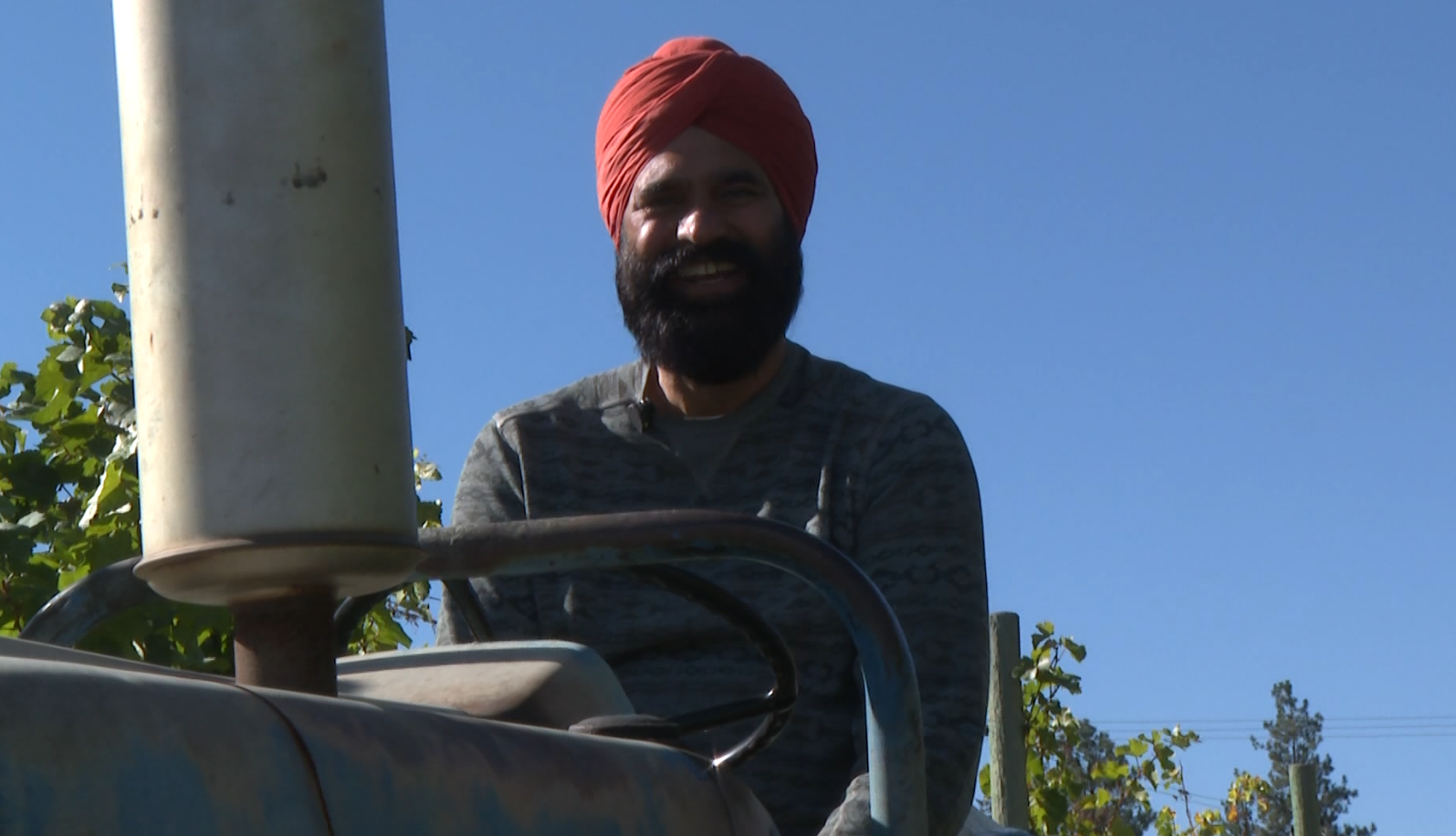
Walk the rows of a peach orchard outside of Penticton on a blistering July afternoon, and the silence is wrong. The bees are too few. The leaves are curled tight against themselves, desperate to hoard whatever moisture remains trapped in their veins. The man tending these trees—let us call him Arthur, though he represents a hundred sun-baked faces from Oliver to Vernon—does not look at the sky with hope anymore. He looks at it with the cold calculation of a man staring down an adversary who changes the rules every single morning.
Arthur is fifty-eight years old. His hands are maps of calluses and small scars earned from pruning shears and wooden ladders. He remembers when winters were predictable cold snaps that put the trees into a deep, necessary sleep, and summers were predictable stretches of dry heat that sweetened the fruit without burning it to charcoal.
Those days are dead.
Instead, the valley has become a theater of extremes. One winter brings a sudden, unseasonal snap of twenty below zero after a warm spell, bursting the sap lines before the fruit even dreams of waking. The next summer brings a dome of stagnant heat so ferocious that the apples sunburn on the branch, turning brown and bitter before they can ever be picked. And always, lingering in the blue haze of the horizon, there is the smoke. The fires do not just threaten the fruit; they choke the light, robbing the trees of the photosynthesis they need to grow, leaving the crop small, bruised, and unsellable.
Arthur is not a gambler by nature. Farmers rarely are. They are risk managers who bargain with weather, soil, and time. But farming in the modern Okanagan is no longer management. It is Russian roulette with a fully loaded cylinder.
To cushion the blow of these escalating disasters, growers like Arthur have long relied on crop insurance. It is supposed to be the safety net stretched beneath the tightrope. When the frost hits or the smoke ruins the yield, the policy is supposed to catch you, patch your bruised finances, and let you live to plant another spring.
Except the net has rotted.
The current crop insurance models, built decades ago on historical weather patterns that no longer exist, are fundamentally broken. They calculate risk using the rearview mirror. They look at the last thirty years of data to decide what a bad year looks like, completely blind to the fact that the last thirty years are no longer a prologue to the future; they are a completely different climate entirely.
Consider the mechanics of how these payouts are triggered and calculated. They are based on historical averages of yield and price. But when consecutive years of extreme weather batter an orchard, the baseline drops. The safety net shrinks right at the moment the fall becomes steeper.
Arthur received his payout statement last autumn after a devastating combination of late frost and smoke taint wiped out half his cherry crop and a third of his apples. The check covered roughly forty percent of his actual operational costs. Not his profit. Not his family's living expenses for the winter. His costs. The bare minimum required to keep the tractors fueled, the water rights paid, and the bank from calling in the mortgage on land his grandfather cleared with an axe and a mule.
"If I wanted to lose money efficiently, I would go to a casino," Arthur said, tossing a stunted, unmarketable peach into the dry grass. "At least at the tables, the lights are bright and someone hands you a drink."
The disconnect between the bureaucratic machinery of insurance and the gritty, compounding reality of climate change is staggering. Insurers look at risk as an isolated incident—a bad frost here, a hailstorm there. They price their products for anomalies. But what happens when the anomaly becomes the baseline? What happens when every single year brings a new, unprecedented catastrophe that the actuaries never imagined in their air-conditioned boardrooms in Victoria or Ottawa?
The financial bleeding does not stop at the farm gate. When an orchardist goes under, the shockwave ripples outward with brutal efficiency.
The packing houses down the road lose volume, leading to layoffs for seasonal sorters and packers. The local equipment dealers sell fewer tractors and spare parts. The chemical and fertilizer suppliers see their orders shrink. The roadside fruit stands—the very soul of the valley’s tourism identity—sit empty or sell imported produce because local shelves are bare.
A community does not die all at once. It frays at the edges. First, the young people leave, looking at their parents' exhausted faces and deciding that inheriting a farm is not a legacy; it is a life sentence of debt and bureaucratic humiliation. Then, the land is sold. Not to someone who wants to plant trees, but to developers looking to carve luxury acreage or vineyards out of generational soil. Once the asphalt covers the topsoil, it is gone forever. You can pave paradise, but you can never un-pave it.
The policy makers talk about resilience. They love the word. They draft white papers and hold panels where they discuss adaptation strategies, soil management, and diversification. And to be fair, adaptation is happening. Growers are pulling out traditional varieties and planting heat-tolerant strains. They are installing expensive overhead netting to protect against hail and sunburn. They are investing in drip irrigation systems that cost small fortunes.
But adaptation requires capital. And capital requires a functioning insurance system to backstop the catastrophic losses while you transition. If the safety net is full of holes, you cannot afford to experiment. You can only afford to go broke slowly.
The fundamental flaw in modern agricultural risk management is that it treats climate change as an insurance problem when it is actually an existential survival problem. Insurance is designed to smooth out the bumps in a stable road. It was never meant to function as a life raft on a sinking ship in the middle of a hurricane.
If we want the Okanagan to survive as the fruit basket of Canada, the paradigm of how we protect our growers must undergo a radical, unsparing evolution. We need policies that look forward instead of backward. We need programs that account for the compounding nature of climate shocks—where a drought year followed by a freeze year and a fire year are not treated as independent events, but as a continuous, cumulative siege.
More than anything, we need to stop treating farming as just another industry governed by the cold laws of supply and demand. Food security is national security. The people who anchor themselves to the dirt and coax sweetness out of stone are the only thing standing between us and total reliance on distant, fragile global supply chains.
Back in the orchard, the sun is dipping behind the jagged peaks of the Cascades, painting the smoke-hazed sky in bruised shades of violet and amber. Arthur walks back toward the weathered red barn, his boots kicking up fine, powdery dust that hangs in the air like a ghost.
He stops by a young Honeycrisp tree he planted two springs ago, checking the moisture of the soil around its base. It is a stubborn act, planting something that takes five years to bear fruit when you are not entirely certain you will own the land in three.
He ties a strip of bright green ribbon to a slender branch to mark it for pruning. It is a tiny, insignificant gesture against the massive, grinding weight of a changing world. But it is all he has. The tree stands there in the gathering dusk, waiting for tomorrow's weather, holding its breath against the dark.